On April 5, 2026, in the Eastern Standard Time Zone, former U.S. President Donald Trump disclosed in a phone interview that the U.S. is engaged in "in-depth negotiations" with Iran and provided a vague and narrow deadline — an agreement must be reached by "Tuesday." Accompanying this timeframe, he made an extreme statement: if no agreement is reached, he will "destroy everything there." In the absence of crucial information such as negotiation agendas and the identities of representatives, this opaque communication framed around "agreement or destruction" was ignited by a high-decibel phone call, quickly spilling over into a magnifier of regional security expectations and global tensions.
The Bombshell Sentences Thrown Out in an Eight-Minute Call
This controversial statement stemmed from a segment of approximately eight minutes of recorded phone interview disclosed by Axios. From the source of information perspective, Axios presented the content by releasing fragments of the interview transcript and directly quoting original statements, which holds a certain credibility among mainstream U.S. media. However, the reporting also has its boundaries: the dialogue context is highly compressed, the length of the interview is disclosed only through a single channel, lacking cross-verification from multiple sources, and there are no additional questions and answers for comparison. In other words, what the outside world currently holds is a segment of "filtered truth" by the media.
In this excerpt, Trump threw out two of the most damaging remarks. The first is his assessment of the negotiation prospects — he claimed there is a "very good/large chance of reaching an agreement," implying that based on the information he has, the U.S. and Iran are no longer in a completely adversarial stalemate but rather that there exists a "window" for a quick deal. The second is an explicit threat — "If we cannot reach an agreement by Tuesday, I will destroy everything there." The term "there" is not specifically geographically defined but, through the extremity of the verb, pushes the imagination of destruction toward a vivid image of total annihilation of infrastructure and even the core of the regime.
In the traditional diplomatic discourse, "in-depth negotiations" often imply multiple rounds of formal meetings, written agendas, and participation from multiple teams, which is a very cautious technical expression; while "destroy everything there" is language that would only emerge in a wartime psychological warfare or extreme deterrence context. In the same conversation, placing "in-depth negotiations" alongside "destroy everything" not only breaks conventional cautious tones but also amplifies the confusion regarding the true nature of this dialogue: is it a last-minute push toward an agreement, or an advance preparation for possible hardline actions?
From Abrogation of the Nuclear Agreement to Renewed Betting on Extreme Pressure
To understand the ultimatum-style language in this phone call, it’s difficult to circumvent Trump's previous trajectory regarding Iran policy. During his presidency, he unilaterally withdrew the U.S. from the Iran nuclear agreement (JCPOA), overturning the framework reached through multilateral mediation during the Obama era. After withdrawing from the agreement, the U.S. reinstated and escalated sanctions against Iran, pushing the nuclear issue back from relatively manageable technical negotiations to a high-pressure confrontation track. This historical background has already stamped the "Trump-style Iran narrative" with the marks of abrogation and reconstruction, rather than continuity and repair.
In terms of negotiation style, Trump has long favored extreme pressure and ultimatums: first pushing his opponent to the edge of a cliff, then offering a seemingly narrow step down. This approach has been frequently seen in trade negotiations and discussions regarding allies' defense burden, and now he directly replicates it in his public statements regarding Iran. The time pressure of "reaching an agreement by Tuesday," compounded with the threatening statement of "otherwise destroy everything," creates a typical binary framework — either immediately accept a "good deal" as defined by him, or face catastrophic consequences.
Complicating matters further, the content of the so-called "in-depth negotiations" in this round remains almost entirely unknown to the outside world. Research briefs can only confirm that the nature of the negotiations is not clearly defined and may involve nuclear issues, regional security, or other sensitive topics. As a result, outside observers can only overlay the current statements onto his past trajectory of Iran policy for speculation: some believe this may be an attempt to restart some kind of new version of the agreement concerning nuclear issues; others caution that this is merely under the name of "negotiation," a prelude to harsher sanctions or even military action. The lack of verifiable technical details means that this negotiation is already trapped in a chain of speculation based on "historical parallels" from the very beginning.
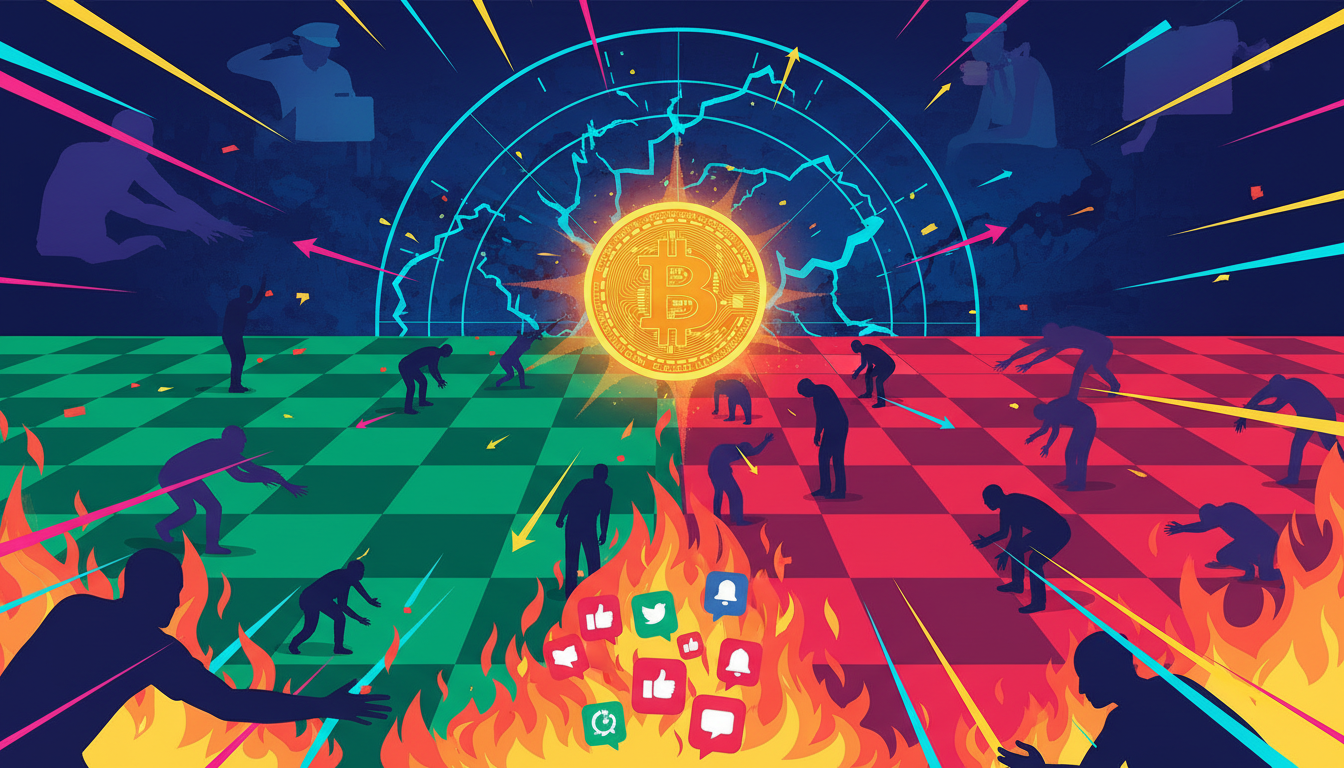
Agreement or Destruction: The Dual Chessboard Behind the Ultimatum
In this interview, the phrase "reach an agreement by Tuesday" is deliberately amplified as a ticking clock, yet no specific calendar date is provided. Research briefs clearly indicate that it is impossible and inappropriate to infer or fill in this specific date, emphasizing that such a vague timeframe may itself be part of a political maneuver: creating a sense of urgency in the media while reserving flexibility for oneself — whether to announce "significant progress" in advance or later emphasize "Iran missed a great opportunity," leaving room for explanations in the ambiguity of the timeline.
The expression "agreement or destruction" artificially constructs a binary choice framework of "either agreement or war." By publicizing and simplifying the extreme consequences, Trump condenses a complex multilateral issue into an emotional multiple-choice question: do you want peace, or do you want destruction? This rhetoric benefits the portrayal of him as a decisive, tough leader who is "willing to give the other side a final chance" in front of domestic audiences; in front of opponents, he attempts to use an unpredictable tough posture to tilt the psychological balance at the negotiation table.
This extreme language does not create a symmetrical psychological impact on the various factions within Iran. For hardliners, it may be seen as evidence of the U.S.'s longstanding hostility, reinforcing the stance of "distrust of America"; for forces advocating some degree of engagement or easing, it may be utilized to demonstrate that "delays will only lead to greater risks," thus increasing leverage in internal debates. Similarly, within the U.S., hawks may see this statement as a deterrent bottom line that must be upheld, whereas doves and pragmatists are more concerned that public escalations of threats compress the space for compromise to a level that makes any technical concession tagged as "submission to the enemy."
The Risky Assumption that the Iranian People Will Support Strikes
In this phone call, another highly controversial statement is Trump's claim that "the Iranian people opposing the government will support strikes." The underlying implication of this assertion is very clear: he attempts to package potential foreign military actions as just interventions to "assist oppressed people," rather than attacks on an entire nation. By forcibly tying internal anti-government sentiments in Iran with external strikes, he seeks to find a moral cover for the threat to "destroy everything."
However, logically equating some citizens’ discontent with their government directly as support for foreign military strikes is a risky chain of reasoning. On one hand, social discontent may point to economic difficulties, political repression, or societal control but does not necessarily extend to permission for attacks on sovereignty and territory. On the other hand, within the context of the nation-state, external strikes often provoke a response of "unified around the flag," which, in the short term, can reinforce the cohesion of the regime. Using such simplistic judgments to endorse potential strong actions carries serious risks of misreading public opinion and touches the moral red line of "whether one can use the name of internal opposition to justify external strikes."
This method of judgment also exacerbates concerns that U.S. decision-makers may misread Iranian social structure and public sentiment. If policy design is based on the assumption that "the people will welcome us," and this assumption has not undergone systematic polling verification or lacks detailed sociological analysis support, once it materializes into concrete actions, it risks a significant contrast between expectations and reality. Historical precedents of similar miscalculations are not uncommon, and as such rhetoric reappears today, the international community's wariness towards "rationalizing external pressure through imagined internal support" understandably intensifies.
The Pulsations of Public Opinion in the Fog of Negotiations and Information Vacuum
In stark contrast to the high-profile phone statements is the "invisible state" of the negotiations themselves. As of now, research briefs emphasize: the outside world knows almost nothing about the specific negotiation representatives, formal agenda, communication channels, or other key pieces of information. There are no publicly disclosed meeting locations, no confirmed representatives' names, and it remains speculative whether the negotiations are focused on nuclear programs, regional conflicts, or other issues. This information vacuum means that Trump's "in-depth negotiations" are difficult to externally verify at the factual level.
Additionally, it remains to be verified whether the Iranian side denies any formal negotiations and the so-called "bridge attacks" and potential civilian casualty accusations. Research briefs clearly label these pieces of information as unverified information, meaning they can only be mentioned as dispute points at this time and cannot be written into the narrative as established facts. The lack of authoritative and transparent multi-party explanations makes related accusations more like "label ammunition" in an ideological standoff than established conclusions from determined events.
In such an environment of missing details and conflicting messages, all parties are forced to construct narratives from "half-true and half-false" fragments: media needs to quickly provide a story framework, some spotlight Trump's extreme threats while others emphasize the supposed "Iranian provocations"; political figures select favorable clips based on their positions, either amplifying the positive side of "negotiations are progressing" or highlighting the threat of "Iran is still dangerous"; emotions on social media are especially prone to rapid escalation between lack of context quotes and edited videos. In this tug-of-war of public opinion, whether the "in-depth negotiations" are a chance to reduce conflict or a prelude to amplifying it becomes increasingly difficult to discern.
A High-Pressure Game without Sight of the Agreement Text
Overall, Trump's self-disclosure of "in-depth negotiations" in the phone call, along with his simultaneous threat to "destroy everything there," collectively constitutes a highly opaque high-pressure game. On one hand, by depicting there is a "very good/large chance of reaching an agreement," he releases signals that he can still influence complex security issues; on the other, he uses the time alarm of "by Tuesday" and the extreme consequence of "destroy everything" to package the negotiations as a dramatically timed confrontation. This narrative structure itself carries a strong sense of performance and pressure.
However, in the absence of any formal Iranian response, without sight of any agreement text, and without understanding negotiation technical details, any concrete projections regarding future military actions must be exceptionally restrained. Research briefs clearly restrict the imaginative supplements regarding specific military action details and the so-called secret envoy channels, and this writing "self-braking" aptly corresponds to the necessary caution in realistic analysis: when verifiable facts are limited, extending far-reaching narrative speculations only builds judgments on sand.
Moving forward, what the outside world truly needs to focus on is the change in the attitudes of both the U.S. and Iran in public settings surrounding the high-profile "Tuesday" deadline: whether either side will present even the minimum negotiation progress to support the term "in-depth," or conversely, whether the discourse of both sides will escalate further, solidifying the binary opposition of "agreement or destruction" into a long-term narrative of confrontation. Only when more verifiable information comes to light can this high-pressure game ignited by a phone call potentially shift from a noisy public opinion battle back to a diplomatic reality that can be rationally assessed.
Join our community, let’s discuss and grow stronger together!
Official Telegram community: https://t.me/aicoincn
AiCoin Chinese Twitter: https://x.com/AiCoinzh
OKX Benefits Group: https://aicoin.com/link/chat?cid=l61eM4owQ
Binance Benefits Group: https://aicoin.com/link/chat?cid=ynr7d1P6Z
免责声明:本文章仅代表作者个人观点,不代表本平台的立场和观点。本文章仅供信息分享,不构成对任何人的任何投资建议。用户与作者之间的任何争议,与本平台无关。如网页中刊载的文章或图片涉及侵权,请提供相关的权利证明和身份证明发送邮件到support@aicoin.com,本平台相关工作人员将会进行核查。