In early April 2026, some users unexpectedly saw links to Polymarket on the Google News results page while conducting event-related searches during daytime in the UTC+8 time zone. This platform, centered around event prediction contracts, suddenly appeared alongside traditional media outlets like Reuters and The Guardian in the news section, drawing dual attention from the crypto community and the media industry. Google quickly responded, with spokesperson Ned Adriance stating that this was a "system error" and the relevant results had been removed. A brief "appearance" blurred the previously clear boundaries between prediction markets and serious news at the algorithmic level, leaving far more questions than this simple "error" explanation.
From Finance to News: How Polymarket Crossed That Divide
Before this incident, the common understanding in the industry was that Google was relatively cautious about integrating new financial and crypto-related data, with signs showing that Polymarket's data had previously only been limitedly integrated into Google Finance (this background information is still under verification). It existed more as a price or sentiment indicator rather than a "news source". This division somewhat maintained the stability of content hierarchy—financial data being noise or signals of the financial market, while news was the domain of media with traditional qualifications.
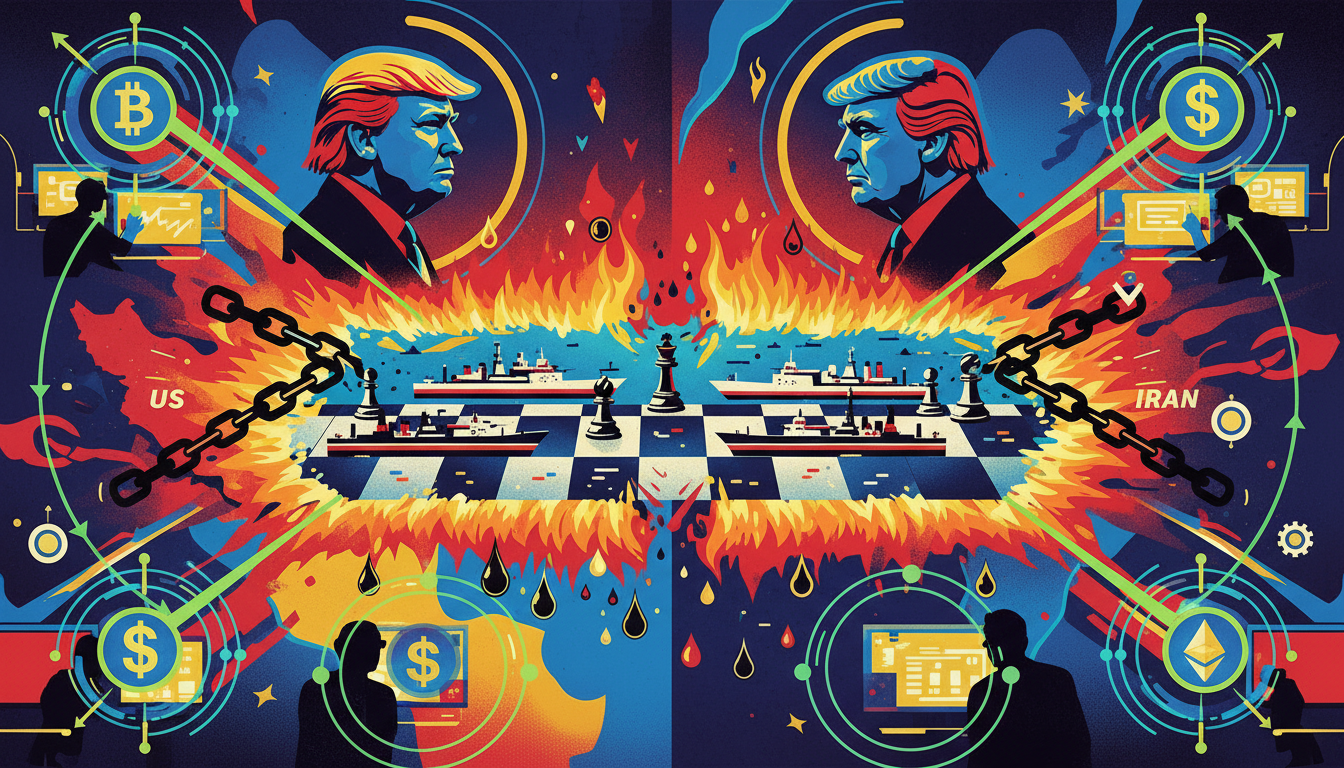
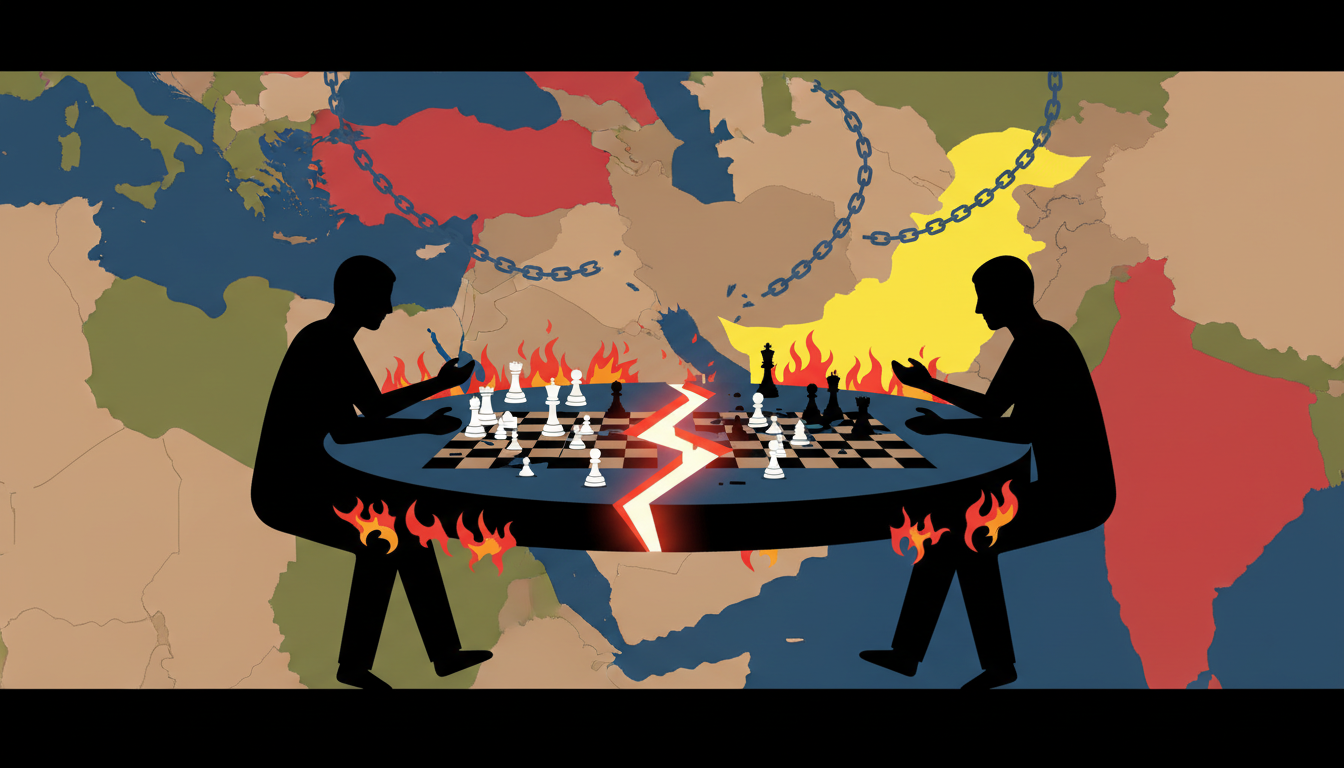
This "slip" in early April shattered that tacit agreement. According to A/C information, during event-driven queries like "shipping through the Strait of Hormuz", some users saw Polymarket contract page links appearing at the same visual level as mainstream media reports from Reuters, The Guardian, etc., within the Google News section. This was not a simple ad insertion, but rather an algorithmically classified entry in the "news results" list, placing the titles of prediction contracts alongside news headlines without any barrier on the interface.
From the user path perspective, according to A/C's description, users might have obtained a combination of complex results after entering specific geopolitical or shipping-related questions:
● On one side were traditional media reports about regional situations, diplomatic statements, and historical context;
● On the other side were the prediction contract pages set up on Polymarket surrounding the same event, pushed as "related information" by the algorithm (details still pending verification).
When an event that has not yet occurred and is full of uncertainty is presented in the form of price probabilities in the "news section," the original context of the search entry begins to blur.
A System Error Exposing the Algorithm's Blind Spots Regarding "News"
In response to this unexpected exposure, Google spokesperson Ned Adriance stated that Polymarket appearing in Google News was a system error (according to A/C), which equated to the official labeling of the event as an accident, rather than a strategic adjustment. Subsequently, the relevant links were quickly taken down, and the page restored only to display media sources with explicit news qualifications.
From an open policy perspective, Google News has consistently emphasized that included content sources must have attributes of news organizations, adhering to basic editorial standards and fact-checking norms (according to C). The product nature of Polymarket is essentially an event prediction market, providing contract prices and betting depth rather than reporting, commentary, or investigation. This mechanism, centered around "betting on the future," exists in a natural misalignment with the role design of news products: the former prices probabilities of events that have not occurred, while the latter offers structured presentations of facts that have transpired.
At the level of recommendation algorithms, the issue lies in another logic. Algorithms typically sort every indexable page based on "relevance" and "click potential". When users search for a specific event, the market page built around that event on Polymarket often aligns closely with the query intent in keywords, titles, and external link references. If the system lacks the further recognition ability of "content nature"—unable to distinguish "this is a pricing/betting page" from "this is news reporting"—then it becomes easy to misplace the prediction market into the news results column during relevance sorting. The so-called "system error," in product performance, is a bug, but on a deeper level, it signifies the algorithm's still rough and tool-like understanding of what constitutes "news".
Can the Price Betting on the Future Be Read as News?
To understand the unease generated by this confusion, one must first unpack the essential differences between the two categories of information. Traditional news reports center on "facts that have occurred," and even when accompanied by analysis and predictions, their starting point is based on verifiable real events, maintaining credibility through sources, evidence chains, and editorial processes. In contrast, prediction markets provide probability pricing for events that have not yet occurred, representing a collective bet by participants on future scenarios, which is essentially a mechanism for aggregating expectations rather than the facts themselves.
In academic and market practice, prediction market prices have indeed been proven to contain a certain "information content": participants embed fragmented intelligence, professional judgment, and emotional expectations in contract prices, making prices in some contexts akin to a real-time, decentralized "probability poll". From this perspective, it can be compared to traditional opinion polls, broker research reports, and think tank analyses—each scoring the future. But this also brings conflicts: polls and reports are usually explicitly labeled as "predictions/analysis" and are visually and textually differentiated from news reports, whereas prediction markets, once entering news result lists directly, dissolve this distinction.
Moreover, the ethical dimension is more sensitive. The practice of "creating prediction contracts around events such as wars and geopolitical conflicts" has long been a source of widespread general moral controversy: critics argue that turning life-and-death public crises into tradable odds may stimulate indifferent or even speculative sentiments; supporters emphasize that this mechanism helps to expose risk expectations earlier, thus enhancing the overall societal responsiveness. This incident did not directly amplify a specific controversial scene, but once similar contracts become a norm in news portals, the question in public discourse about "are you reading news or witnessing others' betting on war" will inevitably be pushed to the forefront.
Boundary Testing by Tech Giants: The Structural Dilemma Behind the Incident
If this controversy is merely understood as an engineering accident, it overlooks the structural issues it reveals. "System errors" are often the most common forms of boundary overstepping by large platforms when integrating new financial and crypto data: the pace of feature launches and compliance reviews are misaligned, and tensions exist between algorithm optimization goals and content regulations, resulting in similar "error exposures" becoming byproducts of the iterative process. There is no need to speculate on Google's internal motivations, simply acknowledging a fact: traditional content classification frameworks are constantly being challenged by new data sources, and platforms have yet to establish mature buffering mechanisms.
Should prediction market results be "tacitly" or "implicitly" normalized in news distribution in the future, the impacts will far exceed a single wave of public opinion:
● Impact on Media Authority: When betting prices are presented alongside news headlines, audiences may subconsciously view the two as equally valid sources of information, diluting the discourse advantages established by traditional media through editorial and verification practices, with the boundaries between facts and probabilities blurring simultaneously on visual and psychological levels.
● Diverse and Noisy Information Sources: Prediction markets can provide supplementary perspectives, but they may also amplify rumor-driven emotional trading during the early stages of events. When platforms lack clear labeling, users struggle to discern whether they are accessing facts, opinions, or expectations themselves.
● Changes in Audience Judgment Structure: An increasing number of users may habitually validate news with "market odds" rather than understanding odds through news. Over the long term, the focus of public discussion could shift from "what happened" to "what others think will happen".
This further leads to inquiries about platform responsibilities: how should algorithms balance "relevance" and "compliance"? When a prediction market page is highly relevant semantically but deviates from existing rules in content nature, who delineates the red lines—algorithm engineering teams, compliance departments, or external regulators? Once the consequences of a blurred boundary manifest—such as misleading judgments, amplifying speculation, or harming affected groups—who will take responsibility remains unclear.
The Invisible Victory of Crypto Narrative: Prediction Markets Seen for the First Time
From the perspective of the crypto industry, this might be viewed as a "publicity in error." Even a brief system error means that more users who had never encountered on-chain prediction markets saw the existence of Polymarket for the first time at a mainstream information entrance. In many people's minds, the concept of "event betting platforms" was originally marginalized within the realm of gambling or niche speculative tools, but now it briefly stepped into the center stage of serious news.
This also creates space for misinterpretation. For traditional audiences, Polymarket may accumulate multiple contradictory labels:
● Some might classify it simply as a "gambling site," viewing all event markets as channels amplifying gambling impulses;
● Others might mistakenly believe it serves as an "alternative news source" or a "more genuine barometer," treating contract prices as superior information to mainstream media;
● Without understanding the contract mechanisms and liquidity structures, some users may even misinterpret price fluctuations as "instant votes of insider information leaks."
This misinterpretation will not remain at the user level; it can reverse influence regulators, media, and platforms' attitudes toward prediction markets. Regulatory agencies, under public pressure, may more readily examine such products from the perspective of "gambling risk" or "public sentiment risk"; traditional media may remain more vigilant about "who uses prices to tell event stories"; platform product teams will also regard this incident as a cautionary tale in future cooperation and access decisions—recognizing both user interest and narrative potential as well as the potential policy and reputation chain reactions that may arise once the public eye magnifies these issues. These subtle influences plant unnoticeable yet genuinely existing foreshadowing for the regulatory frameworks and commercial collaborations surrounding prediction markets in the coming years.
The Next Time It's Headlined, It Might Not Be an "Error"
Returning to the event itself, its core themes can be summarized in two points: firstly, the algorithm's "indiscriminate" tendency in processing content, prioritizing relevance, click rates, and other quantitative metrics while lacking a refined understanding of content nature and social context; secondly, a gray area is forming between prediction markets and news—prices are neither news in the traditional sense nor merely isolated betting data; they lie between facts, opinions, and probabilities, yet lack a corresponding display and regulatory system.
In the future, both regulators and platforms will find it difficult to avoid this topic. Possible responses include:
● Strengthening content classification capabilities at the product level, setting independent display areas or clear labels for new information sources like prediction markets to avoid complete visual homogeneity with traditional news;
● Clearly defining the boundaries and exceptions of "what can be considered news content" in policy and algorithm rules, developing more detailed recommendation strategies for price probability-type information instead of simple relevance decisions;
● In external communications, assisting the public in establishing a basic understanding of the three layers of "facts—analysis—probabilities," enabling users to know which category of content they are viewing and how to interpret it.
For the crypto industry, the important takeaway is that: once price signals and prediction contracts reach mainstream portals and are truly "seen" by ordinary users and prominent institutions, the struggle for narrative power and discourse will just begin. Whoever defines what these prices mean will dominate the regulatory framework, business models, and even public imagination surrounding crypto prediction markets. Behind Polymarket's temporary departure from Google News lies a greater era foreshadowing—next time it makes headlines, it might no longer be explained merely as a "system error".
Join our community to discuss and grow stronger together!
Official Telegram community: https://t.me/aicoincn
AiCoin Chinese Twitter: https://x.com/AiCoinzh
OKX Welfare Group: https://aicoin.com/link/chat?cid=l61eM4owQ
Binance Welfare Group: https://aicoin.com/link/chat?cid=ynr7d1P6Z
免责声明:本文章仅代表作者个人观点,不代表本平台的立场和观点。本文章仅供信息分享,不构成对任何人的任何投资建议。用户与作者之间的任何争议,与本平台无关。如网页中刊载的文章或图片涉及侵权,请提供相关的权利证明和身份证明发送邮件到support@aicoin.com,本平台相关工作人员将会进行核查。