Article Author: Prathik Desai
Article Compiler: Block unicorn
For over a decade, Bitcoin mining operations have faced intense scrutiny from the energy and technology sectors. Its massive power consumption has prompted congressional hearings, ESG rating downgrades, and relentless public criticism. Yet now, these operations have signed 15-year lease agreements with companies like Microsoft, Google, and Anthropic. The mining operations themselves have changed little. In fact, if there is one commonality among these operations over the past decade, it is the crisis itself. So, what has really happened?
Regarding the crisis, there is a fascinating saying: “The best opportunities often come from the worst crises.” The experience of Bitcoin miners is a testament to this. From July 2016 to April 2024, they have experienced three halvings. Each halving reduces the block reward in half, forcing miners to seek cheaper electricity in the increasingly remote corners of the US power grid, including West Texas, rural Georgia, and the North Dakota plains.
The weak have been eliminated. Some businesses have successfully transformed in time. Others have learned lessons only later.
In today's story, I will explain how the surge in investment in AI infrastructure aligns with the increasing computing power and processing capabilities of miners, thus helping them gain a new lease on life.
Now, let us continue.
Halving - The First Turning Point
The first survival test for Bitcoin miners occurred in April 2024, marking the most recent Bitcoin halving event. Each halving is a stress test. But with each halving, the rewards are halved, and the challenges double.
The April 2024 Bitcoin halving reduced the block reward from 6.25 BTC to 3.125 BTC. In the week following the most recent halving, the price of computing power dropped from $0.12 per terahash to $0.047. Computing power refers to the expected earnings miners receive from each unit of computing power. By the first quarter of 2026, the price for computing power fell to a five-year low of $0.023 per terahash per day.
Currently, the average cost to produce a single Bitcoin is approximately $81,000. If other non-production costs required to keep miners operational are also considered, the total mining cost per Bitcoin will far exceed $115,000. The current trading price of Bitcoin is $70,760. Its price has not exceeded $80,000 in the past three months. Do the math yourself.
The Bitcoin mining industry can only continuously pursue lower mining costs while having no control over Bitcoin's price.
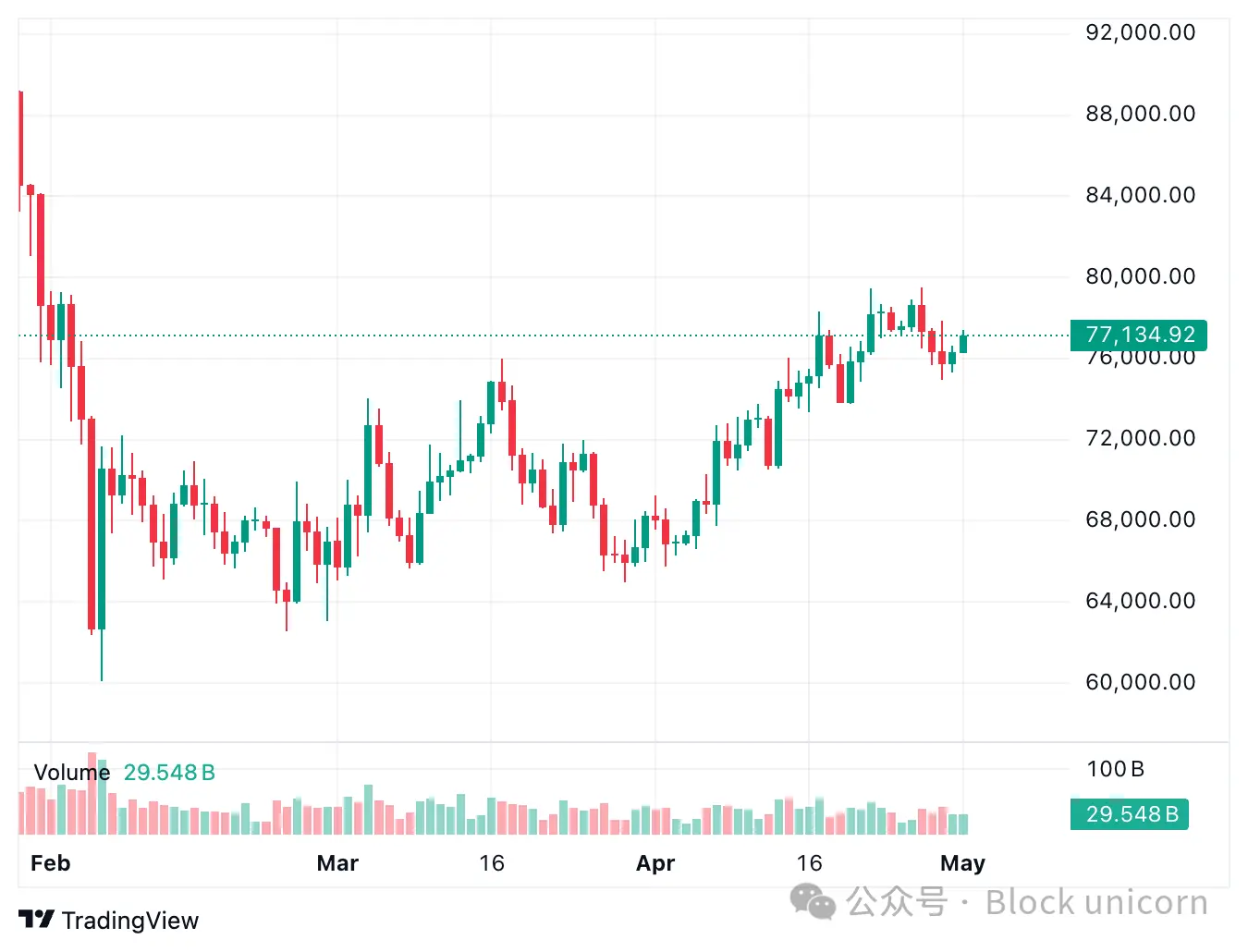
For miners whose main income derives from the difference between Bitcoin mined and Bitcoin sold on the public market, their financial statements suddenly showed losses. Thus, they turned to mining and holding the mined Bitcoin. Their idea was to wait for the price of Bitcoin to rise to a level that would yield them positive gains.
This strategy was effective until the price of Bitcoin began to rise. But market fluctuations are cyclical. Every bull market goes through bear markets and corrections. The cryptocurrency market is no exception.
10/10 - The Second Turning Point
October 10, 2025: A fearful day for the cryptocurrency industry, witnessing the largest-ever liquidation in cryptocurrency history. Since then, cryptocurrency prices have experienced record declines, marking the beginning of a bear market cycle. This led to the complete disintegration of the miners' “mine and hold” strategy.
Some companies began to hesitate about changing strategies. But some companies announced strategic transformations within 24 hours after the liquidation event.
On October 11, Bernstein released a report redefining the role of Bitcoin miners, no longer viewing them as producers of computing power but as holders with access to gigawatt-level secure grid connections. Analysts dubbed these miners as a “key link in the AI value chain.” They collectively agreed that IREN (formerly Iris Energy) is the preferred candidate that successfully transitioned from Bitcoin mining to a cloud infrastructure provider focused on AI.
Digital asset leader and AI infrastructure provider Galaxy Digital announced it raised $460 million to transform its Helios mine in Texas into a CoreWeave high-performance computing (HPC) campus, with a 15-year lease expected to generate annual revenues exceeding $1 billion.
Following the 10/10 event, a series of systemic balance sheet liquidations ensued, defining the identity of the industry previously characterized by the “mine and hold” strategy. Miners took at least 18 months to accumulate Bitcoin as a reserve asset, treating unsold Bitcoin as a sign of confidence.
Under the pressure of the bear market, the price of Bitcoin fell from an all-time high of about $126,000 to roughly 40% in just 45 days, causing this position to begin to wobble. Some publicly listed miners who had never sold Bitcoin before also started selling. The third-largest public Bitcoin holder Marathon Digital (MARA) broke its record of holding Bitcoin continuously and sold 15,133 Bitcoin in three weeks.
The CEO of this company has always supported and drew inspiration from its strategic reserves, which represent the largest corporate Bitcoin reserve. Less than two years ago, the CEO and Chairman of MARA, Fred Thiel, announced that Bitcoin would become its strategic reserve asset.

Just last month, Fred did a 180-degree turn, acknowledging that selling Bitcoin “enhanced financial flexibility and increased strategic options as we expanded our business from pure Bitcoin mining into digital energy and AI/high-performance computing infrastructure.”
But I won't blame him. Hard times require tough decisions. Moreover, MARA is not the only company abandoning Bitcoin as a permanent strategic asset.
While some investors increased their Bitcoin reserves after the liquidation event, others slowed their pace of accumulation or openly stated they no longer consider Bitcoin as a strategic reserve asset.
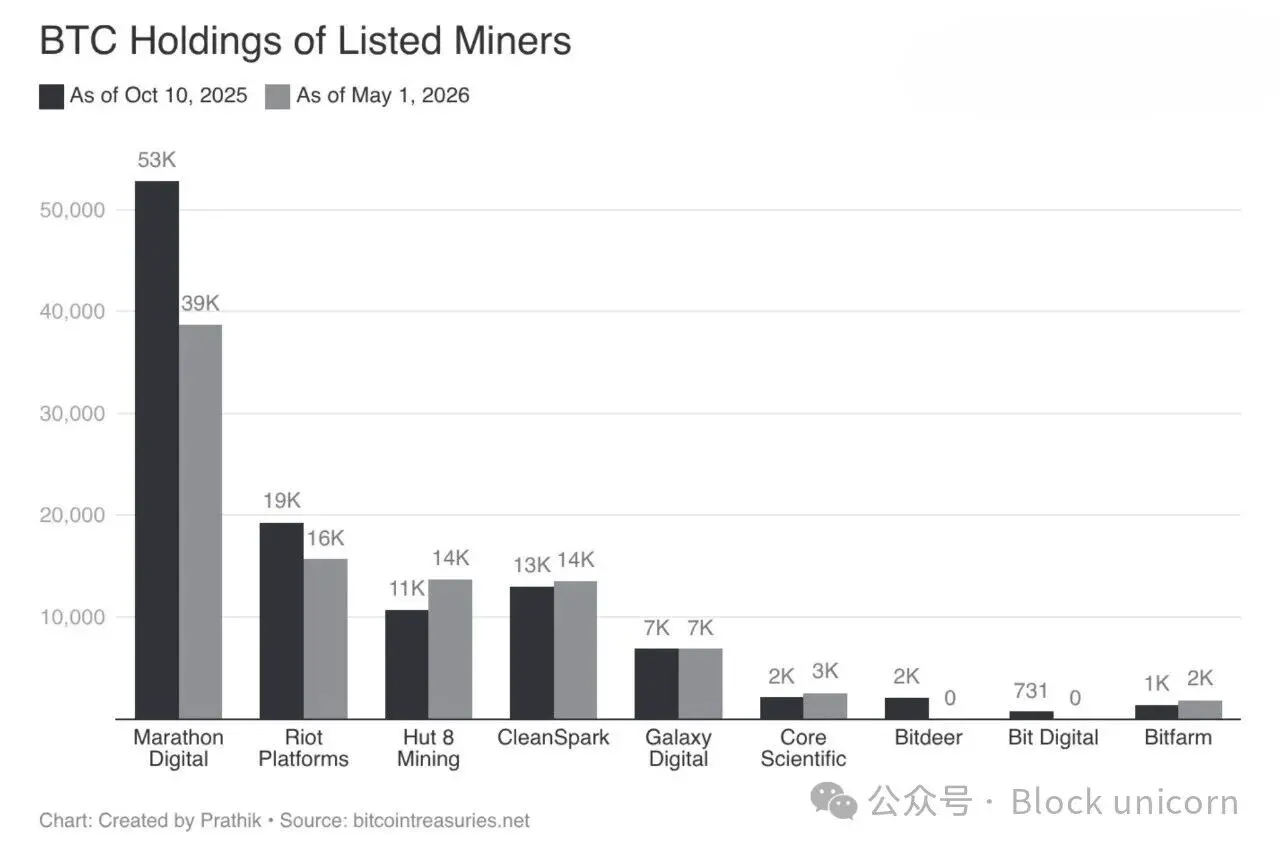
The CEO of Bitfarms admitted frankly: “We are no longer a Bitcoin company.” Ben Gagnon added that Bitfarms would focus on “building the infrastructure for future computing.” CleanSpark took a different approach, viewing its holdings of over 13,000 Bitcoins as productive capital while allocating multiple layered covered call options for them.
Even if Bitcoin does not disappear from their balance sheets, they see it as a resource to strategically drive their infrastructure transformation.
A Blessing in Disguise
Transforming Bitcoin mining facilities into AI infrastructure is no easy task. The conversion cost per megawatt is as high as $8 million to $11 million, which includes new liquid cooling systems, triple power redundancy, high-bandwidth fiber optics, and network upgrades required for GPU training clusters.
However, mining infrastructure, including cooling, power, and computing capacity, is closer than any other industry to meeting the needs of the AI and data center industries. Bernstein analysts noted in a report that existing infrastructure from miners could reduce deployment times by up to 75%.
Analysts are not the only ones holding this view. The deals these mining companies have made in recent months testify to this fact.
IREN signed a contract worth $9.7 billion to provide GPU cloud hosting services at its facility in Childress, Texas, marking the largest single deal between miners and hyperscale data centers to date. Hut 8 secured a $7 billion deal with Google-backed Fluidstack and Anthropic. Cipher Mining signed a contract worth $8.5 billion with AWS and Fluidstack. By the fourth quarter of 2025, Core Scientific's AI hosting business (that is, renting space in data centers to house IT equipment) revenue share is expected to rise from 9% four quarters ago to 39%.
The Surprise Moat
But why would hyperscale data center operators pay mining companies for data center space?
Time is the key to victory. To survive each halving of electricity prices, miners had to chase cheaper power. To endure, they had to take various measures: negotiating long-term power supply agreements, purchasing industrial land in low-cost energy corridors, building dedicated substations, and ensuring direct interconnection with the power grid. Modern mining operations are equipped with specialized high-voltage transformer equipment, redundant power supplies, and thermal management systems designed to operate at full load around the clock.
Perhaps this was not pre-planned, you might say that the miners were just lucky. But who stumbles upon gold while struggling to survive?
Currently, public miners own about 6.3 gigawatts of operational capacity, with another 2.5 gigawatts under construction. In the U.S., the queuing time for data center interconnections in most markets is 5 to 7 years. Microsoft's internal projections indicate that its data center resource shortages will persist into 2026 and beyond.
That is why hyperscale data center operators overlook the mining companies’ lack of expertise in AI infrastructure. Instead, they pay for substations, land-use permits, utility relationships, and grid connections, which often take years to realize elsewhere.
Mining companies can enhance their performance gradually by applying existing equipment to AI applications. MARA recently announced a $1.5 billion acquisition of energy infrastructure, which will increase its total power generation capacity to over 2.2 gigawatts. This enables MARA to convert a depreciated facility into AI infrastructure at costs that other AI infrastructure builders cannot match.
CEO Fred Thiel referred to these assets as ready-to-use infrastructure, which would require up to 10 years and $2 billion to $3 billion in costs if built independently. He stated, “Power is a scarce input in the AI space, and with the planned acquisition of Longreach Energy, we will gain control of an efficient, contracted energy platform.”
The Closing Window
This story contains a trap. Each megawatt of energy transferred from Bitcoin mining to AI infrastructure subsidizes the economic interests of those still engaged in Bitcoin mining. This reduces mining difficulty, making it cheaper for Bitcoin miners to mine a block.
Perhaps some may still choose to use part of their equipment for Bitcoin mining, in case prices go down. But this is limited to those who can afford to replace equipment or reserve costs for mining devices. Not everyone can do that. The reason lies in the fact that those using mining equipment for AI infrastructure cannot switch back and forth repeatedly between mining and AI. Mining is an interruptible process. When electricity prices are high, you can shut down the mining machine. However, AI and high-performance computing cannot do this. Once you lease or commit your computing power, you cannot temporarily cancel the agreement to use that equipment for Bitcoin mining.
However, for most miners, this is not a viable strategy. They have only a short time window to transition, and such luck does not come around often.
Everything has progressed so smoothly that it is almost unbelievable. The Bitcoin halving has squeezed the economic benefits of mining to the limit. The subsequent 10/10 liquidation event forced miners to face the reality: holding Bitcoin during a bear market cycle is not a viable strategy. But the booming AI infrastructure comes at just the right time, providing miners both the motivation to transform and the assets needed for that transformation.
This situation is unlikely to repeat. Mining companies that sign contracts today will enjoy the economic benefits for the next decade, while latecomers will miss out.
That's all for today, see you in the next article.
免责声明:本文章仅代表作者个人观点,不代表本平台的立场和观点。本文章仅供信息分享,不构成对任何人的任何投资建议。用户与作者之间的任何争议,与本平台无关。如网页中刊载的文章或图片涉及侵权,请提供相关的权利证明和身份证明发送邮件到support@aicoin.com,本平台相关工作人员将会进行核查。


