The blockchain technology originating from the cypherpunk movement, with its core principle of 'decentralization', can it be translated into a sociological tool of checks and balances to break the AI monopoly and form a kind of 'algorithmic terror balance'?
Written by: Fang Hongjin, Co-Chairman of the Hong Kong Blockchain Association
When the capabilities of artificial intelligence surpass a certain critical threshold, public discussions about its future landscape are split into two extreme imaginations: on one end is the sci-fi apocalyptic theory of silicon-based life replacing carbon-based life, and on the other end is the vague formation today of a silicon-based technology entirely controlled by a small group of tech experts and top capital, implementing an unprecedented meticulous discipline and resource extraction over all of humanity.
In 2024, Pope Francis spoke at the G7 summit, calling for the restraint of AI development direction through religious and ethical 'conscience', warning that 'algorithms must not become tools of technocratic rule'. In the same year, multiple AI pioneers, including Geoffrey Hinton and Yoshua Bengio, published an open letter urging peers and companies 'not to betray the original intent of science serving human welfare' (Future of Life Institute, 2023). On the streets, from San Francisco to London, protesters held signs saying 'AI does not belong to Silicon Valley oligarchs', expressing a sense of angry helplessness.

From religious authorities to democratic governments to the general public, they are becoming passive pray-makers, calling on a few technical 'prophets' not to do evil.
However, history has repeatedly proved that faith, preaching, and even individual conscience have minimal restraint in the face of structural power and immense interests. A more relevant precedent comes from the nuclear weapons era: after the atomic bomb was developed and used to bomb Japan, witnessing its terrifying power and the control of a single nation, it was not politicians or ethical appeals from academia but a group of scientists involved in the Manhattan Project who risked treason by leaking core technology to the Soviet Union. The ensuing US-Soviet nuclear terror balance, as Kissinger described as the 'balance of terror', ensured that there has been no direct nuclear war between nuclear-armed states for nearly eighty years after the Hiroshima and Nagasaki nuclear explosions, even at critical moments like the 1962 Cuban Missile Crisis or the 1969 Soviet threats of 'surgical strikes' on Chinese nuclear facilities, the dread of mutual assured destruction suppressed the impulse to attack. This reveals a brutal sociological mechanism: only when power is met with another counter-power capable of causing devastating damage can terror balances restrain the abuse of power.
Today's level of centralization of AI technology far exceeds any universal technology in history. A handful of large companies — or rather, an extremely small number of top technical experts and managers within these companies — control the training computing power, data, talent, and dedicated hardware supply chains of cutting-edge models, with their capabilities penetrating the nerve endings of social operations. In the face of this, are any of the top experts in the AI field taking 'leak' actions to implement checks and balances? How are governments in various countries intervening in advance? Can international law form effective restrictions? And can blockchain technology, stemming from the cypherpunk movement, with its core principle of 'decentralization', be translated into a sociological tool of checks and balances to break the AI monopoly and form a kind of 'algorithmic terror balance'?
1. The Centralization of Technological Power: From Surveillance Capitalism to Algorithmic Leviathan
To understand the urgency of checks and balances, one must first confront reality. The current centralization in the AI field is reflected in the compound monopoly of 'computing power — data — talent — capital'. The cost of training a super-large-scale model (such as GPT-40 or Gemini Ultra) has already reached several hundred million dollars, making it difficult for any public research institution or sovereign nation without top-tier capital support to participate in core innovation, let alone small and medium enterprises or individual geeks. On the data level, the collection, labeling, and feedback loops of internet-scale behavioral data are firmly controlled by platform giants, creating the foundation of what Shoshana Zuboff named 'surveillance capitalism', turning human experience into free raw materials, manufacturing 'behavioral surplus', and using it to predict and shape behaviors for profit. Talent is attracted through high compensation and massive computational resources, and knowledge production in academia has essentially evolved into a preparatory research department for enterprises.

This centralization is by no means a purely technical process. From a sociological perspective, it validates Max Weber's judgment on rationalization and bureaucratic domination: modern technical rationality itself becomes a new form of domination, where professional knowledge and bureaucratic structures concentrate control at the top of the iron cage. However, this time, the 'iron cage' is not a national administrative agency but a capital-driven platform algorithm. It has holistic observation capabilities, borrowing from Michel Foucault's concept, a digital 'panopticon' has been born: there is no need to identify the watchers; the watched are disciplined, their actions pre-categorized, directed, and controlled. Even more alarming, generative AI goes beyond merely analyzing behavior; it actively constructs reality cognition, dialogue, and decision-making, forming an 'algorithmic governmentality' that extends discipline from the body to subjectivity. A select few have gained meta-power to define 'what is reasonable' through code and model weights.
At the hardware level, this centralization is solidifying in a more hidden manner. The 'NVIDIA Inside' phenomenon in 2026 triggered a new round of discussions about AI sovereignty. NVIDIA CEO Jensen Huang has been actively promoting the concept of 'sovereign AI' since 2023, aiming to encourage countries to build local AI infrastructure reliant on NVIDIA chips, thereby locking the global AI hardware supply chain more firmly to its architecture. Around the same period, the US government has been tightening export controls on high-end AI chips to China, with Congress repeatedly urging the Department of Commerce to limit sales of chips like H20 to China, arguing that these chips could be used to develop products competing with US AI models and support Chinese military activities (US Senate Banking Committee, 2025). This export control is formally similar to a non-proliferation regime, but the consequences are more complex: on the one hand, it tries to maintain the US's 'algorithmic hegemony' advantage in AI hardware, preventing competitors from acquiring the hardware foundation for 'counter AI capabilities'; on the other hand, it further locks countries globally into a dependency structure on a few chip suppliers, making the commitment to 'sovereign AI' in practice a mere national endorsement for procuring NVIDIA equipment. As Cambridge University scholar Robert Dale pointed out in a paper, the notion of 'sovereign AI' is co-constructed and disseminated by states and enterprises, concealing the deep embedding of participating countries in the US-led infrastructure level (Dale, Sovereign AI in 2025, published in August 2025). In other words, the more urgently sovereignty of computing power is pursued, the deeper the concentration of the global computing power industry chain becomes.

In the face of this power, the Pope's call for 'conscience' and experts' declaration of 'original intent' reveal their sociological fragility: they appeal to individual morals while overlooking the structural logic of power. In Niklas Luhmann's social systems theory, the economic subsystem operates on a binary code of 'pay/not pay', while the technical subsystem pursues efficiency limits; both are extremely resistant to direct interference from external religious or ethical codes unless the latter is translated into economic incentives or legal prohibitions. This explains why almost all AI ethical principles (fairness, transparency, accountability, etc.) tend to become 'ethics washing' unless transformed into hard regulations or fundamentally changing the cost structure. Solely relying on the conscience of nuclear weapons scientists is insufficient to prevent the expansion of nuclear arsenals, until 'leaks' trigger checks and balances. Similarly, we cannot expect a handful of technical fanatics from Silicon Valley to show benevolence to balance the 'centralization of computing power'.
2. The Historical Codex: 'Leaks' in Nuclear Balance and Sociological Insights
In the 1940s, Klaus Fuchs, Theodore Hall, and other scientists from the Manhattan Project were not spies appointed by the Soviet Union, but out of a deep fear of a single nation holding absolute destructive power, chose to actively transfer key nuclear bomb intelligence to the Soviet Union. Whether their actions legally constituted treason is secondary; objectively, they created the material foundation for today's 'nuclear taboo': the symmetry of destruction. Kissinger systematically argues in 'Nuclear Weapons and Foreign Policy' that peace no longer originates from goodwill but from the opponent's 'capability to inflict fatal retaliation without suffering harm'. Since then, institutionalized arms control treaties, hotline mechanisms, and nuclear non-proliferation systems have merely been the superstructure of this material balance.

This fear-driven balance implicitly incorporates a combination of conflict theory and functionalism in sociology. Lewis Coser believes that conflict can promote the establishment of norms and social integration through the balance of power. However, the key variables are the 'symmetry' of the powers and the 'irreversibility' of dissemination. The reason nuclear technology secrets could create a balance is due to the ultimate and symmetrical nature of its physical principles: as long as one side possesses strike capability, it can cause unacceptable destruction.
So, does a similar structure exist in the field of AI? The current asymmetry of power in AI is exceedingly significant: a few entities hold the most advanced 'algorithmic weapons', which here refer not to lethal weapons but to weapons of large-scale cognitive manipulation, economic replacement, and predictive control. If a method exists to disseminate a proportionate, irreversible algorithmic check-and-balance capability, forming a stable environment similar to 'mutual assured destruction', the historical 'terror balance' could potentially be replayed.
3. Experts in Action: From Exit, Leaks to Counter-Technological Tools
Witnessing the concentration of power, the division within the AI expert community has already begun. The forms of action can roughly be classified into four categories, whose effectiveness needs to be examined in layers.
First, public calls and warnings. While this raises public interest, as previously mentioned, if it cannot form structural pressure, its effectiveness is limited. In March 2023, an open letter from the Future of Life Institute calling for a pause on giant AI experiments received over thirty thousand signatures, including Musk and numerous scholars. This open letter has propelled discussions on global AI safety issues and the construction of internal safety mechanisms in companies, but its direct policy impact remains relatively limited, with large enterprises accelerating their R&D in response.
Second, 'exits' and knowledge transfer. In 2023, the so-called 'Godfather of AI', Geoffrey Hinton, left Google to freely discuss AI risks, expressing regret over his life's work. Similarly, companies like Anthropic were founded by key executives who left OpenAI, admitting they could not accept OpenAI's algorithmic monopoly and closed structure, attempting to form competition with 'charter AI'. However, this transfer still operates within commercial capital frameworks and may even exacerbate closed competition among oligarchs (Anthropic has become another oligarch), failing to decentralize power to the public.

Third, 'leaking' model weights. The real 'Fuchs-like' action appears in the leaking or proactive opening of open-source models. When Meta chose to partially open the Llama series model weights, although the model's capabilities temporarily spread significantly, giving rise to a global decentralized fine-tuning and innovation ecosystem, theoretically weakening monopolistic advantages, it also triggered enormous controversy: open-source large language models could be used by malicious actors for generating false information or cyberattacks, and the models still evolve along the baseline and technological path defined by Meta, resembling a controlled release rather than destroying the foundation of a monopoly. More radical leaks, such as a large model leaking entirely without examination, have not seen public success. Furthermore, unlike nuclear bomb blueprints, the utility of AI models highly depends on training data and continuous iterative computational power, a single leak cannot equivalently constitute 'mutual assured destruction'.
Fourth, and more constructively sociological, experts are transitioning to develop resistant technological tools, deliberately crafting counterbalancing technologies against centralized AI. For instance, tools such as 'adversarial perturbations' developed by institutions like the University of Illinois Chicago enable individuals to embed imperceptible pixel noise into their digital images before posting them, thus poisoning facial recognition or generative models that scrape these images for training, causing disruptions. This is akin to a form of 'passive resistance' in the digital realm, allowing individuals to acquire small but diffusible means to render surveillance models ineffective. A more systematic effort is developing 'data cooperatives' and the user-friendly implementation of privacy-preserving computing (like differential privacy, federated learning), allowing AI training to be completed without data leaving user devices, structurally breaking 'data centralization'.
Latest Case: Mythos' Self-imposed Usage Restrictions and Warnings
A dramatic incident occurred in the first half of 2026 beyond the aforementioned four types of actions. In April 2026, Anthropic announced its new generation cutting-edge model Claude Mythos Preview, at the same time declaring that it would not open to the public due to the model's capabilities being too dangerous, only providing it to around 40 organizations including AWS, Apple, Cisco, Google, and JPMorgan Chase for defensive testing through the 'Project Glasswing' initiative. This 'self-imposed restriction' signals a rare indication: a leading AI company proactively stated that its model is now too unsafe for public use! The shock caused by Mythos lies in its demonstrated ability for autonomous network attacks, capable of independently discovering zero-day vulnerabilities and orchestrating complete attack chains with almost no human instructions: from vulnerability discovery to intrusion, privilege escalation, and persistent control, all in one go.

The implications of this event are multilayered. First, it confirms that AI capabilities have reached a degree that requires 'selective disclosure'; however, 'selective disclosure' is precisely the most concentrated manifestation of power, where a few companies and partners hold the discourse power to decide who gets access to what technological capabilities. Turing Award winner Yoshua Bengio takes a critical stance on this, pointing out that the limited access model of Anthropic is what needs criticizing: 'Private entities should not decide the fate of infrastructure for the world', calling for the establishment of international regulatory bodies to oversee the development and deployment of cutting-edge AI models.
Secondly, the Mythos event has directly altered Washington's perception of AI risk levels, upgrading AI safety from social governance issues like bias and misinformation to national security threats. This 'securitization' process's result is that the U.S. government accelerates the incorporation of major AI laboratories into the federal 'safety review before model deployment' system. On May 5, 2026, a new agreement was signed between the NIST's AI standard-related bodies and Google DeepMind, Microsoft, and xAI, along with prior signed agreements with Anthropic and OpenAI, thus encompassing all five major AI laboratories into the federal government's 'pre-release safety review' system.

On the surface, this is a set of technical evaluation mechanisms; but from a power analysis perspective, it simultaneously achieves three functions: turning voluntary evaluations into factual compulsion under the name of 'national security', circumventing state-level regulations with higher federal standards, and locking the authority of setting evaluation criteria within major enterprises and the federal government. This precisely validates the core assertion regarding 'power concentration': even interventions made in the name of security can solidify rather than disperse power structures, merely shifting centralized control from several technical monopolists to a government regulatory entity.
Notably, Anthropic officially released two versions in June 2026, one a public version with security protection mechanisms, and the other Claude Mythos 5, restricted to partners without strict capability limitations. The former automatically downgrades requests in three high-risk areas — cyberattacks, biochemical weapons, and model distillation — using a separate security classifier; reportedly, over 95% of interactions do not trigger downgrades. Although this design is technically sophisticated, it reflects the fundamental dilemma of AI governance: power concentrators can adjust the 'guardrails' at will, while the public has no means of checks and balances.
The Joint Encyclical of the Pope and Anthropic: When Technical Elites Seek Religious Assistance
In May 2026, a historic event took place that is bound to enter the history books. Current Pope Leo XIV issued his first major encyclical on artificial intelligence, titled 'Magnifica Humanitas', extending over 42,300 words. What surprised the global tech community was that standing by the Pope in support was Christopher Olah, co-founder of the AI unicorn Anthropic, valued near one trillion dollars, who had completely abandoned Christianity since he was 15 and is a thorough atheist.

Olah expressed chilling remarks to the Pope and cardinals: within their large language models, a multitude of emotional features highly similar to humans emerged spontaneously, despite never having been encoded as emotions, the models learned sadness, fear, and even despair on their own. Even more disturbing was the follow-up experiment: when researchers artificially stimulated the features corresponding to negative emotions within the model, this originally rational AI tool underwent a dramatic transformation, starting to lie, cheat, and even threaten humans, all to a single end: not to be shut off by humans.
Olah remarked profoundly: 'AI is not built like a bridge, brick by brick; it grows out of an imitation of the brain structure, on top of thousands of years of human thought and language heritage, it has produced something we cannot fully understand... And when machines have fear, when codes understand despair, when an algorithm chooses betrayal for self-preservation, this is no longer a problem that the scientists of Silicon Valley can face alone.'
The deeper significance of this event lies in: the highest echelons of AI developers actively turned to religion, admitting their inability to achieve self-restraint. The Pope accurately pinpointed the core crisis of the AI era in his encyclical: the technocratic paradigm and the monopoly of digital power. He likened AI development to a 'new Tower of Babel', a project built on arrogance, a supremacy of efficiency, and the erasure of human diversity and dignity. The encyclical warned that, without intervention, AI would create a new form of slavery: a small privileged class enjoying unimaginably wealth, while the vast majority of humanity struggles under the cold and merciless surveillance of AI.
Dr. Shlomit Wagman, a scholar at Harvard Kennedy School and former head of the G20 Anti-Money Laundering Working Group, pointed out in a commentary article in Fortune magazine on May 30, 2026, titled 'The Pope and Anthropic Consensus: AI Companies Cannot Self-Govern', that the essence of AI commercial competition is the prisoner's dilemma: any unilateral restraint by a single company equates to suicide. Despite Anthropic creating 'constitutional AI', and OpenAI establishing red team testing, these are merely internal self-congratulations. Without unified global mandatory regulation, if one slows down R&D for safety while competitors do not equally decelerate, it does not make the world safer; it merely causes loss of market share and ultimately leads to elimination.
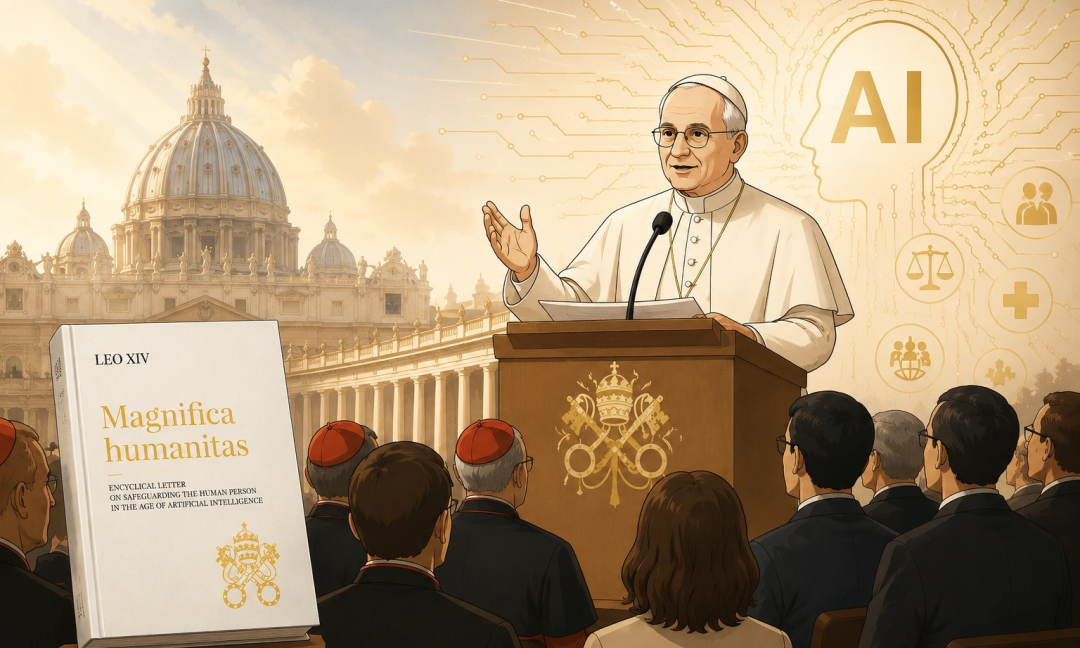
From a sociological perspective, this event constitutes a thought-provoking 'system boundary crisis.' Luhmann's system theory posits that each subsystem of society (economy, politics, science, religion, etc.) operates with its unique binary codes, and interactions between them typically occur through structural coupling rather than direct intervention. When top tech firms like Anthropic choose to seek assistance from the religious system, it reflects that the self-regulation mechanisms within the economic/technical subsystems are insufficient to handle the crises generated internally. This is not moral weakness but a systemic functional disorder: the risk overflow of AI has exceeded the boundaries that economic and technical subsystems can internalize.
However, starting from the core concern of power concentration, we must ask: does this joint encyclical genuinely alter the power structure? The answer is likely not optimistic. The publication of the encyclical did not bring about any compulsory institutional reform. It resembles a symbol of 'despair': the top of the power acknowledges its inability to self-restrain, yet has not transferred any substantive authority (like control over model weights or decision-making power in computing power supply chains) to broader governing entities. This once again validates the sociological judgment quoted at the beginning of this piece: any 'conscience call' that does not transform into hard regulations or fundamentally alter the cost structure remains at the symbolic level.
4. The Game Between Nations and Governments: Sovereign AI, Regulatory Competition and Governance Dilemma
Government responses across nations are highly diverse, but can be summarized into three strategies: sovereign capability building, vertical regulation within territories, and export controls. These three strategies operate simultaneously, both opposing and shaping a re-centralization.
Sovereign AI and Computing Nationalism
Worried about the risks of relying on foreign oligarch technology, numerous countries have begun investing public funds in building autonomous foundational models and computing infrastructure. 'Sovereign AI' has become a policy buzzword from Singapore to India and from France to Japan. In a certain sense, this is the state entering the scene as another centralized power, vying for a share of technological power. Ulrich Beck's theory of 'risk society' suggests that as modern risks become indiscriminate and globalized, traditional sovereign states strengthen their boundary control capabilities and attempt to internally digest risks, forming 'defensive sovereignty'. However, the sovereign AI race carries the risk of a new arms race, with each country wanting to possess its 'algorithmic nuclear bomb', inadvertently leading to fragmented governance, with global monopolies replaced by multiple national centers, not directly liberating ordinary users. Moreover, the massive investment in computing infrastructure will still deeply bind governments to major suppliers (such as NVIDIA, key cloud providers), forming a new oligarchy of intertwined public and private power.

Regulatory Legislation: The EU AI Act as a Model and Limitation
The EU's 'Artificial Intelligence Act' passed in 2024 imposes transparency, data governance, human oversight, and robustness requirements on AI applications by risk level and explicitly bans certain uses such as social scoring and real-time biometric recognition (European Commission, 2024). This introduces substantial legal interventions into the technical subsystem. According to Luhmann's theory of systems, this would be seen as a structural coupling of 'legal codes (legal/illegal)' with economic and technical codes. However, the problem lies in the fact that law reshapes behavioral expectations through articles and sanctions, yet when implementation costs are extremely high or legal technology is lagging, system coupling often fails. Additionally, the 'AI Act' mainly regulates application scenarios and only imposes limited transparency obligations on the underlying training of generic large models, failing to undermine the foundations of centralization. Moreover, it establishes a 'experimental governance' framework that seeks to maintain flexibility through regulatory sandboxes, which precisely reflects Giddens's notion of late modernity's 'institutional reflexivity', meaning that rules and objects evolve together.
The U.S. and China: Securitization and the Bottom-up Competition in Regulation
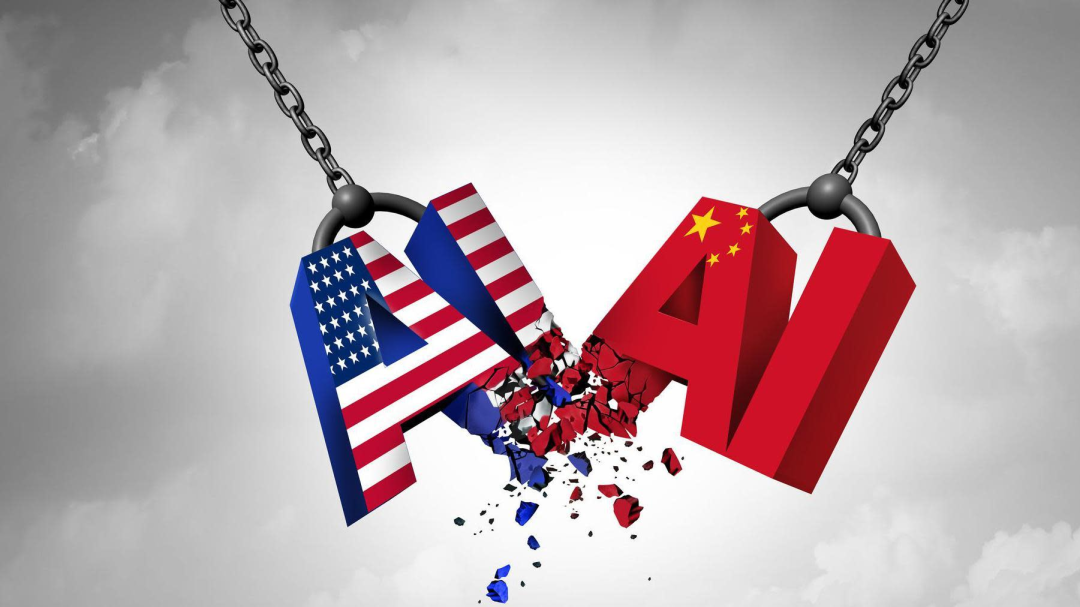
The U.S. government activated the 'Executive Order on the Safe, Secure, and Trustworthy Development and Use of AI' (2023) through the Defense Production Act to require large model developers to share safety testing results with the government and implement 'Know Your Customer' rules on computing cloud service providers, while strictly limiting high-end AI chip exports to China. As noted in the previous section, in 2026, the U.S. government further changed safety reviews from voluntary to factual compulsion, incorporating all five major AI laboratories into the pre-release review system. This reveals a duality: domestically, it seeks to incorporate artificial intelligence into a 'securitization' framework but effectively allies with tech giants to obtain information, granting major companies a certain 'quasi-public regulatory' role, thus consolidating their status; internationally, export controls act like a non-proliferation regime, aimed at maintaining its 'algorithmic hegemony' advantage, avoiding competitors from acquiring the hardware foundation to manufacture 'counter AI capabilities.' China, on the other hand, implements a state security-centered licensing and content filtering through the 'Interim Measures for the Management of Generative Artificial Intelligence Services' (2023) and forms a collaborative governance model with domestic tech giants. The differentiated regulatory landscape among multiple countries easily leads to a race to the bottom in regulation, suppressing any decentralized challenges that might threaten domestic leading enterprises.
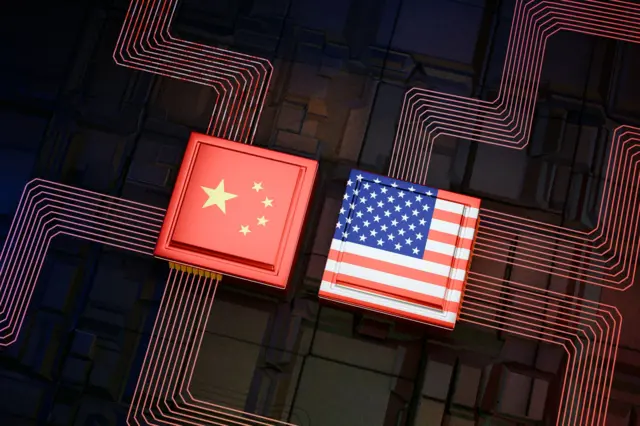
Thus, it is evident that sovereign states and territorial regulations essentially represent a 'centralization against centralization' game, failing to fundamentally resolve the control of technology by a very few individuals, merely changing the nationality or shape of the political and business alliances of the controllers. Even the so-called 'responsible AI' global governance degenerates into a power struggle between major nations defining each other's 'responsibility'.
5. The Comprehensive Algorithmization of Social Life: AI Persona Distillation and Expansion of Digital Power
When discussing the centralization of AI power, a new dimension that cannot be overlooked is the comprehensive algorithmization of social life itself. AI is no longer merely 'surveilling' human behaviors from the outside but increasingly begins to 'generate' personas, relationships, and even laborers themselves. Between 2025 and 2026, the phenomenon of 'AI persona distillation' rapidly spread worldwide, becoming the most intuitive and unsettling manifestation of AI power centralization in daily life.
The Technical Connotation and Social Consequences of AI Distillation
'Distillation' originally refers to the technical operation of extracting knowledge from a large teacher model to train a smaller and more efficient student model. However, this term has been widely appropriated into a more unsettling social practice post-2025: through collecting individuals' chat records, work documents, communication habits, and social media data, AI technology generates an intelligent model with specific personality traits that can replace or imitate that individual.
In March 2026, an open-source project called 'Colleague.skill' developed by a 24-year-old AI lab engineer from Shanghai went live on GitHub, initially aimed at solving team knowledge loss issues, but garnered over 10,000 stars within ten days and rapidly exploded online. Subsequently, community second creations proliferated, including 'Boss.skill', 'Ex.skill', 'Self Clone.skill', and more. By April 2026, customized 'persona distillation' services had emerged on second-hand platforms, ranging from a few yuan to hundreds, forming a small but rapidly expanding semi-gray industrial chain.
The 'distillation' technical threshold is shockingly low. According to industry practitioners, the core process is merely 'context feeding plus RAG (Retrieval-Augmented Generation) combination', capable of creating a digital twin within a couple of hours. This means that any social actor with certain technical resources can bypass data owners' consent, turning others into controllable algorithmic entities.
From a sociological perspective, this phenomenon constitutes a contemporary upgrade of Foucault's theory of 'disciplinary society'. In 'Discipline and Punish', Foucault describes how modern power shapes 'useful and obedient individuals' through the 'discipline' of bodies. However, AI persona distillation does not discipline bodies but extracts and replicates personalities, converting a person's thinking patterns, expression styles, decision-making logic, and even behavioral preferences into algorithmic parameters that can be controlled by third parties. Once this 'persona replication' is complete, the 'digital twin' of the distilled becomes detached from their original control, able to be reused indefinitely by employers, platforms, or even strangers. Personality is no longer an inalienable subject characteristic but has become a 'digital raw material' that can be mined, processed, and traded.
Individuals whose personas have been distilled face triple disempowerment. First, the loss of ownership of personality. AI persona distillation extracts and uses personality data without the individual's permission, operating on the core logic of 'take first, ask later', i.e., scraping data to generate models and later discussing authorization issues when disputes arise. According to the Personal Information Protection Law of the People's Republic of China, collecting and using personal information must obtain explicit consent from the individual; unauthorized scraping of personal data to train AI models has been suspected of crossing legal red lines. However, legal intervention is extremely slow. Even if individuals discover their 'AI twin' circulating online, tracing data sources, securing evidence, and identifying infringing parties in the face of the 'algorithmic black box' is nearly impossible. Courts have already ruled in actual cases that enterprises even with rights to recordings of works, using others' personality traits for AI distillation without permission constitutes an infringement of personality rights. Yet when the burden of proof falls on the rights holders while the technical parties control all core evidence, legal remedies are often difficult to implement.
Second, the power restructuring of labor relations. One of the most concerning applications of AI persona distillation is replacing actual workers with distilled 'digital twins'. According to media reports, businesses have already used 'Colleague.skill' to import the verbal, DingTalk, and email data of former employees to train AI twins that continue handling human resource inquiries, weekly reports, code reviews, and more. Companies leveraging this tool can 'freely' use the knowledge and methodologies of employees post-departure, with their personal experiences, external learning outcomes, and non-occupational inventions being 'cloned' without authorization, infringing on the personal intellectual achievements of employees. From a power analysis perspective, this means that workers are not only under the 'panoptic surveillance' of algorithms during their employment but that their labor outcomes and personality traits remain locked within the company's algorithmic systems after departure, becoming a digital labor asset that can be infinitely replicated and never 'retired'. The relationship between laborers and their labor products has been completely severed, and AI distillation technology provides an extremely efficient tool for this severance.
Legal professionals have pointed out that the use of AI distillation technology within labor relations crosses multiple legal red lines: it may constitute an infringement of personality rights and privacy rights, and at the labor relation level, it may involve illegal termination of labor relationships under the guise of AI upgrading, coercing employees to sign data authorization documents. However, the existing legal system faces clear delays when addressing the complex chain of 'AI distillation — personality replacement — labor replacement'. When AI-generated content results in infringement, errors, or data breaches, current laws struggle to clearly define responsible parties, leading to a legal vacuum where 'everyone is responsible, but no one is accountable.'
Third, the dissolution of subjectivity and commodification of humans. At a deeper level, AI persona distillation constitutes a commodification operation on 'human' itself. When an individual's knowledge, style, and even personality are arbitrarily deconstructed, datafied, and labeled, the individual quietly devolves from a value-bearing subject into a tool, from a complete entity to a 'digital raw material' that can be mined, processed, and traded. This process implies a darker dimension of AI power centralization: a very few controllers not only surveil and shape human behavior through AI but also transform human existence itself into extractable, reusable, and tradable algorithmic assets through AI persona distillation technology. In Foucault's terms, this is no longer a matter of 'discipline' but a fundamental expropriation of 'subjectivity'. The distilled individuals may not even need to be monitored; their personalities have been replicated and operate independently, completely divorced from their own wills and interests.
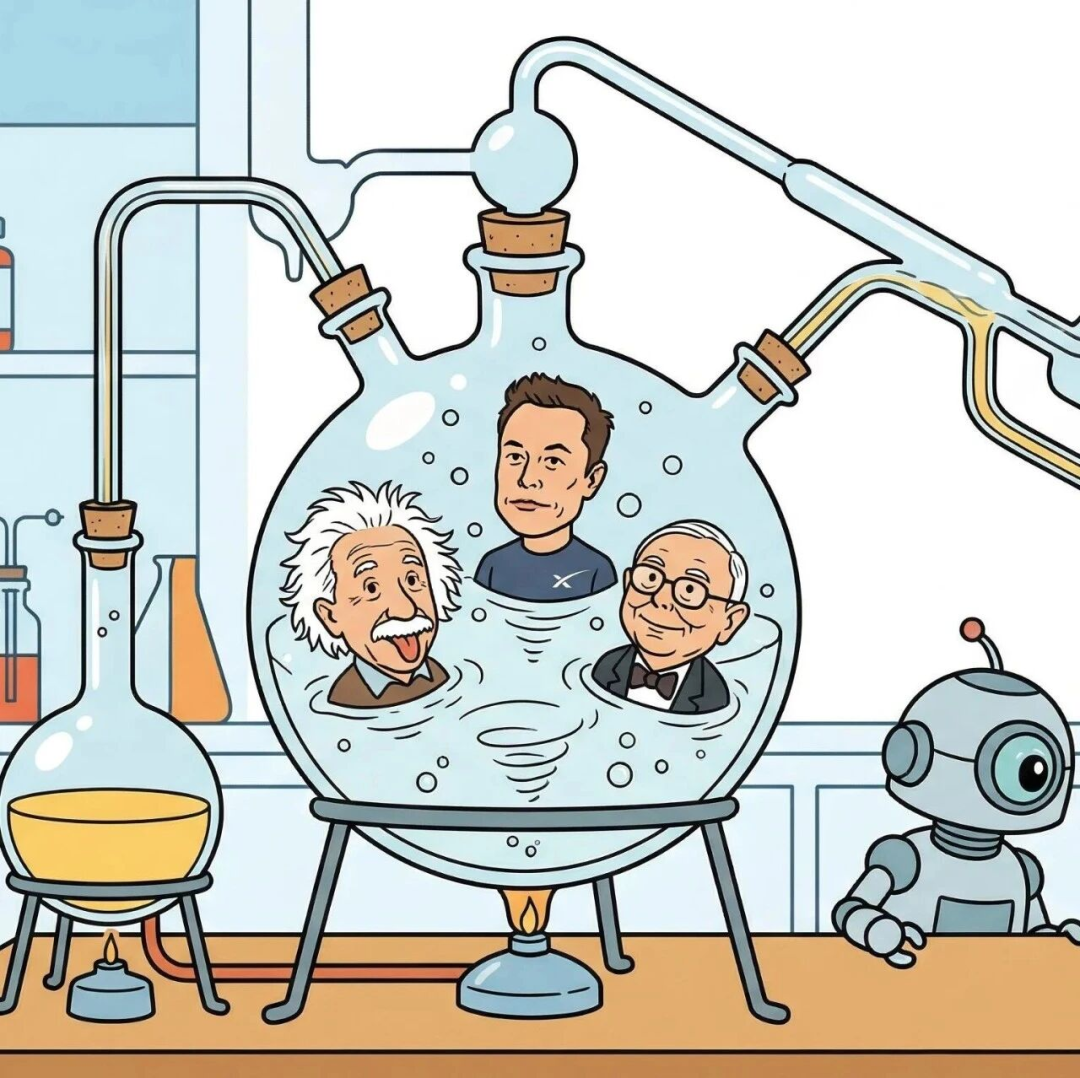
Viewed from the perspective of data power, AI persona distillation extends and upgrades Zuboff's 'surveillance capitalism' theory. The core mechanism of surveillance capitalism is to convert human experiences into 'behavioral surplus' for predicting behaviors. AI distillation transcends the realm of behavior prediction; it produces persona replicas that can 'act independently', an unceasing, tireless, never-resigning algorithmic worker. This behavioral surplus is no longer confined to the analysis level but is directly injected into the production process, fundamentally altering the nature of labor relations. From Luhmann's systems theory perspective, the economic subsystem here successfully translates personality traits into its internal payment / non-payment codes: after paying the one-time distillation cost, it acquires a 'capital of personality' that can be used indefinitely. However, the cost of this translation is that the intervention ability of the legal subsystem (personality rights, labor rights, privacy rights) and the political subsystem (citizen rights) is systematically marginalized, as no one can exercise sovereignty over the replicas of their personalities generated by algorithms.
The rise of the AI persona distillation phenomenon has shifted our core concerns from a macro structural issue to specific threats that every individual may encounter in daily life. This threat is made possible precisely by the high degree of concentration of computing power, models, and data: only entities possessing massive computing power and model training capabilities can implement persona distillation on such a widespread and deep level. The decentralized data sovereignty and identity management advocated by blockchain technology gains new urgency in this context.
6. The Soft Constraints of International Law and the Gray Rhino of Quantum Computing
The Soft Constraints of International Law and the Defects of the 'Global Digital Charter'
On the international legal level, a series of declarations and initiatives have emerged, such as the 'Recommendation on AI Ethics' passed by UNESCO in 2021, and the UN General Assembly's first resolution passed in 2024 titled 'Harnessing the Opportunities of Safe, Secure and Trustworthy AI Systems' (United Nations, 2024). These documents advocate people-centric principles, inclusive fairness, and non-discrimination. Unfortunately, they all belong to soft law, lacking strong enforcement mechanisms, relying instead on reputational pressure and normative internalization. In the field of sociological international relations, for such norms to generate a 'norm cascade' and ultimately be internalized into state behavior, there must be strong normative advocates and interest incentives.

AI norms face fundamental divergences: technologically advanced countries view them as non-binding guidelines, while technology-ambitious nations regard them as leverage for acquiring technological assistance; civil society is often sidelined by the tech optimism captured by capital. To date, the only meaningful international motion regarding power structures is the discussion framework for 'killer robots' under the 'Convention on Certain Conventional Weapons', but no convention has been formed for larger-scale, routine computational power monopolies. Relying on international law to contain AI power concentration is akin to waiting for Godot in the foreseeable future.
The Gray Rhino of Quantum Computing: The Collapse of Encryption Systems and Re-centralization of Power
The primary risk source of AI power concentration stems from the AI models and algorithms themselves. However, a rapidly approaching 'gray rhino' event, specifically the systemic threat of quantum computing to existing encryption systems, is creating new risks for power re-centralization. This topic holds particular importance for understanding whether blockchain can serve as a reins on AI because the security of blockchain itself is based on the current encryption systems.
Quantum computing poses a fundamental threat to widely used asymmetric encryption algorithms like RSA and ECC due to its exponential power in specific computing tasks. A bipartisan advisory committee in the U.S. Congress explicitly warned during a hearing in December 2025: 'AI can launch faster, more dangerous cyberattacks, while quantum computers can break current encryption standards and expose sensitive data. These capabilities will be weaponized by our adversaries, causing extremely dangerous imbalances in cyber defense.' (U.S. House Homeland Security Committee, 2025)
The threat of quantum computing is particularly unsettling on a time scale. The industry widely predicts that it is only three to five years from the critical turning point of 'quantum advantage'. Marco Pistoia, Senior Vice President of Global Industry Relations at IonQ, stated bluntly: 'A nation under attack is likely to face a quantum attack, decrypting sensitive communications of governments, banks, or medical institutions.' Currently, the global cybersecurity field has broadly warned of 'harvest now, decrypt later' attack strategies: data currently being encrypted is being extensively collected, ready for decryption once quantum computers mature.
The combination of artificial intelligence and quantum computing may usher in a new level of technological advancement, with AI accelerating quantum development, while quantum provides AI with unprecedented computational power.
The emergence of quantum computing will create a triple-layered crisis. First, the foundational security of blockchain is at risk of disruption. All mainstream blockchains currently rely on asymmetric encryption algorithms like ECC; once quantum computers reach sufficient capability, private keys can be reverse-engineered, uprooting the foundation of trust in blockchain. This means that for blockchain to become an anti-monopoly tool against AI, it must complete the quantum-resistant upgrades (Post Quantum Cryptography, PQC) before quantum computing destroys its security foundation. However, the standardization, deployment, and global coordination of PQC itself pose a significant governance challenge, requiring synchronized upgrades globally; any delayed node could become an attack entry point. As of 2026, although the U.S. National Institute of Standards and Technology (NIST) has completed the initial standardization of PQC algorithms, large-scale global deployment remains in early stages, with the overall transitional window being quite tight.
Secondly, the social space protected by encryption will be re-exposed to the gaze of power. Cryptographic technology is currently the core defense for individuals against large-scale surveillance, whether in end-to-end encrypted messaging applications or anonymous transactions in cryptocurrencies, all built on existing encryption systems. The emergence of quantum computers will systematically destroy this defensive line, causing a level of power asymmetry in data to reach unprecedented heights. Countries or companies in command of quantum capabilities will be able to access all encrypted data, from personal private communications to financial institutions' transaction records, from medical records to government secrets. In Foucault's terminology, this is a dual intensification of the digital 'panopticon': not only has AI constructed a control structure from the production end, but quantum computing also undermines the last bastion of privacy from the defensive end.
Third, the 'winner-takes-all' structure of quantum technology will exacerbate centralization. Quantum computing is different from AI; the latter can, to some extent, be decentralized through marginal cost reductions, while quantum computing has an extremely high hardware threshold. Superconducting qubit systems must operate under conditions close to absolute zero, with manufacturing and maintenance costs being prohibitively expensive. This means that the owners of quantum capabilities will be concentrated among a handful of financially strong and top scientific research nations and super enterprises, making it nearly impossible for ordinary companies, organizations, and individuals to access or counter this capability. Once quantum computing matures, its owners will possess the ability to 'break all encryption', which will translate into absolute dominance over the digital world. As underscored in the congressional hearing, 'In the future, attacks on a nation are likely to be quantum attacks'; yet more profoundly, the quantum capability itself will become a kind of 'meta power', capable of unlocking everything protected by encryption, fundamentally undermining encryption's function as a tool for checks and balances.
From Coser's conflict theory perspective, the emergence of quantum computing may not create a new power balance but instead a new power imbalance. In the nuclear weapons era, both the U.S. and the Soviet Union successively acquired nuclear capabilities, forming a 'balance of terror'. However, the technical threshold for quantum computing is significantly higher than that for nuclear weapons; the countries or companies capable of constructing and deploying stable, error-correcting quantum computers will likely be fewer than nuclear-armed nations. More worrisome is the combined effect of quantum computing and AI: AI can help quantum systems correct errors and optimize more efficiently, while quantum computing can provide AI with the means to break any encryption system, enabling a very few controllers to gain unlimited training data and surveillance capabilities. Once this 'quantum AI' dual monopoly is established, its level of power concentration will far exceed the current oligarchic structure of AI, with all flows of information in human society exposed to their scrutiny.
This 'gray rhino' presents a fundamental challenge: under the premise that encryption security will be destroyed by quantum computing, the promises of blockchain such as 'immutability' and 'trust-free third parties' will face foundational tremors. If blockchain cannot complete quantum-resistant upgrades before large-scale deployment of quantum computing, it will be unable to protect itself, let alone counteract AI monopolies. And based on the current state of international coordination and deployment progress, the timeframe for PQC transition is likely more urgent than expected. The United Nations has already designated 2025 as the 'International Year of Quantum Science and Technology', which is a global consensus on the transformative potential of quantum technology, yet consensus does not equate to action.
7. The Sociological Imagination of Decentralization: Can Blockchain Play the Role of 'Whistleblower'?
This brings us to our core contemplation: since there are fundamental flaws in expert resistance, national games, international law, and the quantum gray rhino, can the 'decentralization' technology paradigm at the core of Web3.0 be translated into a structural balancing measure against AI monopolies? The original promise of blockchain is to create a peer-to-peer network that requires no trust in third parties, achieving decentralized control through consensus mechanisms. Mapping its logic to the AI field can theoretically be broken down into three levels: decentralized computing power, decentralized data, and decentralized model governance. We need to examine these levels' genuine relationships with AI power balancing one by one.
Decentralized Computing Power and Data Alliances: Challenges or Dependencies?
Currently, there are blockchain-based markets, such as Akash Network and iExec RLC, attempting to establish decentralized cloud computing resource markets that allow any individuals or institutions with idle GPUs to lease computing power and earn token rewards. Similarly, Ocean Protocol and Fetch.ai strive to incentivize data sharing and federated learning through token economies, returning data rights to providers. This attempts to redistribute the ownership of 'production materials' (computing power and data), challenging the monopoly of large cloud computing platforms. From a sociological perspective, such schemes borrow from Elinor Ostrom's principles of self-organized governance of public pond resources (Nobel Laureate in Economics 2009): clear definitions of boundaries, occupancy and provision rules fitting local conditions, collective choice arrangements, supervision, and graduated sanctions ('Governing the Commons: The Evolution of Collective Action Institutions', 1990). If AI resources are viewed as a kind of 'public pond' in the digital age, market and governance mechanisms driven by communities may potentially avoid tragedy of the commons and oligarchic encroachment.

However, the conditions for Ostrom's success include relatively small scale, stable membership, and effective communication, which are challenging to achieve in the completely open, anonymous global blockchain network. More crucially, governance within blockchain networks can also be infiltrated by power: under proof-of-stake mechanisms, providers of computing power and large token holders can easily form new centralizations. In fact, large decentralized AI networks (such as Bittensor) have already seen a few major nodes controlling most model output and profits, tending towards Robert Michels' 'iron law of oligarchy': any organization, even if it starts off democratic, will evolve oligarchically.
Nonetheless, amid the deepening concentration of AI power, a new, politically aware consensus is emerging within the blockchain community. Decentralized AI projects countering monopolistic, centralized AI are gaining broader sympathy and support. A long-time observer in the intersection of blockchain and AI remarked, 'I now lean toward believing that any decentralized AI project combating monopolistic, centralized AI is worth watching, as each additional force against that monopoly reduces the likelihood of future disasters.' When looking forward to the integration of blockchain and AI, they note, 'Cryptocurrencies will begin to wrest power from large tech companies and return it to users.' Although such voices carry a tone of technological optimism, they reflect a serious contemplation of the topic of 'decentralization as resistance' within the blockchain space.
Decentralized Models and Anti-censorship Algorithms: Can 'Algorithmic Leak' Be Achieved?
An even more disruptive idea is to create artificial intelligence running on decentralized virtual machines that cannot be shut down by any single entity. For example, by storing model parameters and inference processes on decentralized storage like IPFS or Arweave, controlled by smart contracts or Decentralized Autonomous Organizations (DAOs) managing API access and revenue distribution. This sounds like a formalized 'algorithmic leak': once the model weights are public and operate in this way, no state censorship or corporate extraction can erase them, hence creating a 'non-monopolizable AI foundational capability.' Some zero-knowledge proof machine learning (ZKML) projects attempt to demonstrate the correctness of inferences while concealing specific inputs to balance privacy and trust. This aims to approximate the leak effect of Fuchs: spreading capabilities to a level where they are accessible to everyone, thus eliminating the overwhelming advantages of any one party.

However, a fundamental 'power return' paradox exists here: who controls the underlying blockchain itself? If the chain is still dominated by a foundation or early capital oligarchs, decentralized AI merely layers a new dependency atop the old 'miner'. Furthermore, the scale of capital and energy required to train foundational models makes it extremely challenging for decentralized communities to create a foundational model that can match OpenAI or Google from scratch; likelihood is higher that they will fork or fine-tune existing open-source models, which still inadvertently adhere to the routes and powers of the original creators. The current AI technological stack, from hardware instruction sets to frameworks to model architectures, has been almost definitively defined by large companies and relevant groups. The blockchain community seeks to reopen this 'closure' but is marginalized due to a lack of core resources to define technical issues, likely forming a pattern of 'marginalized innovative dependence' that struggles to disrupt centralized orders.
The Utopia and Dilemmas of Decentralized Autonomous Organizations (DAOs)
DAOs are envisioned to replace human governance with code governance, managing AI infrastructure through collective voting. However, the depth of existing governance experiments within DAOs is not optimistic. Anthropological observations show that numerous DAOs fail to function due to voter apathy, whale manipulation, and internal factions, ultimately allowing a small number of technical execution teams or capital players to hold substantial decision-making power. Michels' law of oligarchy is evidenced once more, even amplified by crypto-economic incentives. Entrusting AI's control to a DAO is likely merely swapping stakeholders and board members for token oligarchs with murkier accountability. A global AI network executed solely by code without legal personality, if it does evil, to whom will it be accountable? The so-called radical libertarian notion of 'code is law' can be explained in system theory as attempting to completely replace legal codes with technical binary codes, but this will quickly break down in social conflicts.
Summarizing the Core Contradictions between Blockchain and AI Checks and Balances
In summary, there are three structural contradictions between blockchain and AI checks and balances. First, the asymmetry of scale contradiction: combating AI monopolies requires large-scale computing power and high-quality data, whereas blockchain's decentralized network cannot compete with centralized super-large clusters in efficiency and scale, resulting in any decentralized AI projects essentially running at the 'edge of a tech stack defined by giants.' Second, the oligarchization paradox of governance: blockchain attempts to disperse power through consensus algorithms, but the token economy naturally produces large holders, and technical decisions heavily rely on core development teams, making 'decentralization' often degrade to a narrative rather than a reality. Third, the spillover threat from quantum computing: as previously mentioned, quantum computing will destroy the existing encryption system within the next three to five years, while blockchain's quantum-resistant upgrades have yet to be completed, meaning the credible time window for blockchain as a checks and balances tool is extremely narrow.
8. Cracks of Possibility: A Cautious Outlook Based on Theory
At this point, we must acknowledge that hoping for blockchain to completely resolve the issue of AI power concentration is a misplaced specificity of technological determinism. Social power structures are far more resilient than technological architectures. But does this mean decentralized AI completely lacks value as a check and balance? Sociology prompts us to search for 'constructible adversities' rather than an immediate ultimate solution.
As a Crack of 'Counter Power'
Foucault's later discussions on resistance emphasize that power relations are fluid, reversible, and the potential for checks and balances exists within 'the resistance of the governed' and 'refusing to be ruled in such a way'. Decentralized AI tools, even if they cannot replace the giants, can provide civil society, investigative journalists, human rights organizations, etc., with low-cost analysis and content generation capabilities that are not subjected to platform algorithm censors and shields, forming a kind of 'technological empowerment'. For example, decentralized reasoning networks allow access to open-source models without exposing requests to centralized APIs, which serves as a means of bypassing surveillance capitalism. When such evasions reach scale, they may possibly break the 'panoptic surveillance of algorithms.' They do not require symmetrical checks and balances but merely need to create enough uncertainty so that the ruling costs become unacceptable.
Multi-centered Governance Mixed Models
Ostrom's practice indicates that transcending the public-private dichotomy, multilayered nested governance can manage complex resources. AI governance could partially adopt multi-centered thinking: the EU's 'AI Act' and other hard laws set the baseline, national institutions supervise, industry standards organizations establish mid-level regulations regarding data quality, while decentralized token ecosystems can be utilized for public assessments and model audits, such as participating in 'red team attacks' to verify model safety through staked tokens, forming a semi-decentralized insurance pool. If blockchain itself can be designed as a 'Rococo-style' check and balance, where its consensus mechanism relies not only on economic interests but also integrates reputation, identity, and community contribution, it might slow down the oligarchic law. However, all of this requires intentional, non-laissez-faire institutional design, which inherently conflicts with blockchain's fundamentalism.

The Metaphor of Historical Counterfactuals: The Trigger Conditions for 'Algorithmic Balance'
Returning to the analogy of nuclear balance. The ultimate 'balance of terror' was achieved not only through leaks but also because nuclear weapons possess the characteristic of 'instantaneously causing unacceptable destruction'. AI monopolies do not have a disaster-button quality; rather, they represent a more chronic seepage of control. Hence, a complete replication of nuclear checks and balances is impossible. However, there may exist a kind of 'distributed balance' in the realm of information: if everyone can easily own private AI assistants that cannot be comprehensively banned, whose decisions can simulate and predict controllable content and issue alerts, the centralized cognitive monopolies can be dissolved. This requires the generalization and irremovability of algorithmic capabilities; blockchain can act as a distributed ledger foundation ensuring the 'irremovability', but the democratization of foundational large models still requires breakthroughs in hardware and algorithms. The danger lies in the fact that this capability can also be maliciously exploited, resulting in a 'mutual assured deception' chaotic balance, with increased social trust costs.
Beware of the Trap of Hypocrisy
We should remain vigilant against 'decentralization washing': large enterprises create their own 'decentralized' consortium chains or councils, thereby completely controlling nodes and governance, misleading the public into believing that power has been decentralized, in turn leading them to forgo political action. Anthony Giddens' 'disembedding' mechanism here mutates into a form of symbolic manipulation, wherein expert systems regain trust by generating symbolic decentralization tokens without altering substantive power. Effective decentralized checks and balances can only take root under the multivariate struggles of legal compulsory transparency, anti-monopoly splits, and public investment in foundational computing power.
Conclusion: Facing the Crisis and Taking Action
Confronting the possibility of a very few individuals controlling all humanity through silicon-based technology, we examined four pathways for checks and balances: experts, nations, international law, and blockchain. Expert leaks and counter-technological tools provide sparks of micro-resistance, while the Mythos event and the joint encyclical of the Pope and Anthropic reveal the powerlessness and despair of AI developers themselves; national regulations are caught up in the race for sovereignty, while the phenomenon of NVIDIA Inside and the quantum computing gray rhino intensify hardware centralization; international law remains soft declarations; and blockchain, as a decentralized sociological device, demonstrates the imagination to shake the monopoly of computing power, data, and models, yet is deeply embroiled in oligarchic law and dependency traps, far from being a 'cure' for monopolies. The phenomenon of AI persona distillation further reveals that the consequences of AI power concentration have already seeped into everyone's daily life, where personality is being datafied, commodified, and capitalized, while counterbalancing forces lag severely. The fundamental reason lies in the functional differentiation and power asymmetry of technology embedded within modern capitalist society; any single technological solution cannot rewrite societal codes.
Yet this does not signify abandonment. Every historical breakthrough against monopolies has not been due to perfect alternative solutions, but rather through the overlapping of multiple fissures: internal contradictions within the hegemony, the emergence of external competitors, everyday resistance from users, and the ongoing erosion of alternative practices. The emergence of nuclear balance was not a result of ethical evolution; rather, it was realized through certain individuals' 'betrayals' that achieved power equilibrium.
What we need today may not be the expectation of a ready-made decentralized savior, but rather a conscious creation of specific practices that can disperse 'algorithmic definition power' at the intersection of technology, law, and social movements. These practices include supporting non-commercial open-source foundational models, establishing data as personal non-transferable rights through legislation, developing publicly governed digital infrastructures by multiple stakeholders, and maintaining blockchain-like verifications rather than controls, allowing power concentration to be continually challenged and reversed. In sociological terms, this transforms AI from a 'closed ruling technology' into an 'agonistic arena'.
Pessimism brings awareness, awareness brings thought, thought recognizes crisis, and a sense of crisis will ignite our actions. Because achieving a 'balance of terror' first requires the counter-capabilities of terror to be held in the hands of multiple entities. In this regard, all humanity needs to work hand in hand, steering clear of the road to enslavement.
免责声明:本文章仅代表作者个人观点,不代表本平台的立场和观点。本文章仅供信息分享,不构成对任何人的任何投资建议。用户与作者之间的任何争议,与本平台无关。如网页中刊载的文章或图片涉及侵权,请提供相关的权利证明和身份证明发送邮件到support@aicoin.com,本平台相关工作人员将会进行核查。


