Text | Sleepy.md
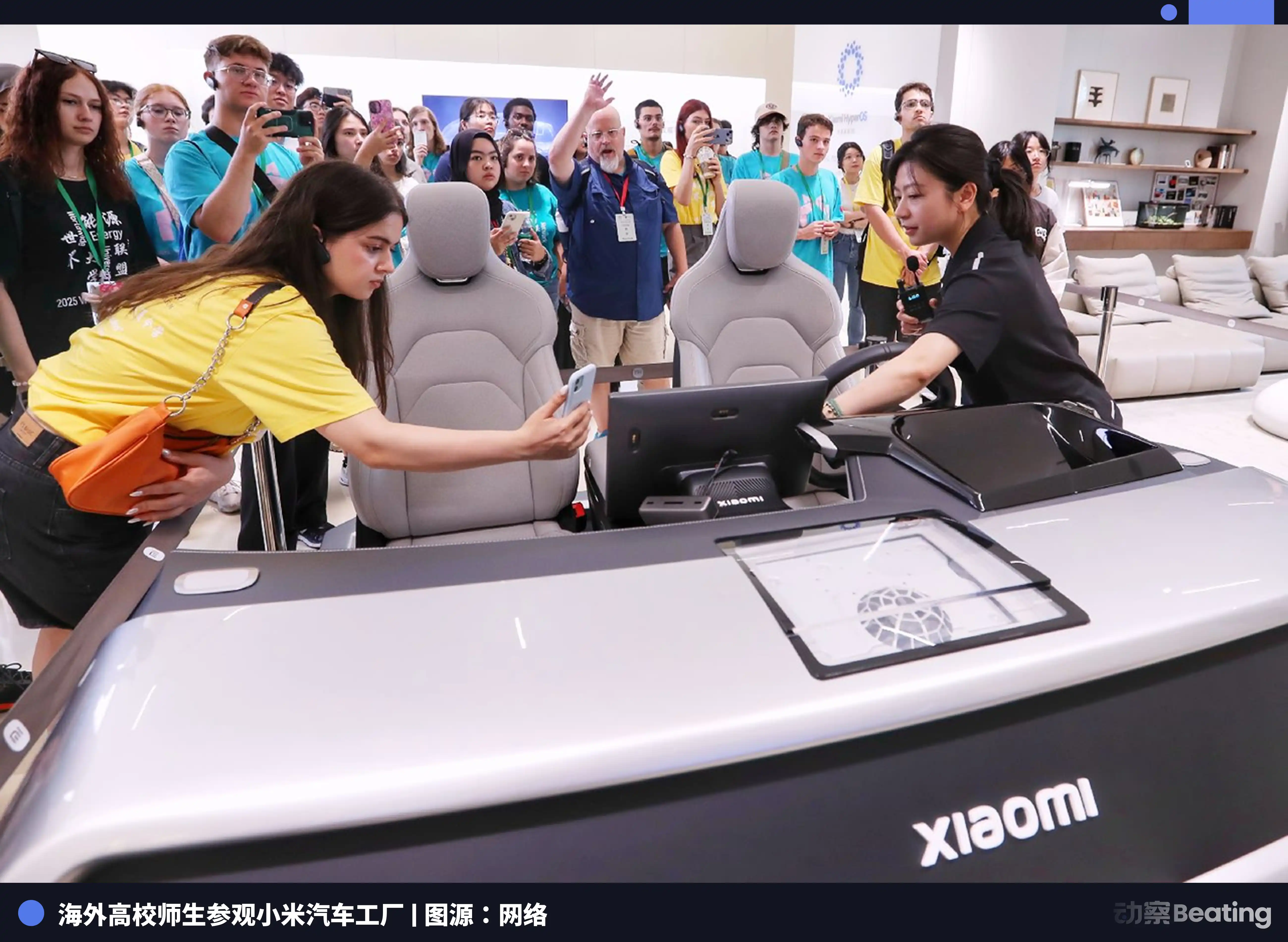
Starting in 2025, visits to Xiaomi's car factory in Daxing, Beijing, have become one of the top activities for elite American families bringing their children to China. Every Saturday afternoon, American parents speaking English can always be seen with their children, lining up to enter this Chinese car production line.
Here, visiting spots are extremely hard to come by. Each event regularly attracts up to 4,600 registrants, but only 20 groups of visitors can enter, leading to a selection rate of 0.4%, comparable to Ivy League admissions.
According to publicly available data from the Beijing government, in just the first six months of 2025, the factory hosted a total of 93,000 visitors; by the end of 2025, this number soared to 130,000. Visitors come from over 70 countries and regions, including dignitaries, diplomats, multinational corporate executives, Silicon Valley investors, European venture capitalists, and groups of American elite families.
What exactly has turned a car production line into a hot tourist attraction?
Cognitive Replacement
For decades, the Western world's perception of China has relied on a framework of traditional cognitive infrastructure.
This infrastructure includes media reporting frameworks (the filters of CNN or The New York Times), think tank research reports (projections of overcapacity), division of labor theories from economics textbooks (assemblers at the bottom of the smile curve), and cheap consumer goods labeled "Made in China" on supermarket shelves.
They share a core commonality: they are all indirect.
Whether it is the stereotype of "the world's factory" or the grand narrative of "the Thucydides Trap," they are all conclusions filtered through layers and packaged within specific frameworks before being presented to the public. For a long time, this system firmly locked Western stereotypes about China.
However, at this factory in Daxing, it has failed.
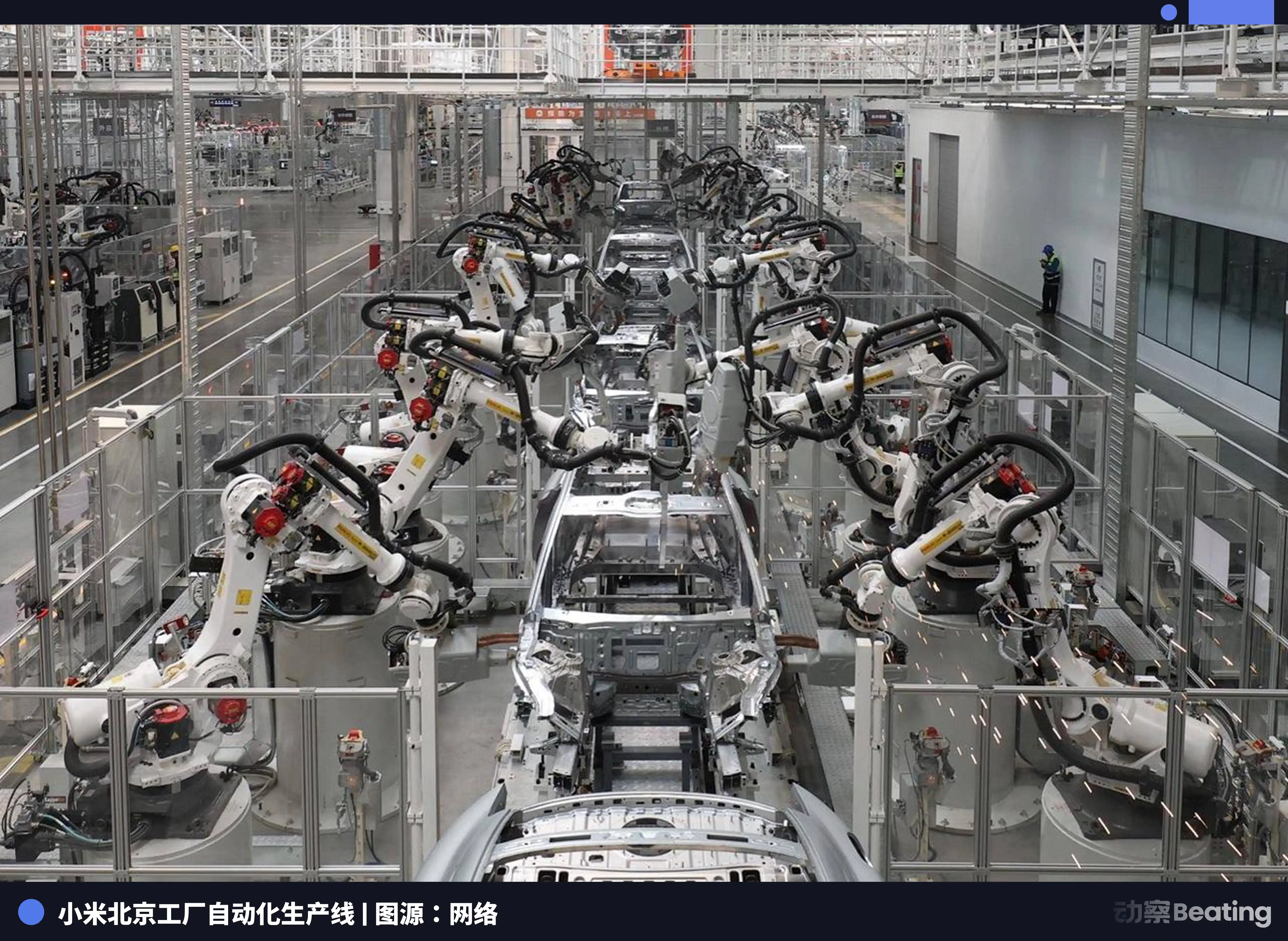
Stepping into the workshop, one is greeted by an incredibly surreal silence. In the body workshop where key processes are 100% automated, the overall automation rate reaches 91%, with over 400 robots working seamlessly with more than 400 high-precision cameras, achieving true dark factory production. In the die-casting workshop, a steel behemoth with a clamping force of 9,100 tons can form 72 parts in a single step in just 120 seconds, with an error margin of less than a human hair.
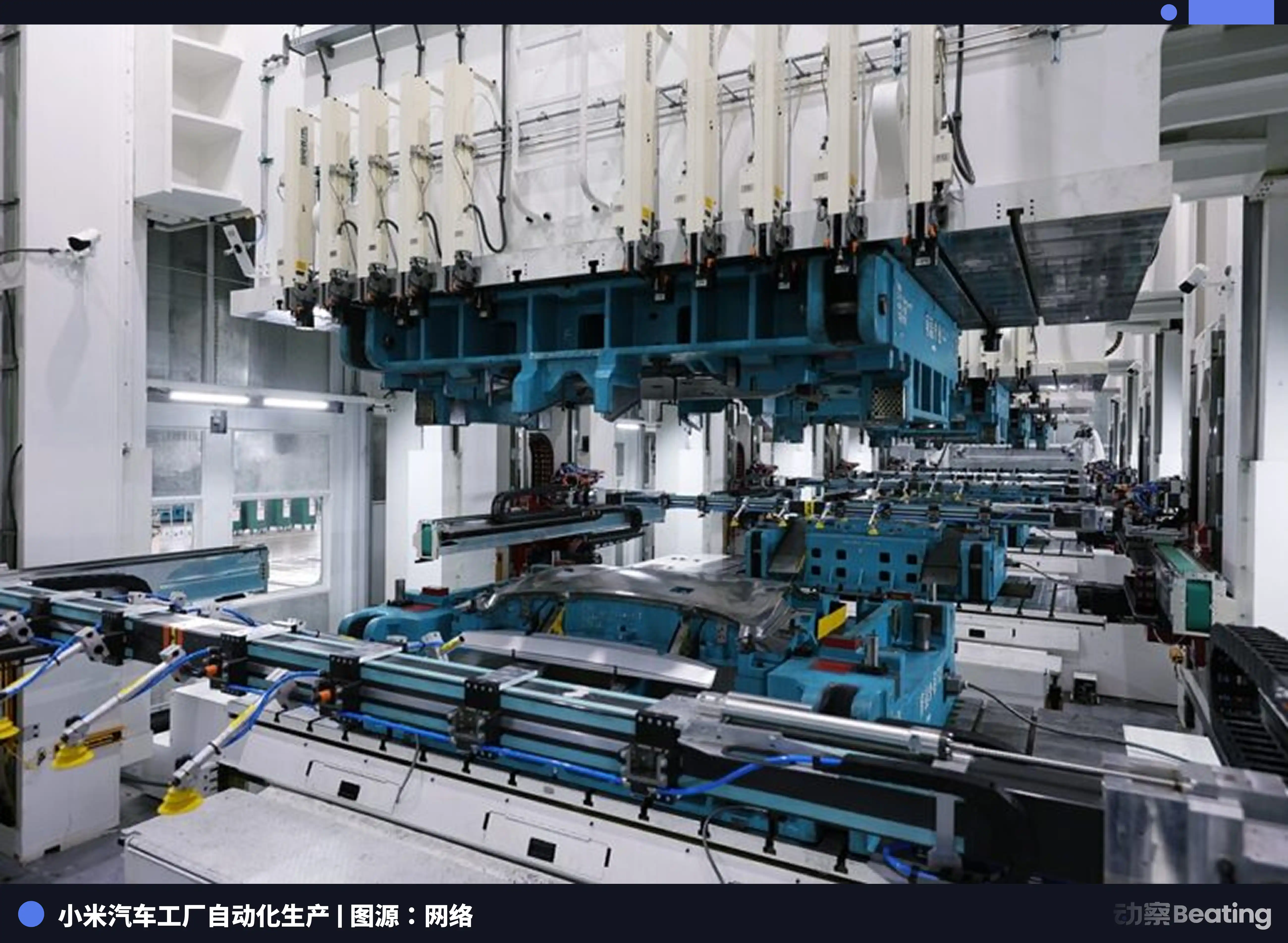
Here, on average, a new car rolls off the production line every 76 seconds.
When a Silicon Valley venture capitalist or a Washington policymaker witnesses this firsthand from the observation bridge, there is no need for any think tank report to prove to them that "Chinese manufacturing is upgrading." The dry and dull figures in reports have transformed into the mechanical arms waving right before their eyes.
Scrolling through news on Twitter and standing on the bridge watching a car roll off the line every 76 seconds can yield a huge disparity in judgment about Chinese manufacturing. This disparity represents the largest cognitive arbitrage space between China and the U.S. today. Those with top resources are quietly adjusting their asset allocations, exploiting this information asymmetry.
Taxing by Day, Pilgrimages by Night
In the spring of 1950, young Japanese engineer Eiji Toyoda boarded a flight to America, heading straight for the Ford Rouge plant in Detroit. At that time, the Ford plant had a daily production capacity of 8,000 cars, while Toyota had a dismal annual production of just 40 cars.
That trip to Detroit directly gave birth to the Toyota Production System. Subsequently, larger-scale actions followed. In 1955, the governments of the U.S. and Japan launched a "Productivity Program," sending nearly 4,000 Japanese engineers to visit American factories. It was an organized pilgrimage. The Japanese traveled across the ocean because they were acutely aware of their own backwardness and were eager to learn.
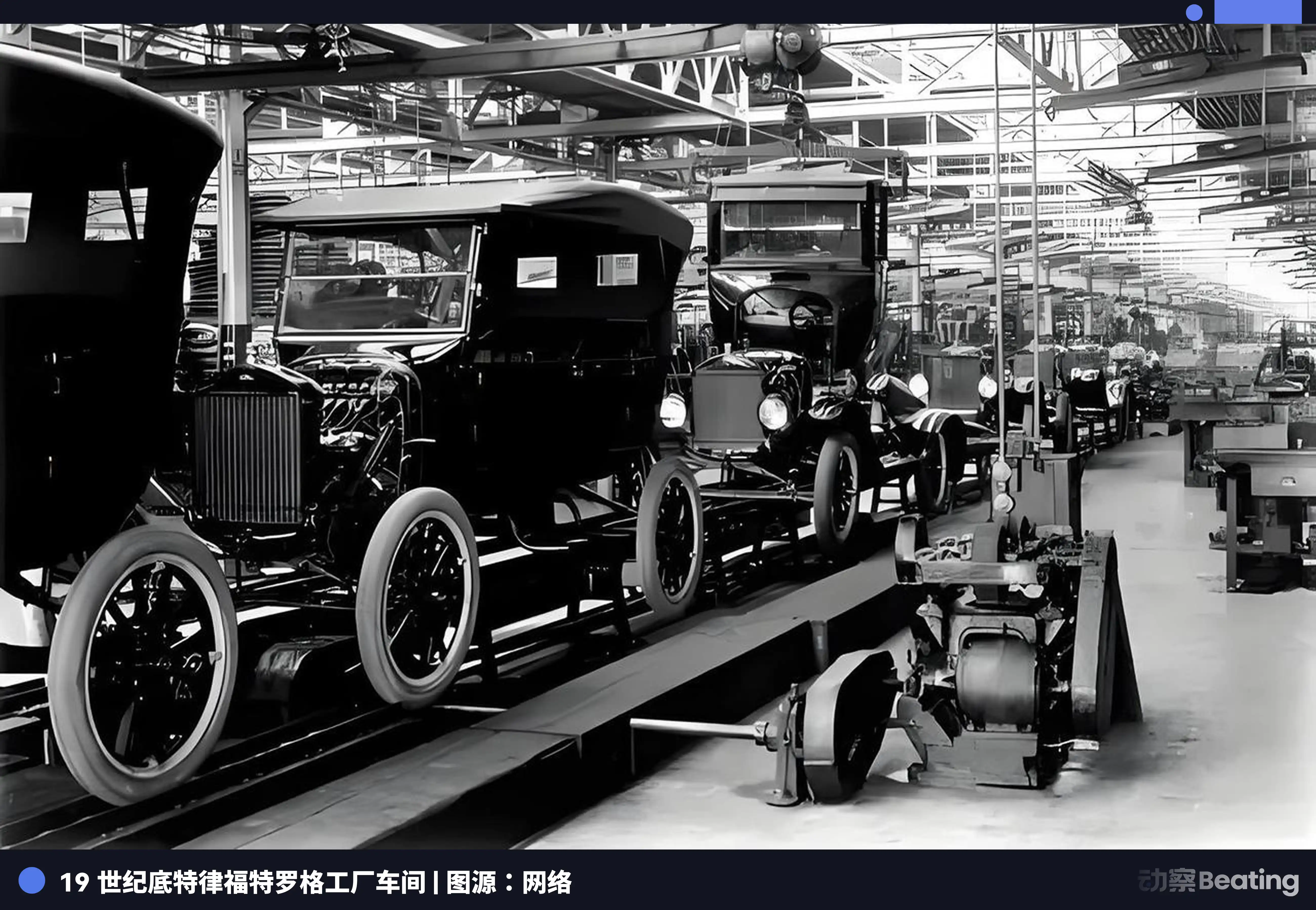
But now, the direction has reversed.
Western elites, with mixed feelings, fly into Daxing, Beijing. There is no government organization or state endorsement; against the backdrop of the trade war, this trip even appears quite politically incorrect. Yet they still come, spontaneously, privately, and discreetly.
As early as 2010, China's manufacturing added value first surpassed that of the U.S., becoming the world's number one. By 2024, China's manufacturing added value accounted for nearly 30% of the global total, about equivalent to the combined output of the U.S., Japan, and Germany. In the new energy vehicle sector, China exhibits a crushing advantage, with a 68.4% share of the global market for new energy passenger cars in 2025.
In contrast, the once-pilgrimage site Detroit has now deteriorated into a desolate industrial relic. The decline of American manufacturing is by no means accidental; it is the bitter fruit of over four decades of excessive financialization.
Since Milton Friedman proposed the theory of "maximizing shareholder value" in the 1970s, American companies have started reallocating resources from long-term manufacturing investments to pursue short-term accounting returns.
Boeing stands as a bloody lesson. Since merging with McDonnell Douglas in 1997, Boeing's corporate culture shifted from being engineer-led to Wall Street-led. Executives became obsessed with cutting costs through outsourcing and boosting stock prices via buybacks, ultimately leading not only to the tragedy of the 737 MAX but also to the complete hollowing out of the manufacturing system.
By day, supporting tariffs against China in Washington; by night, lining up to visit factories in Daxing, Beijing. America’s strategy towards China is predicated on the premise that China is a threat that must be contained; yet the private actions of American elites follow another logic: China is a reality that must be acknowledged.
Policies may decouple from reality in the short term, but the evolution of capital's instincts and cognition will ultimately catch up with reality.
In early 2025, Spencer Gore, founder of American sodium-ion battery startup Bedrock Materials, flew to China to visit CATL's factory. He saw that the Chinese battery giant was producing sodium-ion batteries using the same production line and set of equipment as lithium batteries.
Upon returning home, he immediately dissolved the company and refunded the $9 million financing to investors.
Eiji Toyoda went to Detroit to learn; today’s American elites come to Beijing to confirm something. Something they have vaguely sensed but need to see with their own eyes to truly let go of.
Accidental Turns
Amidst this wave of visits, Lei Jun's role appears somewhat subtle.
At the end of 2024, when he decisively decided to open the factory to the public, his original intention was quite pure and commercial—it was simply to sell cars. In a heavily barrier-laden industry like automotive, a brand crossing over from mobile phones faces the greatest challenge in overcoming consumer trust. By opening the factory doors, Lei Jun merely aimed to eliminate doubts and build trust.
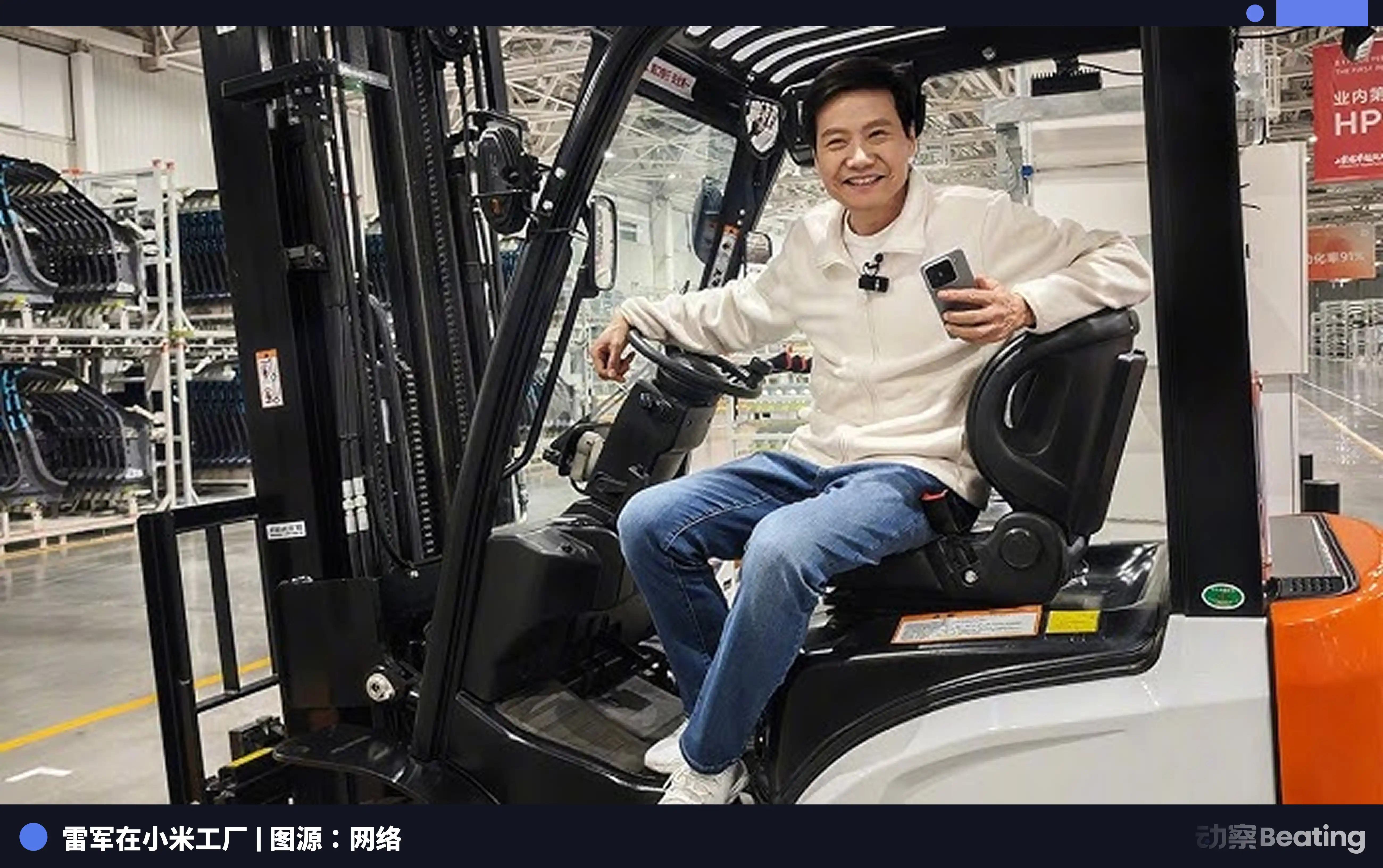
However, in his attempt to open that door, he inadvertently knocked down another invisible wall.
Over the past decade, China has invested heavily overseas to build Confucius Institutes and launch national image ads, attempting to enhance soft power through cultural exports. However, such top-down actions with a strong official tone often easily provoke defensive psychological reactions in the West, and are even directly labeled as "propaganda tools."
When others sense that you are trying to persuade them, their first reaction is always one of defense and skepticism.
In contrast, the Xiaomi factory says nothing. It does not attempt to instill any values or sell any grand narratives; it simply exists there, quietly and efficiently producing a car every 76 seconds.
In social psychology, there is a theory called "intergroup contact theory," which suggests that the best way to eliminate prejudice against a group is not to preach grand principles but to create conditions for direct, equal contact.
In the age of information warfare, the mainstream narrative over the past decade has been that whoever controls the media framework wins the cognitive war. China has consistently been at a disadvantage in this narrative battle. But Xiaomi's car factory in Daxing tells us that when the pull of reality is strong enough, even the tightest narratives will collapse automatically. You do not need to struggle to win a narrative war; you only need to open the door and let the other party face reality directly.
The highest level of soft power often emerges at moments when you are not trying to influence anyone at all.
The Longest Geopolitical Variable
As night falls over Daxing, the factory's workshop remains brightly lit.
The American children brought to visit by their parents are perhaps already sound asleep in the car on their way back to the hotel. They do not understand what a trade war is, do not know what the "Thucydides Trap" refers to, and cannot comprehend why their parents are spending such high costs and efforts just to show them an industrial assembly line.
But their eyes won't lie, and they will remember everything.
Geopolitical analysts often focus on the number of aircraft carriers, chip legislation, and trade deficits, but few pay attention to the intergenerational transmission of cognition.
These American children, aged 8 to 15, will grow into investors on Wall Street, entrepreneurs in Silicon Valley, decision-makers in Washington, or even the most ordinary voters twenty years from now. Their first impression of China will no longer be that layer of prejudice in CNN news, nor will it be the imaginary enemy conjured by politicians, but the firsthand sensory memories engraved through personal experience.
This cognition, based on direct experience, is often the hardest to overturn. Because it does not rely on any third-party sources for validation; it depends solely on their own eyes.
Twenty years from now, when they discuss issues related to China at the conference table, what will the first scene that comes to their minds be? Not cheap small commodities, not the noisy world’s factory. They might think of that quiet workshop, recall the tirelessly waving mechanical arms under the lights, and remember the car smoothly assembled before their eyes.
The seed of this cognition, once planted, can never be uprooted.
This is a cognitive reset spanning twenty years, far more unbreakable than any trade agreement and more difficult to reverse than any diplomatic statement. The eyes of these children will be the most unpredictable, yet also the most irreversible variable in America’s China policy twenty years from now.
The direction of pilgrimage has truly changed.
免责声明:本文章仅代表作者个人观点,不代表本平台的立场和观点。本文章仅供信息分享,不构成对任何人的任何投资建议。用户与作者之间的任何争议,与本平台无关。如网页中刊载的文章或图片涉及侵权,请提供相关的权利证明和身份证明发送邮件到support@aicoin.com,本平台相关工作人员将会进行核查。


