Source: Geek Park
Written by: Moonshot
In the past few years, HarmonyOS has completed a shift.
It has emerged from the large company laboratories and become a new blue ocean for developers.
The underlying logic is straightforward. The mobile internet market is already saturated, and everyone is competing for existing territory. However, a report by iResearch at the end of last year pointed out that there are still large areas of unmet demand within the ecosystem of HarmonyOS.
Currently, devices equipped with HarmonyOS 5 and HarmonyOS 6 have already surpassed 50 million units, backed by 10 million registered developers. For many developers, this represents a new starting point for product creation and expression in an ecosystem that has not yet been fully defined.
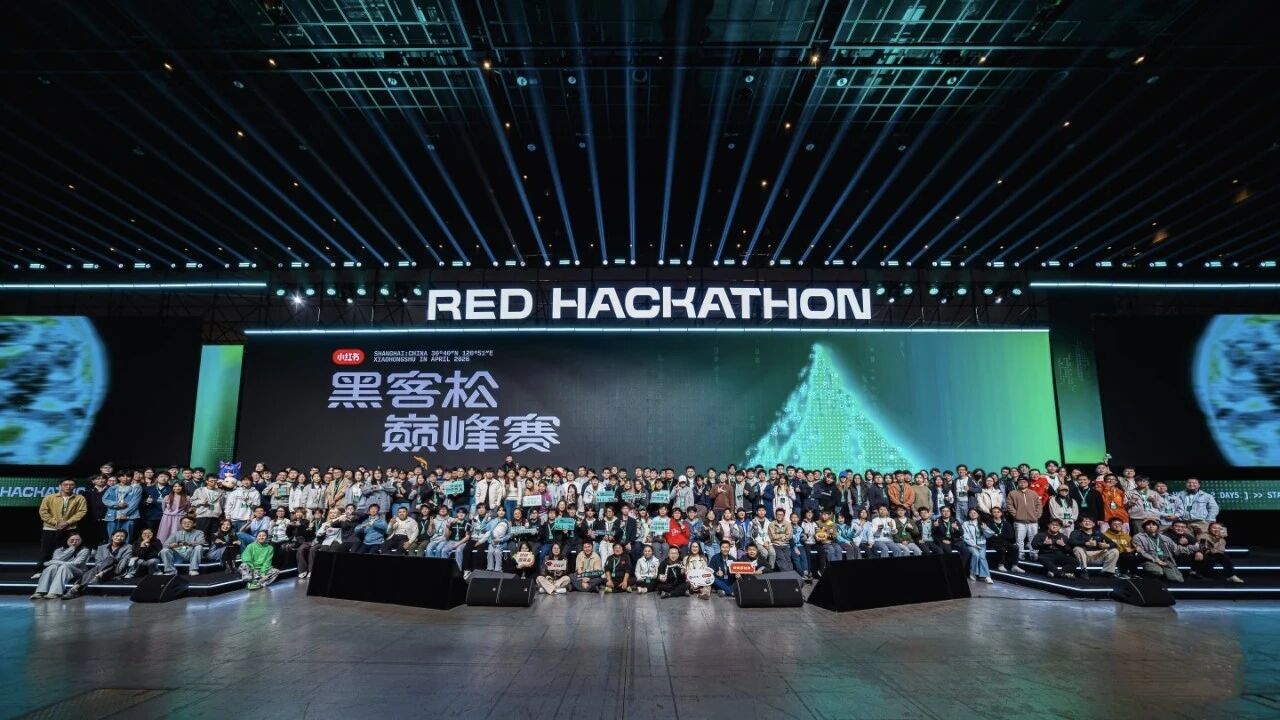
A new developer stage is taking shape, and this bottom-up flow has been amplified in the recent hackathon finals of Xiaohongshu.
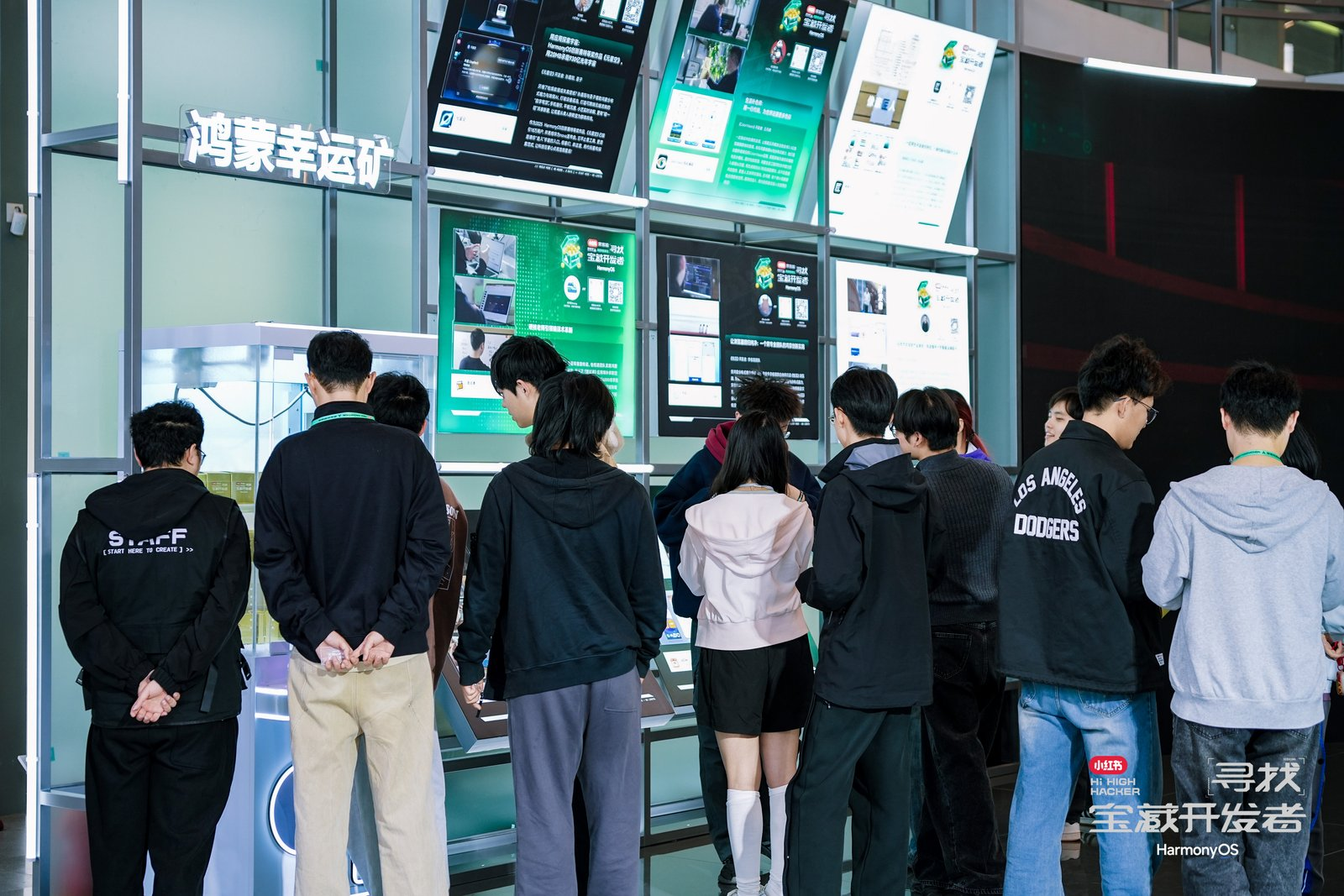
Within 48 hours, hundreds of developers completed the sprint from idea to demo within the same time window. The competition allowed for open questions and completely free technical paths, resembling a real-world "choice test."
Among different teams and directions, a portion of developers coincidentally focused their projects on HarmonyOS.
Geeks are the most sensitive group; their sensitivity to toolchains, efficiency, and opportunities is often a step ahead of the market.
When time is compressed to the limit, the path becomes very important.
And HarmonyOS just happens to provide such a path.
01When the system becomes the foundation, the landing of creativity is no longer limited
The essence of a hackathon is an extreme compression of engineering and R&D capabilities.
In this 48-hour extreme battle, as soon as the geeks open their eyes, they’re coding; as soon as they close their eyes, they’re fixing bugs. In such a high-pressure environment, developers dread encountering two main issues: one is that the development threshold is too high, and creative ideas get stuck midway; the second is that the demo created with great effort is bland and leaves judges unimpressed.
On this unofficially led battlefield, why do developers frequently lean towards HarmonyOS?
Because HarmonyOS provides a set of highly encapsulated lower-level interfaces, equivalent to an instantly usable arsenal, allowing developers to treat system capabilities as readily available toolkits to mitigate the time pressure of extreme development.
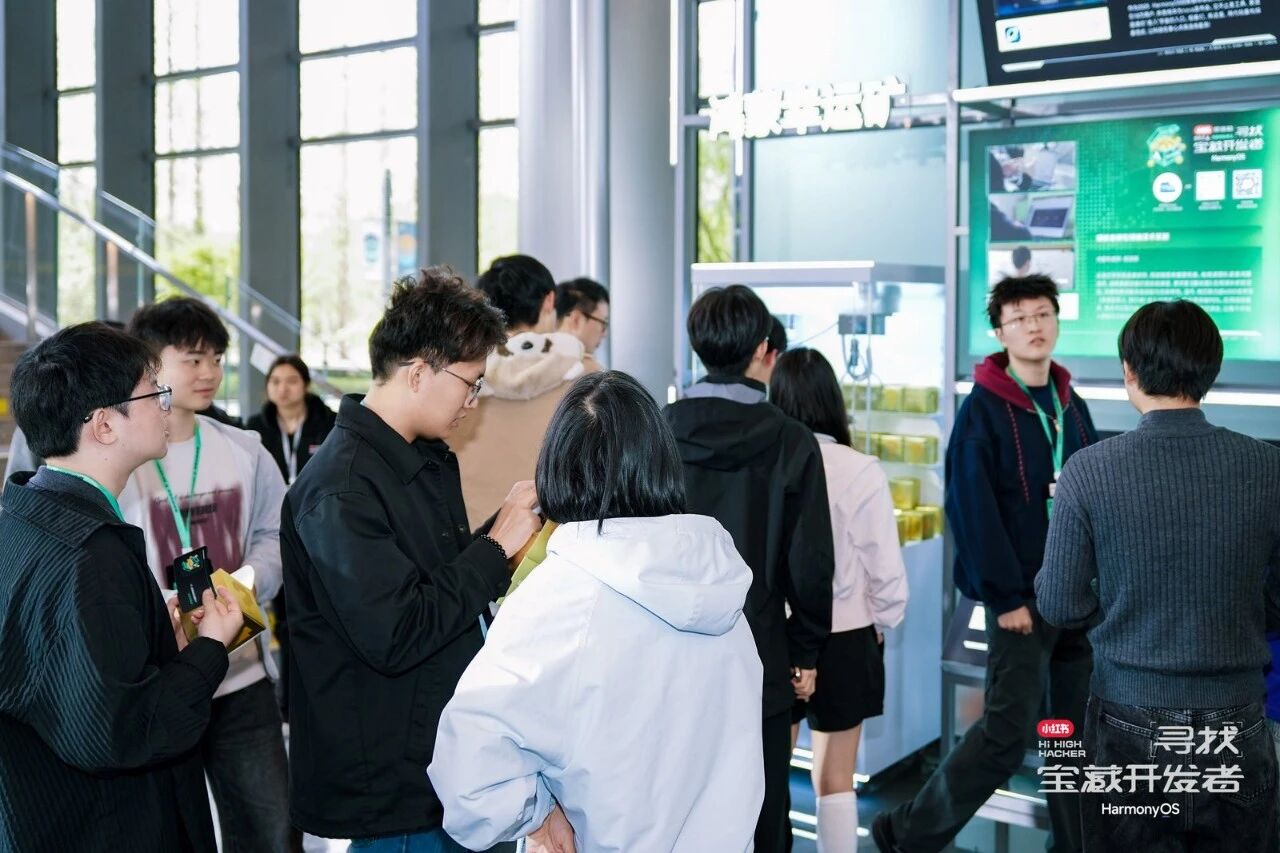
Want to integrate large models into applications? With the system-level AI capabilities encapsulated by HarmonyOS, the interface calls are extremely simple, and generative logic can be up and running in just half a day.
As for the severely homogenized interaction experience, HarmonyOS's 3D spatial technology directly pulls visuals from two dimensions to three dimensions, forming a dimensionality reduction strike.
Moreover, with built-in privacy and security mechanisms, it naturally provides a credibility endorsement to the projects.
With this arsenal in hand, we can clearly see how the underlying technology stack of HarmonyOS translates into product certainties through the two award-winning works that emerged on site.
The team "Hey! Star," which won the special unit award for "Finding Treasure Developers," delivered a hardcore project attempting to reconstruct the use rights of space infrastructure.
The team consists of a doctorate in space materials, lower-level system geeks, hardware entrepreneurs, and cross-disciplinary creators. The four of them gathered at the Xiaohongshu competition and used 48 hours to manually create a prototype of a "personal satellite operating system" based on the HarmonyOS ecosystem.
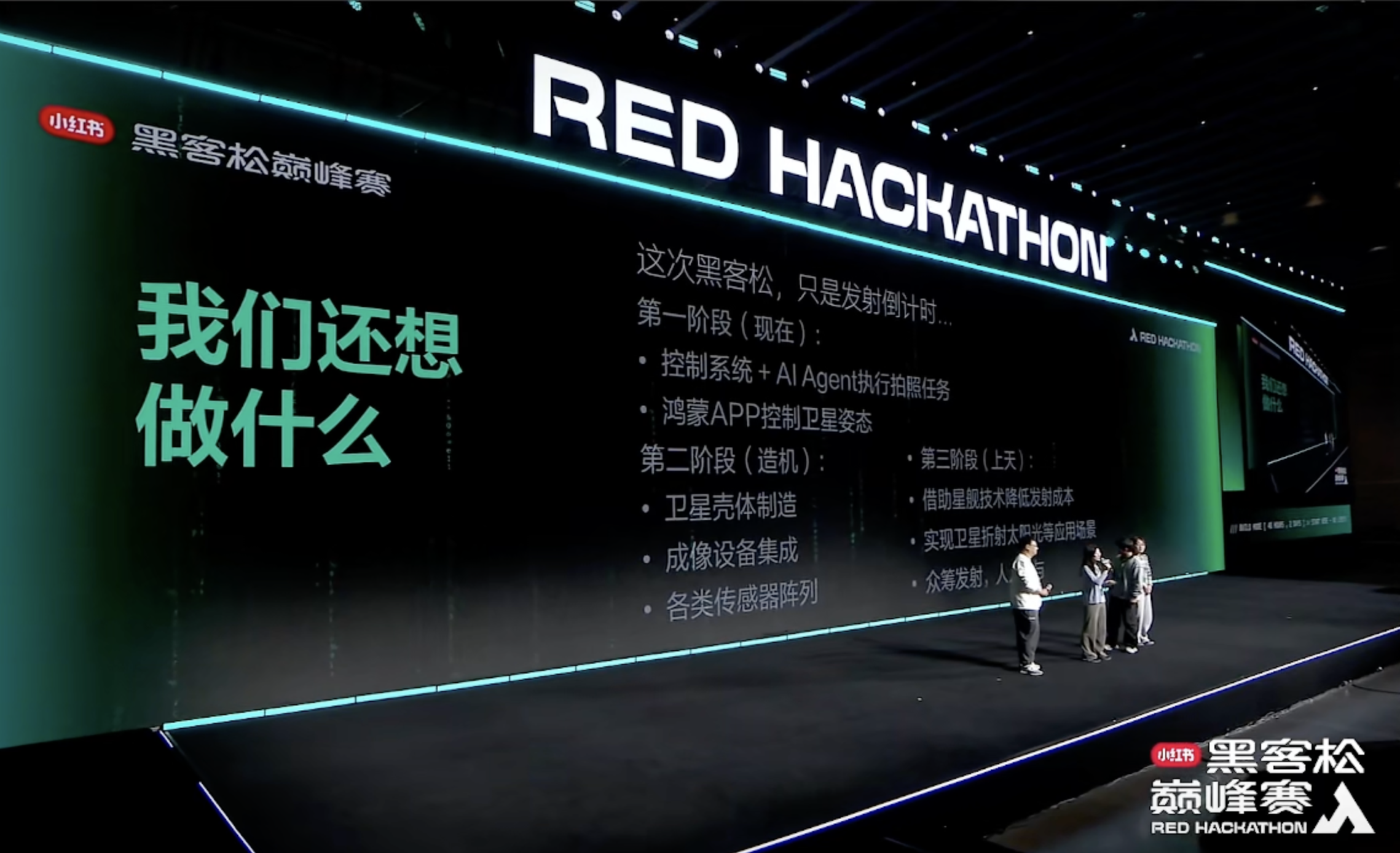
They not only 3D printed a satellite model with a reflection mechanism but also built two personal satellite control platforms using HarmonyOS: one is an application developed specifically for HarmonyOS, demonstrating direct control of the satellite through a mobile interface.
The other platform enables the development of Xiao Yi Agent, allowing conversations in natural language with Xiao Yi to control the satellite with "one sentence."
Peeling away the romantic exterior, the satellite project serves as a "pressure test" of HarmonyOS's lower-level interfaces.
In 48 hours, manually creating a satellite control platform, the most troublesome aspect is not adjusting satellite data but figuring out how to smoothly operate that complex 3D satellite model on a mobile device.
Typically, such high-precision spatial models would cause the phone to overheat and drop frames, but the "Hey! Star" team discovered that HarmonyOS's built-in ArkGraphics 3D framework could directly take over model calculations, rendering complex spatial models extremely lightweight, and it directly aligned with the "3D spatialization" track encouraged by the authorities.
Whether commands are issued from the mobile screen or given through Xiao Yi's voice, they can penetrate the network to enable precise responses from the remote satellite model, relying on HarmonyOS's cross-device distributed soft bus technology.
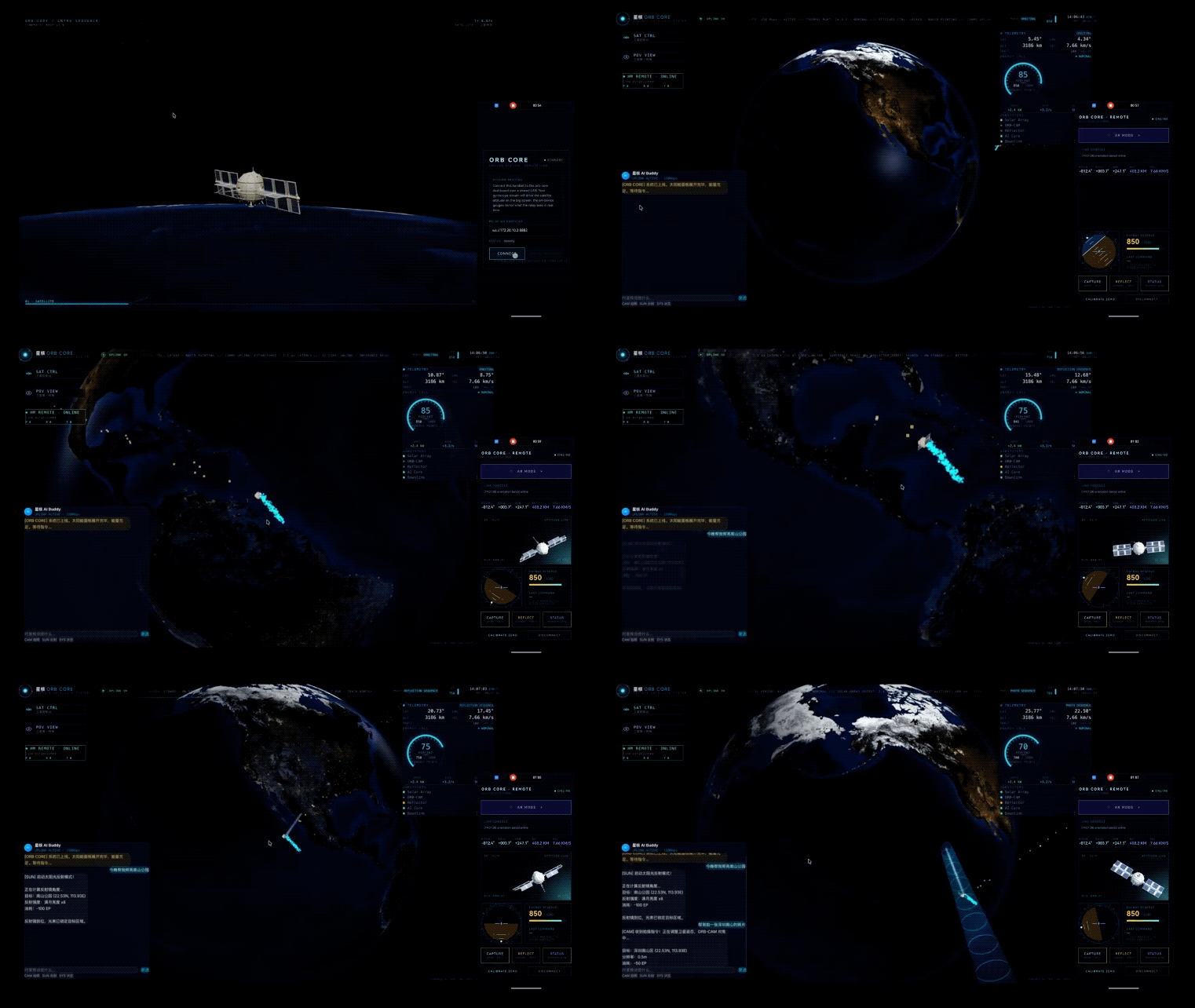
This project demonstrated to the outside world that as long as the system foundation is efficient enough, space computing power can also become basic infrastructure on personal desktops.
If the "Hey! Star" team was challenging the physical limits of software collaboration, then the team "TRI.ME Are You Bragging?" which won third place in the hardware category, achieved a complicated integration of hardware and software ecosystems.
The team is composed of champions of humanoid robot competitions, consumer electronics experts, and technical developers. They shifted their focus from space to the bathroom sink, a common aspect of human daily grooming.
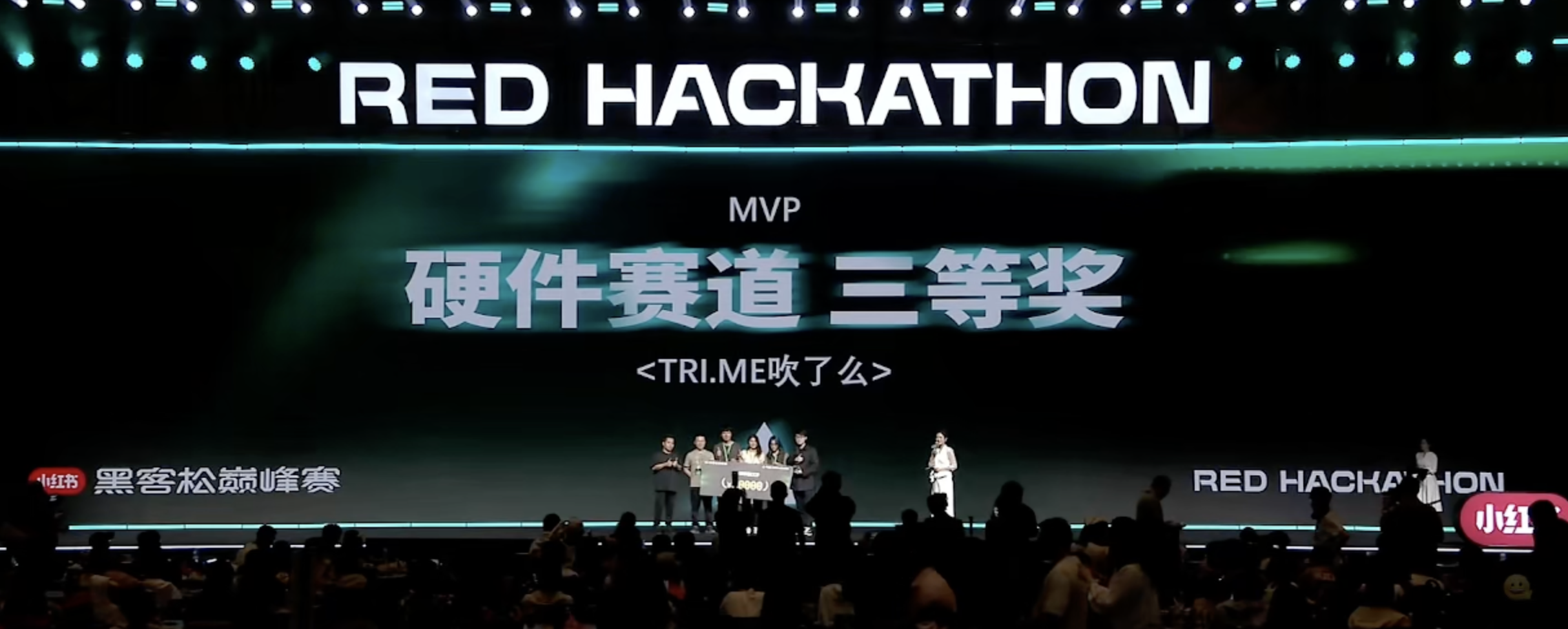
"TRI.ME Are You Bragging?" recognized that the ten minutes spent every day drying hair and brushing teeth is the last "attention vacuum zone" not yet digitized for modern people. Therefore, they chose to use a robotic arm to grasp a hairdryer, automatically following head positions for intervention, while embedding a smart panel into the bathroom setting to provide audiovisual entertainment.
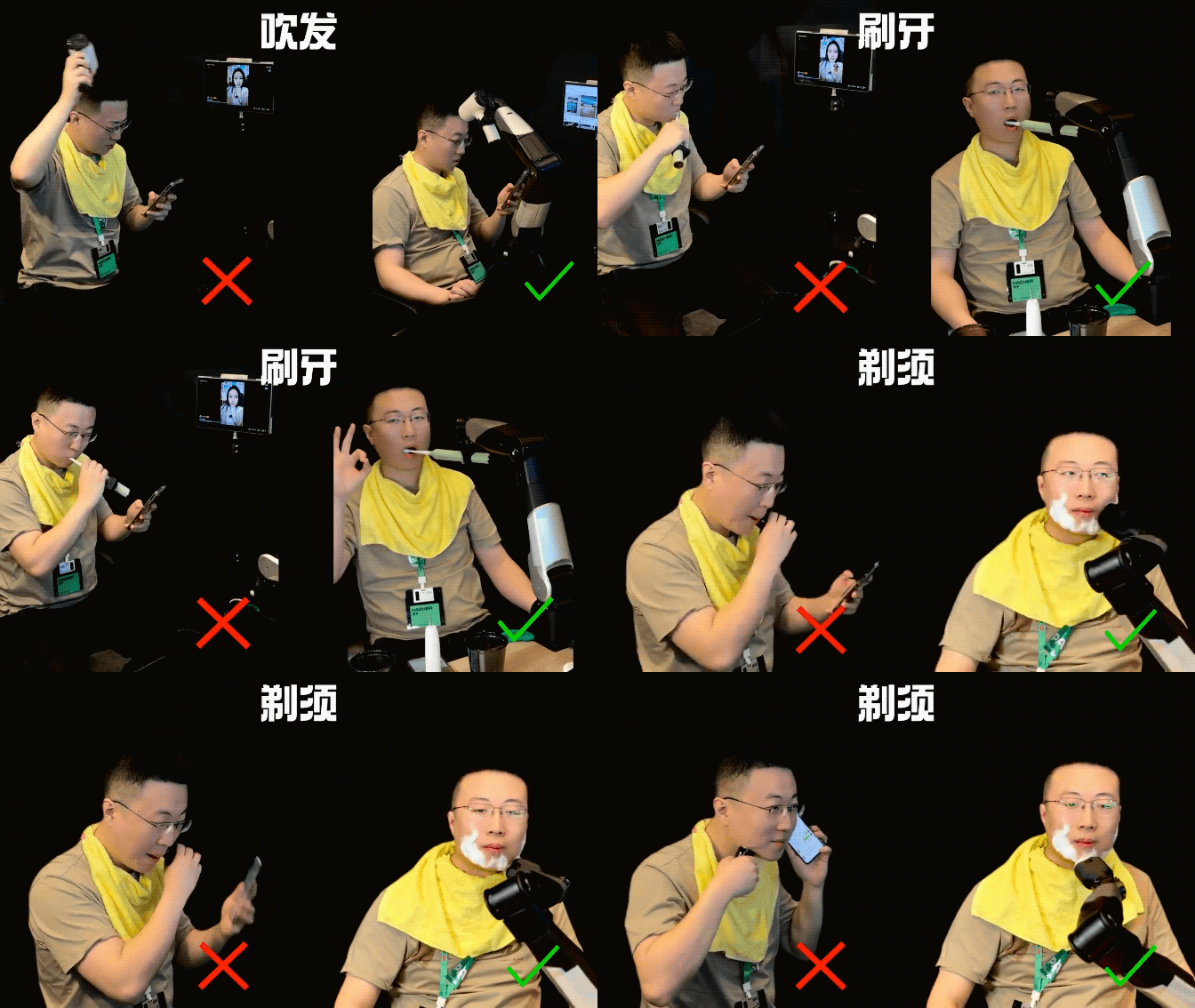
The biggest challenge for this project was "hardware fragmentation." To deal with the mechanical arm's motion protocols and hairdryer power adjustments, while also incorporating streaming media on the screen, would consume nearly all 48 hours just to establish basic communication among three components using traditional methods.
However, under the HarmonyOS architecture, the hardware has been virtualized into system modules. Developers call on that external robotic arm as easily as calling the phone’s built-in camera.
This transformation of "hardware into plugins" allowed the team to skip the tedious infrastructure setup and focus entirely on recognizing user intent and the logic of device intercommunication.
Just after finishing the on-stage demonstration of the project, Liu Jingkang, the founder of Insta360, sitting in the audience, immediately threw out a verbal cooperation invitation.
Based on the rapid development enabled by HarmonyOS, they can run through the MVP (Minimum Viable Product) validation of a business model with minimal loss, and this became a reality in the bathroom model.
Besides the big winners in the spotlight, many more intuitive and hardcore ideas have emerged during these 48 hours.
For example, the "Time-Sequence Personality" team, which focuses on AI intelligent dialogue, created an app that allows celebrities from different life stages (such as the impulsive phase of being 20 years old and the mature phase of being 50) to meet and debate across time and space.
This kind of multi-role, multi-turn interaction places high demands on the system's response and scheduling. The team opted not to build from the ground up but directly developed based on HarmonyOS's native ArkTS and ArkUI framework, delegating multi-device compatibility and interface rendering to the system, and running the same code on both mobile phones and tablets.
After multiple AI roles complete their discussions, the system automatically generates structured minutes, and the team directly calls Share Kit. Users can simply "grab" the results on the screen with gestures, or transfer them through the air to another device.
This project isn't perfect yet, but it sufficiently proves that with a smooth enough underlying capability, complex interactive structures can also be run successfully within 48 hours.
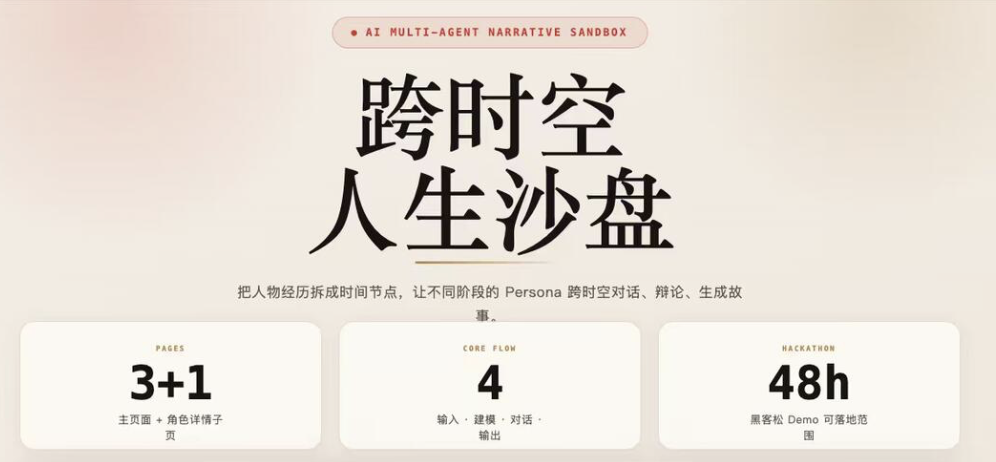
In an extremely limited time frame, this kind of "certainty" that allows products to be turned into reality is what geeks desire most.
02From "System" to "Platform": Structural Benefits of HarmonyOS Ecosystem
In the past, the logic of operating systems was often that large companies set the stage while developers adapted, with a clear distinction between platforms and applications. In this outdated structure, the system was merely a pure bottom-level code library. Developers writing code still had to engage in fierce competition deep in the waters, buying advertising and competing for exposure with giants.
But in the context of HarmonyOS, this layering begins to blur.
It not only provides capabilities but also pre-organizes scenarios, compressing critical links across devices, AI, and distribution into a shorter path. Developers no longer need to assemble system capabilities from scratch but can directly enter the "creation" phase, shifting the focus from "does it support" to "how short is the implementation path."
This difference determines that its attractiveness to developers comes not only from the technology itself but from a whole set of structural benefits.
The most hardcore first layer is the technological benefit brought by the reconstruction of the underlying architecture.
In the past two years, large models have proliferated. But for the vast majority of small and medium teams and independent developers, training models themselves is simply unaffordable in terms of computing costs. Directly calling external APIs? The application would again become a shell tool.
HarmonyOS's solution is "one system, one ecosystem." Here, AI is no longer an added feature on applications but is directly integrated into the foundation of the operating system.
The change in development experience is direct. Taking Xiao Yi intelligent agent open platform as an example, developers do not need to build a complex AI interaction logic from scratch; they only need to connect application capabilities to the system's intent framework to be directly called through voice, search, recommendations, and other entry points.
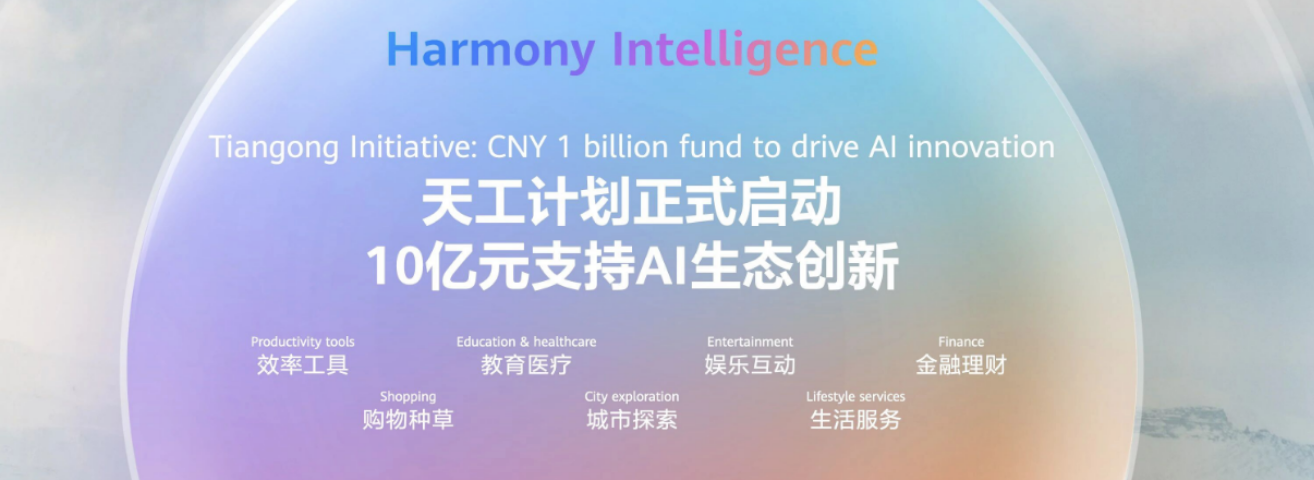
Huawei's "Tian Gong Plan," announced last year, was also a very straightforward expression. With a special resource of 1 billion yuan concentrated on AI innovation, it means the authorities are assuming the cost of trial and error for developers in AI.
This decentralization of technology directly leads to the second layer of benefits: efficiency.
Surviving is the highest priority for all startup teams. In today’s fragmented terminal device landscape, considering mobile phones, tablets, car displays, and even smart watches all at once can overwhelm startup teams with adaptation costs.
HarmonyOS's solution to this is pragmatic: it integrates development, debugging, and performance optimization into one toolchain through DevEco Studio, turning the long-cherished slogan of the tech circle "one development, multi-device deployment" into reality.
After writing a set of code, the system automatically manages transitions between different screen sizes and hardware characteristics, allowing small teams to focus their energy on refining product experiences rather than pixel adaptation.
But this is still not enough. Technology and efficiency can only guarantee that things are made, but whether they can make money depends on the most critical third layer: opportunity benefits.
This is also the underlying driving force for geeks to really compete on the field. Now the scale of users in China's mobile internet has approached 1.3 billion, and the growth potential has become saturated.
For developers, the real challenge is no longer "are there any users," but "is there a place."
The HarmonyOS ecosystem is at a different stage. In certain sub-fields such as social communication, sports culture, and maternal and child services, user structures are still changing rapidly, providing developers with the opportunity to define product shapes at an earlier stage.
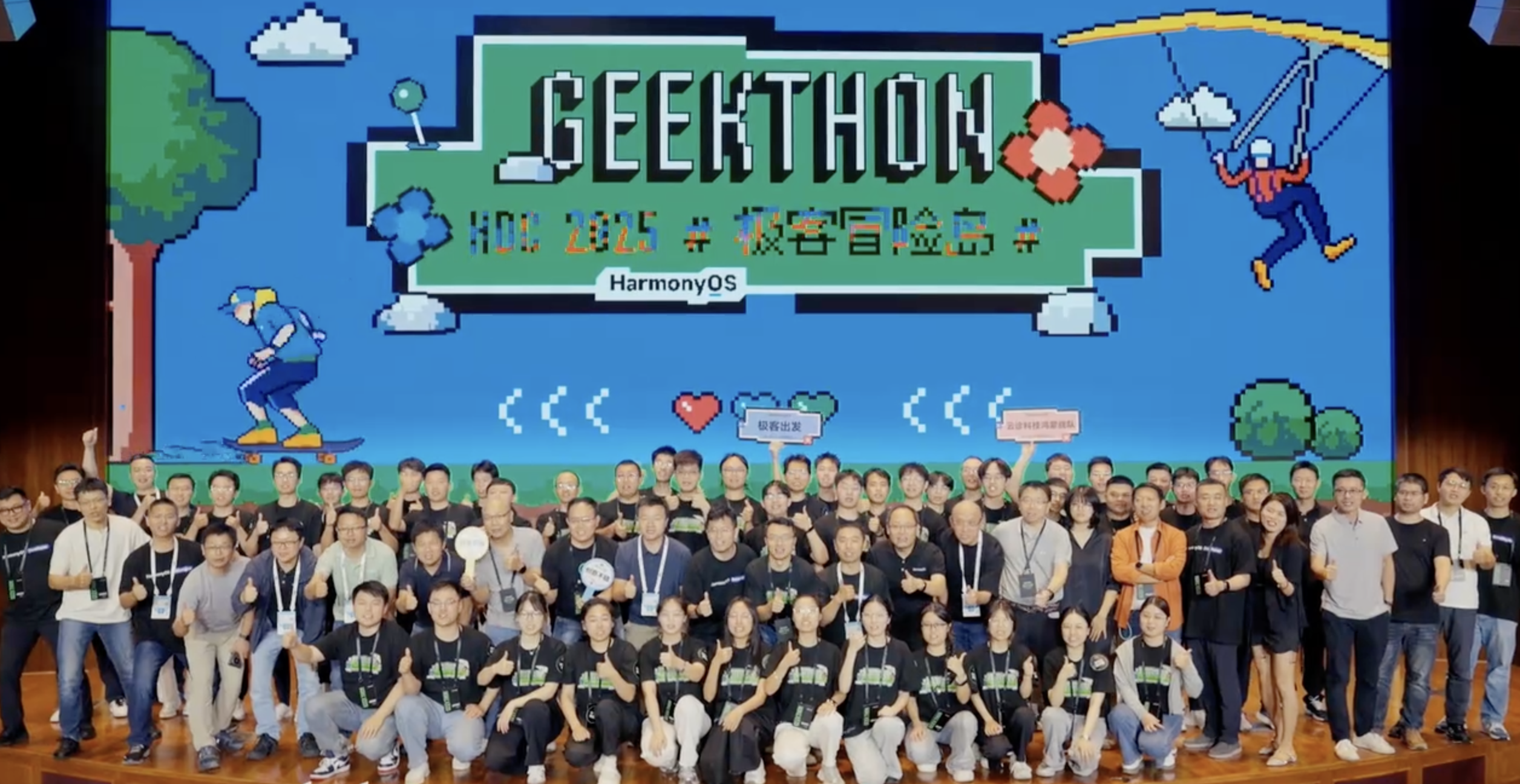
Facing the traditionally disadvantaged small and medium-sized developers, HarmonyOS systematically offers multidimensional support.
Billion-level "Application Developer Incentive Plan" and "Starlight Plan" have been successively launched. The authorities use real monetary investments to lower entry barriers in exchange for the ecosystem's bottom-level vitality.
More importantly, the distribution mechanism has changed.
In traditional markets, rankings are based on scale, and the homepage is reserved for giants. HarmonyOS, however, directly enhances exposure for "small and beautiful" applications through "editorial recommendations."
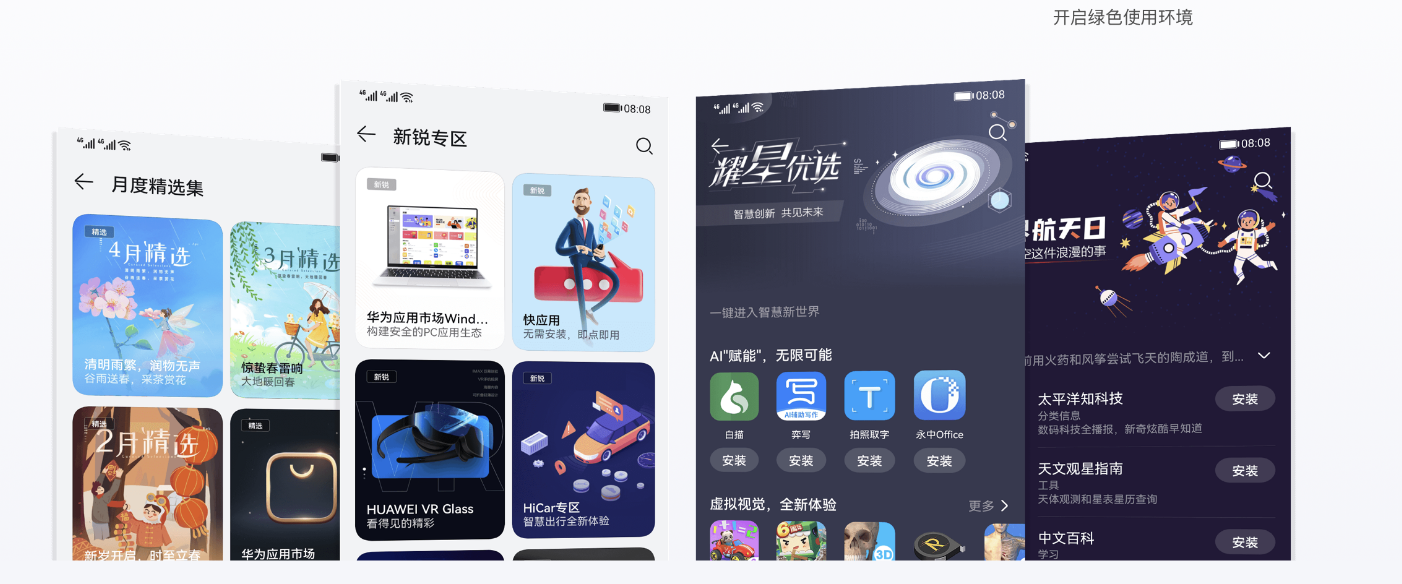
In last year's HDC Geeks Marathon, the student team that developed navigation tools for the visually impaired and the entrepreneurial project promoting the digitization of traditional Chinese medicine both received unexpectedly high levels of attention.
Such projects would struggle to gain the same exposure in traditional application markets, but within the narrative of the HarmonyOS ecosystem, they are seen as innovations "worth seeing."
As funding, traffic, and platforms begin to shift toward ordinary developers, old hierarchies are being broken.
This will also change the behavior of developers; some will begin to explore more segmented directions, while others will start to create more experimental products, because they know that these attempts may be amplified.
This explains the origins of the "vibrant" projects seen at the Xiaohongshu hackathon. Whether it's the romantic notion of satellites as private hosts or the hardcore idea of using robotic arms to take over the bathroom, geeks have keenly realized that as new capabilities are unlocked and old distribution methods are broken, windows of opportunity will emerge.
This is also the signal released by the 2026 HarmonyOS Innovation Competition·Geek Track: the most hardcore system-level capabilities are open to all developers.
And whoever first turns these capabilities into products will have a better chance to define what the next type of application looks like.
03From Extreme Sprint to Long-term Advancement
Running through logic in 48 hours is just the starting point; transforming a demo into an officially used product by thousands requires longer iterations.
Many mature HarmonyOS applications started off as rough prototypes on the hackathon stage, undergoing multiple rounds of official resources and refinement until they eventually became mature products used by millions.
The 48 hours of the Xiaohongshu hackathon has ended, but the lifecycle of creativity has just begun.
For those developers who are not done and attempt to truly push their ideas to the market, they need a more forgiving and resource-rich incubator.
The "2026 HarmonyOS Innovation Competition·Geek Track" has taken up this bridging point.
Compared to the short-cycle sprint of hackathons, this is more like a long-term incubator. Developers can expand their demos into truly usable products over a more ample timeframe, refining a more complete experience around four directions: security and privacy, multi-scenario collaboration, AI, and 3D spatialization.
The incentives here are also more pragmatic, with a prize pool exceeding 680,000 yuan and a maximum single-person reward of 150,000 yuan, essentially providing "start-up funds" for independent developers.
More importantly, follow-up resources will be made available to participants, including in-depth guidance from official technical experts and high-profile exposure at the 2026 HDC conference. This is a ticket for individual projects to leap out of the geek circle and into the mainstream market.
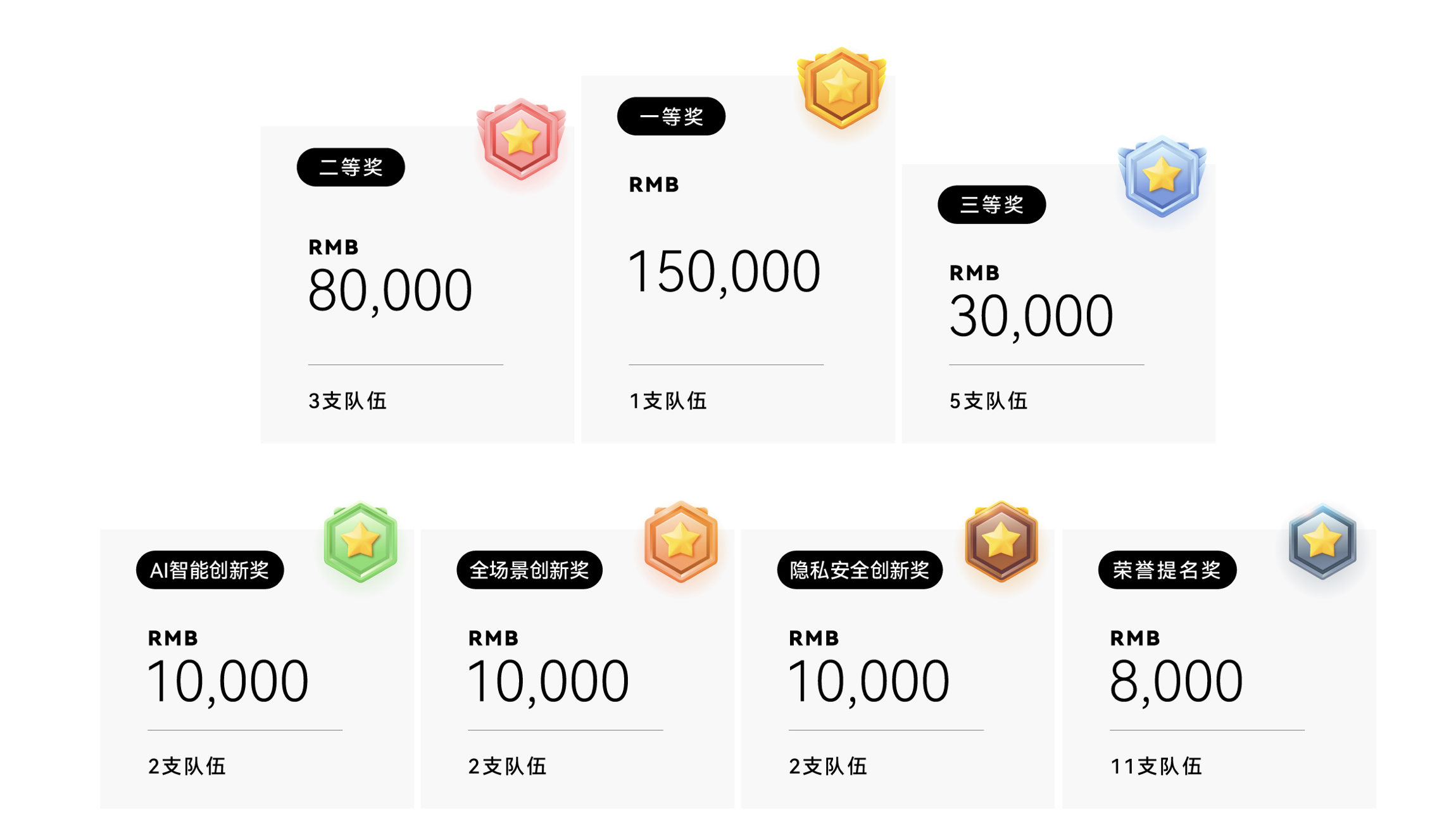
If we stretch the timeline a bit further, we can see that the HarmonyOS ecosystem has already transcended the initial phase. Whether anyone is willing to enter this platform is no longer a question.
The more realistic challenge is how to create truly competitive experiences within this system. This is also the signal released by the Innovation Competition.
With the continued opening of the technology stack and the improvement of the toolchain, HarmonyOS is becoming a reliable commercial and technical foundation and reshaping the decision-making logic for geeks. More and more developers have begun to use HarmonyOS as a starting point to plan their projects.
This change won't be completely magnified in a single competition, but will gradually accumulate through repeated attempts.
When more products are truly realized, this early choice will become a part of the results.
免责声明:本文章仅代表作者个人观点,不代表本平台的立场和观点。本文章仅供信息分享,不构成对任何人的任何投资建议。用户与作者之间的任何争议,与本平台无关。如网页中刊载的文章或图片涉及侵权,请提供相关的权利证明和身份证明发送邮件到support@aicoin.com,本平台相关工作人员将会进行核查。


