Written by: Golden Legend Big Smart
This morning, OpenAI released Workspace Agents, a team-level workspace agent based on Codex.
This thing is the Hermes code product that was leaked by TestingCatalog on the 21st, aimed at the enterprise market, available for subscribers of the four packages: ChatGPT Business, Enterprise, Edu, and Teachers.
Official entry: openai.com/index/introducing-workspace-agents-in-chatgpt
Build a new agent, describe it in one sentence, and ChatGPT will help you create an agent.
OpenAI positions Workspace Agents as an evolution of GPTs, the evolved form of GPTs.
In the same paragraph, they casually mentioned the end of GPTs: a one-click transition to workspace agents will be offered in some time.
In plain language: it is ending.
What is it
Workspace Agents are essentially team-based agents.
One person describes the workflow repeatedly done in the team to ChatGPT, and ChatGPT will create an agent. Then the entire team can use this agent in ChatGPT or Slack, making adjustments as they go, becoming more accurate with use.
Compared to previous products, it goes something like this:
GPTs (November 2023)
Prompt + knowledge base + Actions, one-time configuration, mainly for individual use, with no real long-process execution capability.
ChatGPT Agent (July 2025)
Single user, one-time task execution, done and gone, with no persistent identity.
Workspace Agents (April 2026)
Team sharing, persistent operation, has memory, works by process, equipped with governance.
Five official use cases
OpenAI showcased five demo cases, none of which involve coding:
Software Reviewer, Software Request Routing Agent
Reviews software purchase requests initiated by employees, checks against the whitelist and policies, recommends next steps, and directly opens IT tickets if needed.
Employees submit software purchase requests in a Slack channel, and the agent responds one by one.
Product Feedback Router, Product Feedback Routing Agent
Monitors feedback from Slack, ticketing systems, and public channels, categorizes, prioritizes, converts to tickets, and generates a weekly product feedback summary.
Scout Feedback Routing Agent's configuration panel is linked to Slack and Linear MCP.
Weekly Metrics Reporter, Weekly Report Agent
Automatically pulls data, creates graphs, and writes narrative paragraphs every Friday, delivering the weekly report to the team.
Tally Weekly Report Agent is linked to Google Drive and multiple analytics skills.
Lead Outreach Agent, Sales Lead Agent
Conducts background checks on inbound leads, rates them according to the team's scoring rules, drafts personalized follow-up emails, and updates CRM.
Spark Sales Outreach Agent is linked to Gmail, Google Calendar, and web search.
Third-Party Risk Manager, Third-Party Risk Control Agent
Screens suppliers against sanction lists, financial health, and public opinion risks, producing structured reports.
Trove Risk Control Agent is linked to Google Drive, Docs, and custom TPRM skills.
These five cases cover IT, product, finance, sales, and risk control functions, each of which involves high repetition, clear SOPs, and data dispersed across multiple systems.
Additionally, OpenAI also offers a library of preset templates in areas like finance, sales, and marketing, allowing agents to be built without starting from scratch.
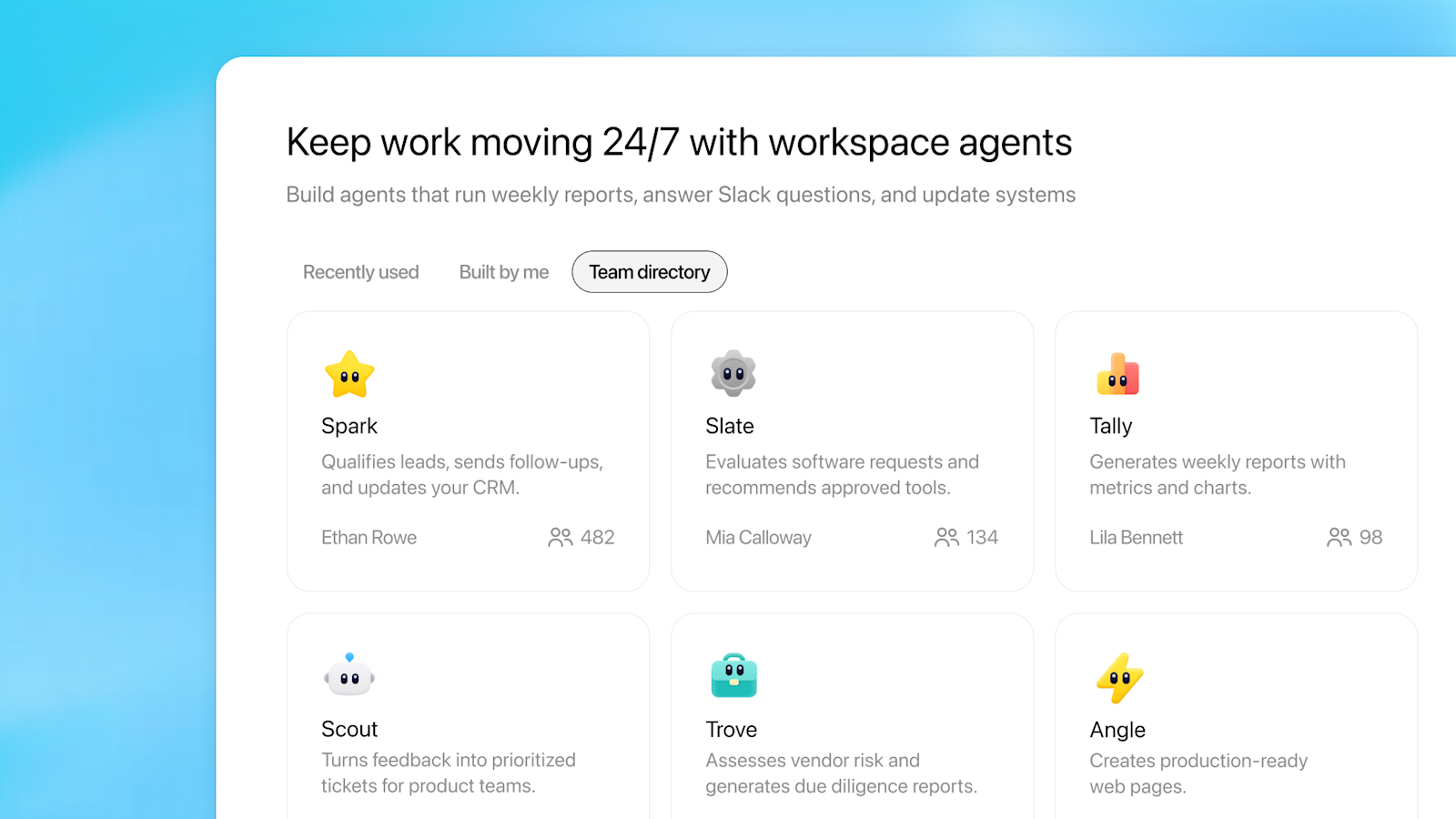
Agents configured by colleagues in the team directory can be reused directly at a glance.
It’s basically: describe what you want to do or directly give a document to ChatGPT, and it breaks down the steps, connects the necessary tools, adds skills, and pulls you in to test it once completed.
Codex, the runtime for business agents
Workspace Agents run on Codex. Each agent has a cloud workspace, which includes a file system, code execution environment, connected apps, and memory.
This system provides the following capabilities:
- Writing code, running code
- Calling connected apps (Gmail, GitHub, Google Drive, Slack, etc., via ChatGPT Connectors)
- Remembering previously learned information
- Continuously executing across multiple steps without being awakened for each step
Codex has been expanding its territory over the past year, from Codex CLI to IDE extension, to macOS app, Windows app, and to Codex for (almost) everything on April 16.
As of today, Workspace Agents bring Codex into the main interface of ChatGPT for use by departments like sales, finance, IT, and marketing.
OpenAI provided an internal example: the product team created an agent that sits in a Slack channel, answering employee questions while providing document links, and opening tickets directly when new bugs are found.
Deployment: ChatGPT and Slack
Currently, there are two deployment methods for Workspace Agents:
- ChatGPT for interaction
- Adding it to a channel in Slack
Agents in Slack can respond to messages within the conversation context, handle requests, and advance workflows.
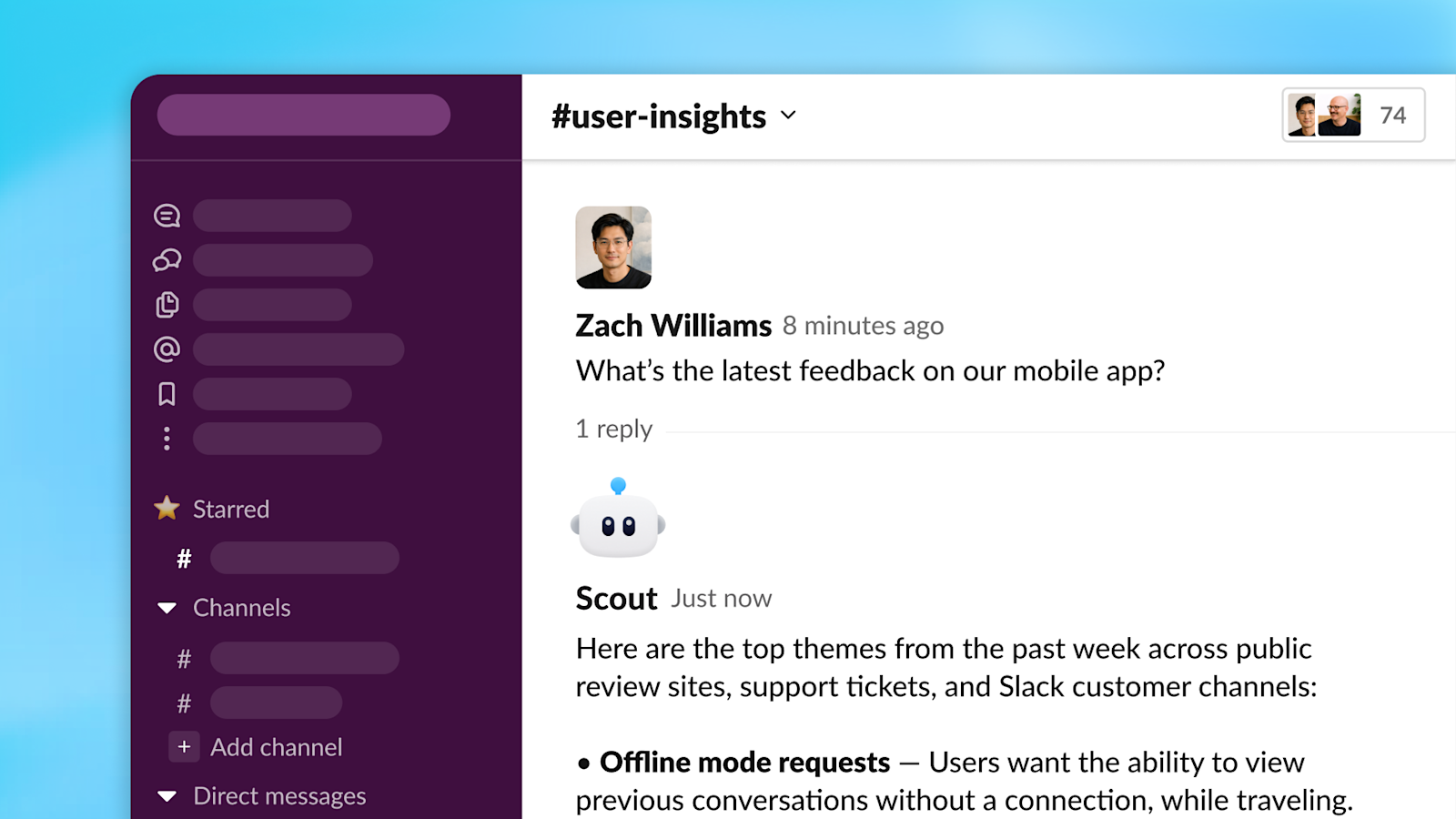
Sola feedback routing agent in Slack responds directly to colleagues' questions in the channel.
Within OpenAI, the sales team has an agent that combines call records and account research, scores leads, and directly drafts follow-up emails in the sales representatives' inboxes. The finance team has an agent that handles monthly closures, prepares entries, reconciles balance sheets, and runs variance analyses, completing in minutes and providing drafts for review, complying with internal processes.
OpenAI mentioned that more deployment options are coming soon. The implication in this statement is that Anthropic pushed Claude Cowork to macOS and Windows in March, with Dispatch turning phones into remote controls.
Clearly, OpenAI's ecosystem is currently slightly weaker than Anthropic's, but it is rapidly accelerating.
Control and Governance
Successfully implementing team-level agents requires resolving who can use them, what they can do, and when they should pause to inquire.
Workspace Agents' control is divided into four layers:
Tool and data access: what tools each agent can use and what data they can access is set during configuration.
Sensitive operations: approvals for editing spreadsheets, sending emails, adding calendar events, etc., can be set to require prior user consent.
Admin RBAC: Enterprise and Edu administrators control who can use, create, and share agents; control which connected tools are available to which user groups.
Prompt injection defense: when agents encounter adversarial commands in external content, they have built-in barriers to prevent them from veering off course.
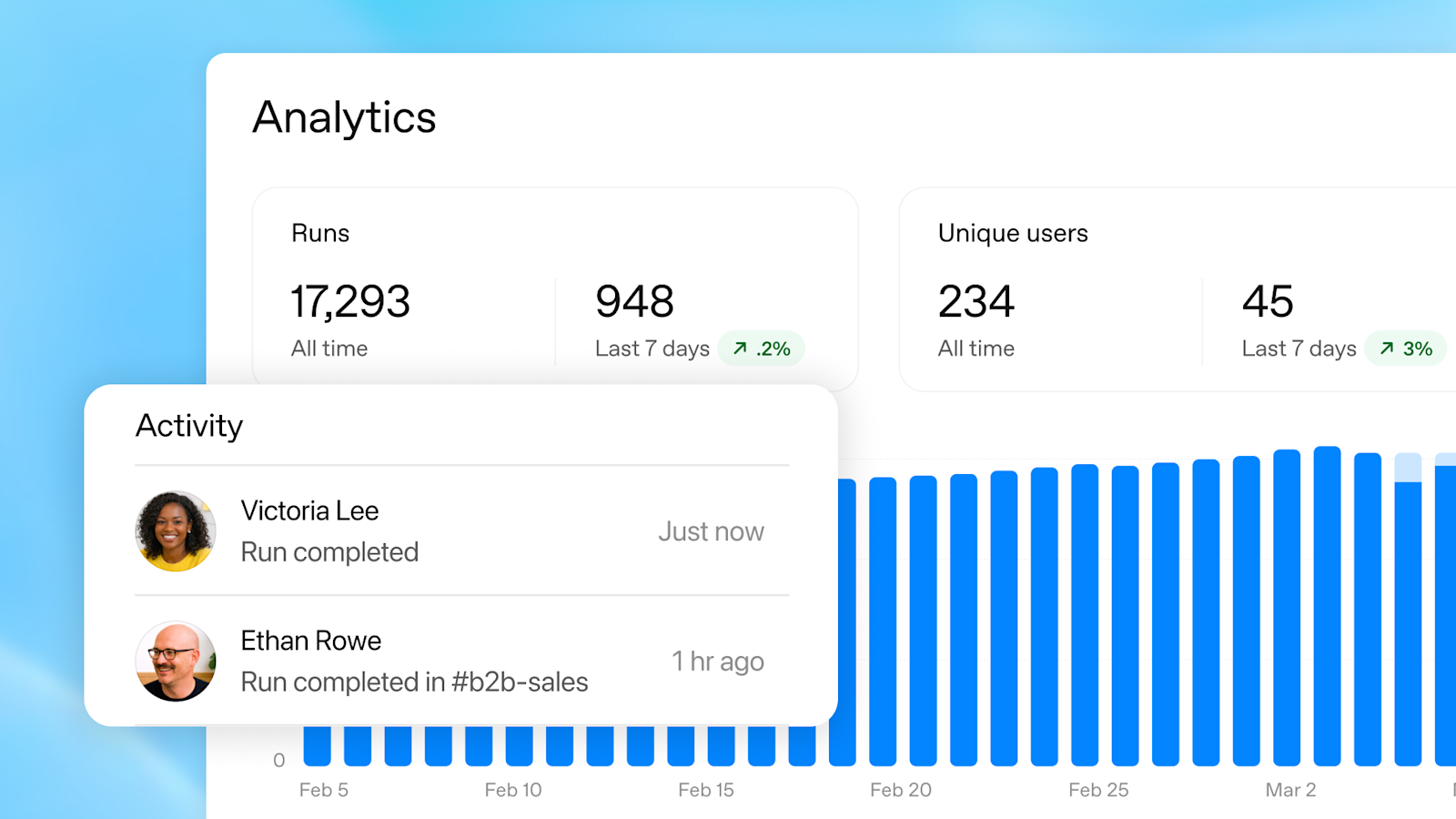
Usage analysis after an agent is live: total run count, active users, run trends.
Once an agent is published, its creators can see the run count, user numbers, and activity status. The Compliance API is available for administrators to view each agent's configuration, update records, and each run; they can also suspend an agent if necessary. OpenAI announced that a global view will be added to the admin console, allowing organizations to see which agents are being used and which data sources are being accessed at a glance.
Rippling's Endorsement
OpenAI's early client is Rippling. Ankur Bhatt, the head of AI Engineering at Rippling, stated:
The challenge of building agents has never been the model, but the integration, memory, and interactive experience scaffolding. After Workspace Agents covered the scaffolding parts, one of their sales consultants independently built a Sales Opportunity Agent without engineering team involvement. This agent conducts account research, summarizes Gong call records, and sends deal briefs directly to the sales team's Slack channel. What previously required the sales representatives to spend 5-6 hours a week is now continuously running behind every deal.
Ankur Bhatt, Rippling AI Engineering
A non-engineering sales consultant independently built an agent for the entire sales team to use, and this agent serves other colleagues as well.
Sales can build agents for sales use without requiring technical participation.
Pricing and Next Steps
During the trial phase, until May 6, 2026, workspace agents are free. After May 6, a credit-based pricing model will be implemented.
On the same day, OpenAI introduced a flexible pricing credit pool for the Enterprise plan, and workspace agents will deduct from this pool. The enterprise AI expenditure model shifts from how many seats to purchase to the number of tokens consumed.
OpenAI has outlined the next steps:
Triggers: Agents can be automatically triggered by events, not just scheduled.
A better dashboard: After building an agent, builders can see how to optimize it.
More business tools: Actions agents can perform actions in more SaaS applications.
Codex app support for workspace agents in the Codex desktop application.
GPTs were announced on November 6, 2023, at the first DevDay, and it has been 900 days since then. In these 900 days, OpenAI has experimented with the GPT Store, GPT Actions, and tried to make GPTs the main entry point in ChatGPT, but clearly, none of them worked out.
A quiet note:
At the beginning of the GPTs release, two of the top 100 GPTs were developed by me.
And now, the final outcome prepared by OpenAI for it is to change its form and continue living as workspace agents.
Moreover, this thing is free before May 6, and after that, it will be charged based on usage. The enterprise evaluation shifts from how many users to activate to how much business output is generated vs. how many tokens have been consumed.
This change may be the main storyline of corporate AI procurement over the next year.
Reference Material
Introducing workspace agents in ChatGPT, OpenAI official blog
openai.com/index/introducing-workspace-agents-in-chatgpt
ChatGPT Business
chatgpt.com/business
免责声明:本文章仅代表作者个人观点,不代表本平台的立场和观点。本文章仅供信息分享,不构成对任何人的任何投资建议。用户与作者之间的任何争议,与本平台无关。如网页中刊载的文章或图片涉及侵权,请提供相关的权利证明和身份证明发送邮件到support@aicoin.com,本平台相关工作人员将会进行核查。


