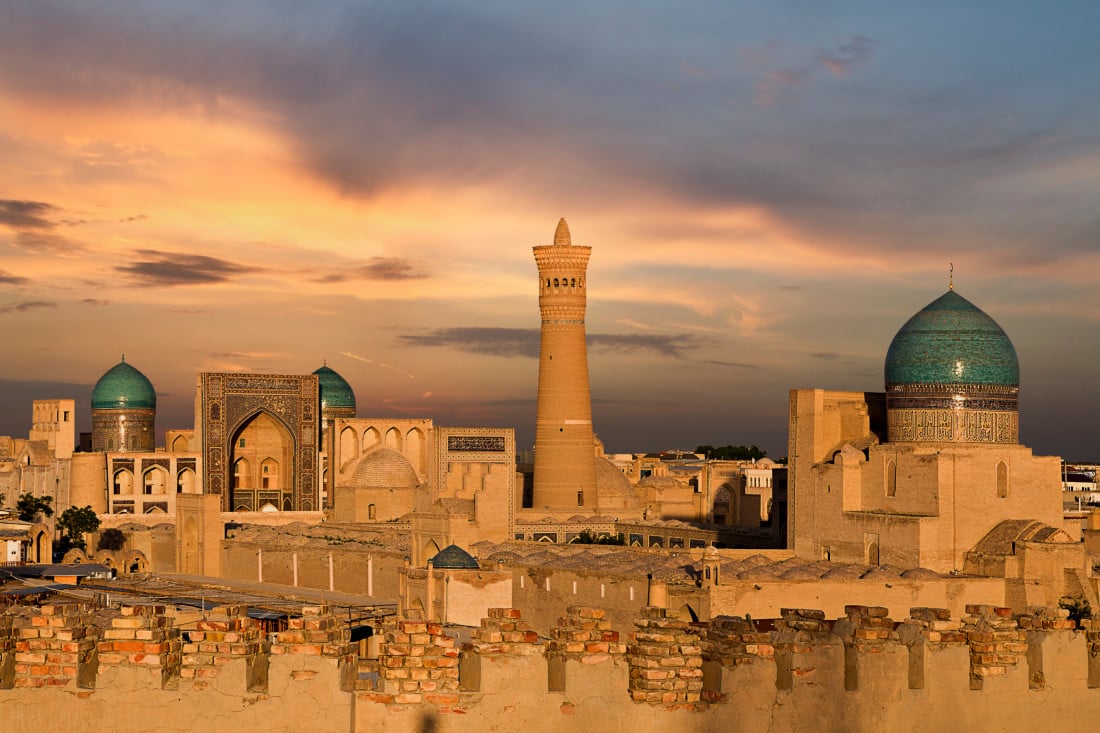
In the current "era of institutional competition" for global stablecoins and crypto assets, a country that has not been a focal point for mainstream markets is quietly completing a clearly defined and steadily paced cryptocurrency industry layout, even with a strong national will—Uzbekistan.
If you only look at scattered news, it's difficult to understand the true intentions of this country. On one hand, it blocks international exchanges while issuing local licenses; on the other, it strictly controls capital flows while promoting tokenization and stablecoin education; and today, it directly offers "10 years of tax exemption" in mining special zones.
This is not a swing, but a systematic design centered around "controllability".
More directly, Uzbekistan is attempting to answer a question: Can a non-US core country build its own financial infrastructure in the crypto era?
Open Up—Tighten—Then Open Again
Uzbekistan's crypto policy has never been a simple "support" or "prohibit," but a typical "exploratory regulatory path."
In 2018, the country was the first to legalize cryptocurrency trading, but soon in 2019, it restricted domestic residents from purchasing crypto assets, only allowing "sales." This stage was essentially to prevent capital outflow and speculative risks.
By 2021, the policy began to undergo a key turning point: regulators allowed residents to freely buy and sell crypto assets on locally licensed exchanges, while also improving token issuance and listing rules.
This step signified an important change—Uzbekistan was no longer trying to "restrict crypto," but began to "define crypto."
First "Close the Door," Then "Issue Licenses"
The true systemic turning point occurred in 2022.
That year, Uzbekistan did two seemingly contradictory but highly unified things:
- Blocked international trading platforms including Binance, Huobi, and Bybit
- At the same time, issued licenses for crypto trading services to local institutions
On the surface, it appears to be "blocking," but essentially, it is "controlling." Through this operation, regulators clarified a bottom line: crypto assets can circulate, but must do so within the domestic regulatory framework.
In the same year, the regulatory system was further refined:
- Introduced a monthly fee system for crypto service providers (directly included in the national treasury)
- Clarified regulatory categories for different businesses such as mining, custody, and exchanges
- Mandatory compliance and registration for mining
The core logic of this system is very clear: it is not about letting the market grow freely but about integrating the crypto industry into a "taxable, regulatable, and statable" national system.
From Restrictions to "National-Level Industry Tools"
If the trading side prioritizes "control," then in the mining sector, Uzbekistan's strategy is more industry-oriented.
In 2022, the government made it clear:
- Mining must use renewable energy such as solar power
- Must obtain permits and register
- Anonymous mining is prohibited
This was understood by many at the time as "restricting mining." But if viewed over a longer period, it is actually doing something deeper—transforming mining from a "grey arbitrage industry" into an "industrial behavior with controllable energy consumption."
This logic was amplified in 2026.
Uzbekistan announced the establishment of the "Besqala Mining Valley" mining special zone, covering the Karakalpakstan region:
- Mining income is tax-exempt until 2035
- Encourages the use of renewable energy
- Allows free sale of crypto assets (but funds must flow back to the domestic banking system)
This is not a simple "investment attraction policy," but a highly structured design: front-end opening (mining income) + mid-end freedom (trading) + back-end locking (funds returning).
In other words, computing power can be globalized, but funds must be localized.
The State Begins to "Get Involved" Directly
If the previous stages were still at the level of "regulation and industry," then starting in 2023, Uzbekistan entered a crucial next step—direct state participation in the construction of a crypto financial system.
The most typical case is the transformation of the national payment system HUMO.
- Launched blockchain tokens backed by government bonds
- Accessed a system of over 35 million cardholders
- Supports instant fiat conversion and on-chain transparent settlement
- Links to global networks like Visa, Mastercard, and UnionPay
This is no longer "crypto-friendly," but rather: directly mapping traditional financial infrastructure onto the chain.
Meanwhile, the banking system is also included in the experiment:
- Kapital Bank and Ravnaq Bank issue crypto physical cards
- Realized interconnection between bank accounts and crypto accounts
- Accessed payment network systems
This means that crypto assets are no longer "investment products," but have begun to become "payment tools."
Introducing External Forces, Filling Cognitive Gaps
In the context of intensified global competition for stablecoins, Uzbekistan has chosen a relatively restrained but pragmatic path.
In 2024, it signed a memorandum of cooperation with stablecoin issuer Tether:
- Promote the adoption of Bitcoin and stablecoins
- Establish an educational system (for students and professionals)
- Promote the popularization of P2P and blockchain infrastructure
The key here is not "introducing USDT," but rather: accelerating domestic cognition and talent structure building through external mature systems. This forms a closed loop with its mining, payment, and regulatory systems:
- Upstream: Energy + Mining
- Midstream: Trading + Regulation
- Downstream: Payment + Stablecoins
- Support: Education + Talent
This combination from regulation, mining to payment and stablecoins is not a fragmented advancement but gradually points to the same goal—completing the controllable integration of crypto assets within the system.
Not Leading, But Controllable
Markets often tend to measure a country's crypto layout by whether it can become a global center, but Uzbekistan's path does not point to this goal.
From licensing systems, capital return restrictions to mining special zones and payment systems on-chain, this series of actions is closer to an internal structural optimization—introducing crypto assets within a controllable range, improving capital efficiency, while avoiding systemic spillover risks.
In other words, it is not competing for "global discourse power," but attempting to answer a more realistic question: To what extent can crypto assets be utilized without giving up financial sovereignty?
Currently, this answer is still in the process of formation.
But it can be confirmed that Uzbekistan's choice is not a radical path, but a "reversible and adjustable" middle route.
And this route itself has already revealed a lot.
*The content of this article is for reference only and does not constitute any investment advice. The market has risks, and investments need to be cautious.
免责声明:本文章仅代表作者个人观点,不代表本平台的立场和观点。本文章仅供信息分享,不构成对任何人的任何投资建议。用户与作者之间的任何争议,与本平台无关。如网页中刊载的文章或图片涉及侵权,请提供相关的权利证明和身份证明发送邮件到support@aicoin.com,本平台相关工作人员将会进行核查。


