Author: Zen, PANews
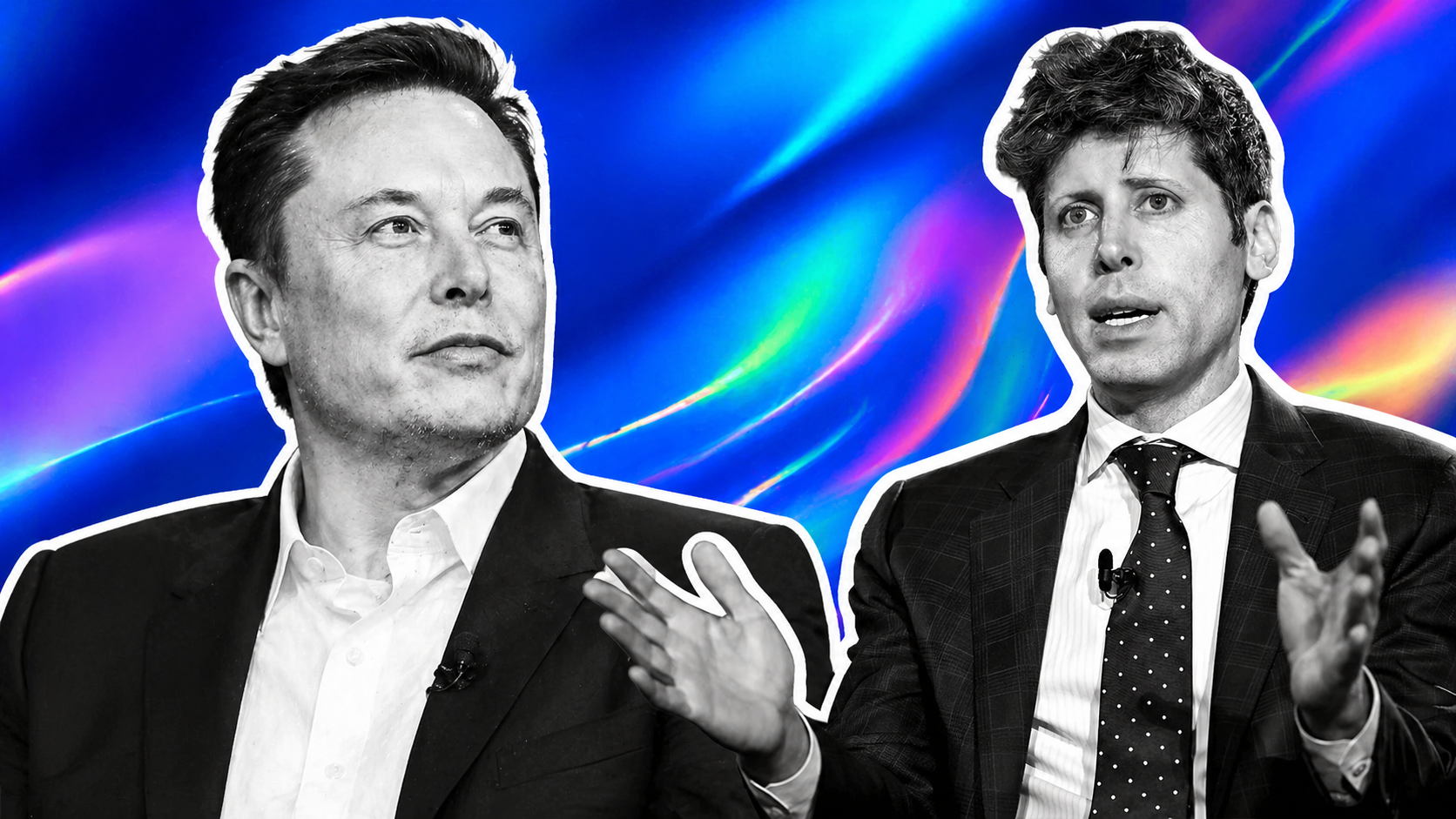
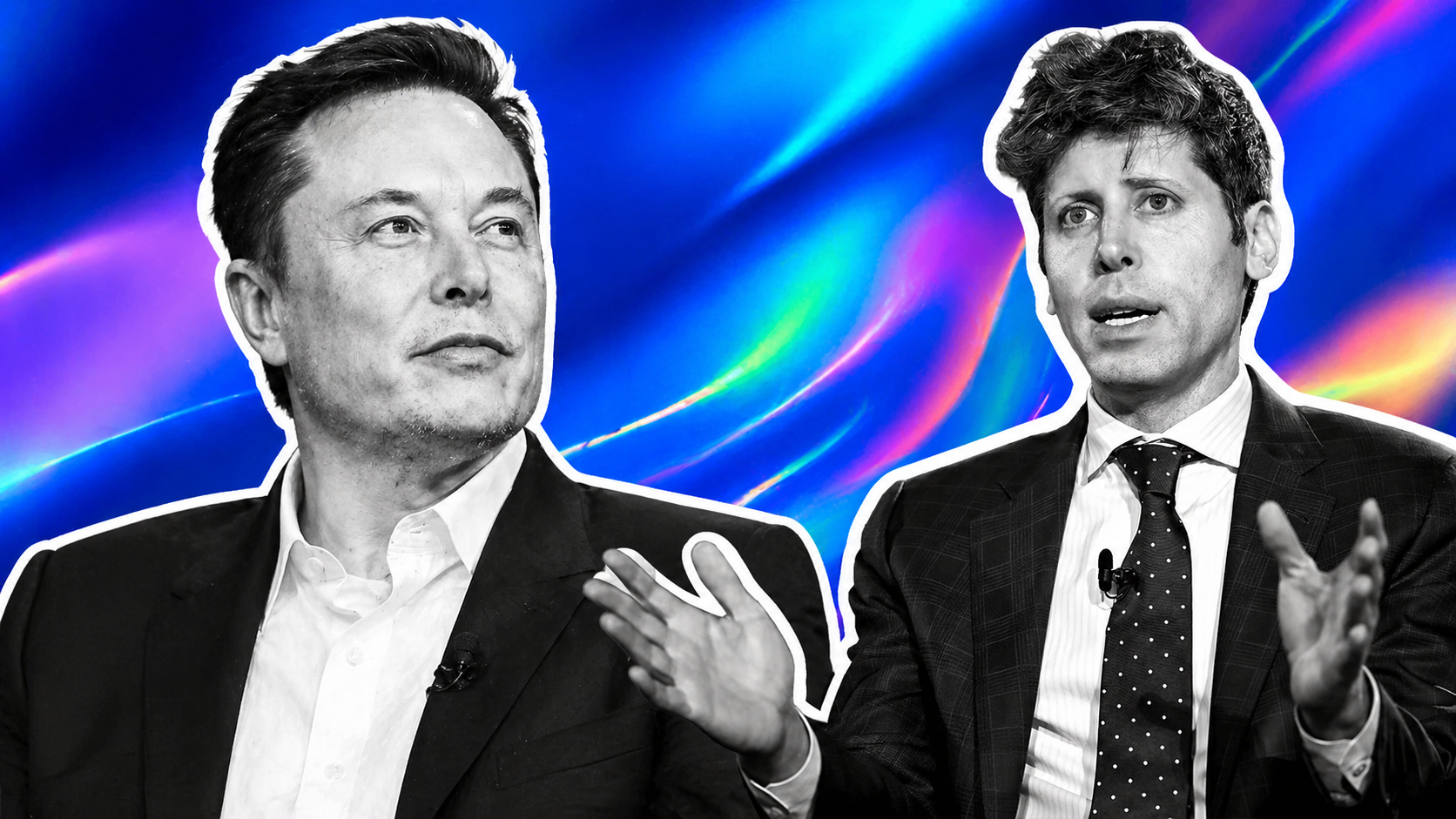
The dispute and separation between Musk and Sam Altman regarding the control of OpenAI, its commercialization direction, and its original mission have reached an extreme point, ultimately leading both to stand on opposite sides in court.
Musk accuses OpenAI of deviating from its original intention of “opening AI for all humanity,” while for OpenAI and Altman’s camp, Musk's continued emphasis on betrayal of the original intention appears more like frustration over his loss of dominance in the early power struggles.
This conflict, in some ways, represents a microcosm of the entire AI era’s fracturing. Yet, more than a decade ago, everything was entirely different.
In 2015, artificial intelligence had not yet become a global industrial frenzy. At that time, the explosion of ChatGPT was still far off, and most of Silicon Valley's attention was still focused on the mobile internet, social platforms, and the sharing economy. However, within a small circle of technology, a new change had already begun to emerge:
A year earlier, Google had spent heavily to acquire DeepMind. In 2014, this appeared to the outside world as just another large tech acquisition. However, within the core circles of Silicon Valley, the shock it brought was far greater than expected. More and more people began to realize that the development speed of artificial intelligence might be approaching a critical point.
If a general artificial intelligence that surpasses humans emerges in the future—who will control it? This question began to loom over the entire industry like a shadow.
It was against this backdrop that Elon Musk and Sam Altman, who would later become completely estranged, stood on the same side. At that time, they had a common enemy.
Allies of the Common Enemy
In mid-2010s Silicon Valley, AI was shifting from academic research to real industrial competition. Google owned DeepMind, Meta was madly recruiting AI researchers, and Amazon and Microsoft also began betting on machine learning infrastructure.
However, many believed that the real danger was not AI itself but the monopoly of AI by a few tech giants. Musk was one of the most radical voices among them. He had long publicly warned about the risks of artificial intelligence, even calling AI one of the greatest existential threats to human civilization. To some, his anxiety about AI bordered on paranoia.
Meanwhile, on the other side, Sam Altman was gradually transitioning from the world of startup incubators to more significant technological issues. At that time, Altman did not yet have the strong public controversy he has today; as a typical Silicon Valley technological idealist, he believed that technology would reshape the world and that a few key infrastructures would determine the human order for decades to come.
In 2015, OpenAI was founded. Today, we see OpenAI as a leading AI company, but at its inception, it resembled more of an interdisciplinary experiment in technology and socio-politics. Its goal was not only to create AI but to establish an AI research organization different from Google. Non-profit, open research, and preventing superintelligence from being controlled by a single company were at the core of OpenAI’s early narrative, aligning with today’s ethos of integrating decentralized concepts into research and AI technology.
At that time, OpenAI carried a strong utopian spirit. The research results were openly shared, papers were published publicly, and its project name “Open” even carried a deliberately declarative meaning. For a long time, both Musk and Altman believed they were doing something that could change the future power structure of humanity. But soon, reality began to close in.
Differences in Ideology and Power
OpenAI's initial issues were not only about technical research but also faced the pressure of insufficient funding. Computing power, GPUs, researcher salaries, data centers—everything was becoming increasingly expensive. The cost of training AI models began to spiral out of control.
OpenAI quickly realized that relying solely on idealism could not participate in this war, especially since their number one competitor, Google, already possessed a significant advantage in computing power. This was where Musk and Altman began to diverge fundamentally.
Both sides believed AGI was extremely important. However, they had entirely different answers regarding OpenAI’s survival philosophy.
According to later leaked internal discussions, Musk grew increasingly dissatisfied with OpenAI's direction. He worried about OpenAI falling behind Google in technical capabilities and questioned the organization's efficiency. Reports indicated that Musk had proposed a more radical integration plan, including the possibility of Tesla taking over OpenAI.
But this direction did not receive support. For many within OpenAI, entering a corporate system would mean losing the original purpose of its existence. The conflict began to shift from “technical routes” to “control.”
Who will decide OpenAI's future? Who truly owns it? During this process, Sam Altman’s influence was rapidly rising. He began to become the actual core organizer of OpenAI. Compared to Musk's more intense personal will, Altman was better at building alliances and coordinating capital and organizational structures. This was also a key reason why OpenAI could continually fundraise and expand.
But at the same time, this also meant OpenAI was gradually straying from its original idealistic experimental form. By 2018, the rift had become irreparable. That year, Musk withdrew from the OpenAI board.
The official reason was to avoid conflicts with Tesla's AI business, but many did not believe the situation was that simple and preferred to interpret it as a failure in a power struggle.
Embracing Capital, OpenAI Partners with Microsoft
After Musk's departure, OpenAI truly entered the Altman era, which was also the most pivotal turning point in OpenAI's history. It began to fully embrace capital.
In 2019, OpenAI launched a capped-profit structure. This is an exceptionally unique design. On the surface, OpenAI still retained nonprofit control, but at the same time, it allowed external investors to receive limited returns.
This structure is essentially a compromise. Because OpenAI had realized that without entering the capital system, it would be impossible to continue competing. What truly changed everything was the subsequent deep binding with Microsoft. Microsoft was not only a financial backer providing substantial funding, but it also offered cloud computing infrastructure, which in the AI war was almost equivalent to providing oxygen.
Subsequently, OpenAI's model capabilities began to increase rapidly. From GPT-2 to GPT-3 to the later GPT-4, it began to become a core player in the generative AI wave.
However, at the same time, another issue became increasingly evident: OpenAI was transforming into what it once sought to oppose. It was no longer open; models were becoming increasingly closed, and commercial interests were becoming more significant. Moreover, its relationship with Microsoft became deeper.
From Musk's perspective, this was almost ironic. OpenAI was originally founded to prevent the concentration of AI power. Yet, a few years later, it had formed a deep alliance with one of the world's largest tech companies. More importantly, the person controlling all of this was no longer him.
Musk's anger towards OpenAI was mixed with complex emotions. There was disappointment in terms of ideals, hostility after losing control, and, to some extent, a sense of betrayal.
On the other hand, Sam Altman's power increasingly solidified. He not only became the core figure of OpenAI but also gradually became one of the most influential figures in the entire AI industry. However, the greater the power, the bigger the conflicts became. The real war subsequently began.
Angry Former Founder
At the end of 2022, ChatGPT was released, igniting the entire tech industry. Within a few months, generative AI became the hottest technology direction globally, and OpenAI finally stood at the center of the world.
At this time, Musk had completely taken a stand against OpenAI. He began to frequently attack OpenAI publicly, criticizing it for “no longer being open” and for becoming a closed-source company under Microsoft's control. In many interviews and social media statements, he increasingly resembled an angry former founder.
Meanwhile, he also began to build his AI influence. In 2023, xAI was established. This was seen by many as Musk's direct response to OpenAI. The conflict between the two sides began to evolve from organizational differences to ideological and corporate warfare.
Musk constantly emphasized that AI should be more open. The OpenAI camp retaliated, stating that Musk had also supported commercialization in the past and only began to criticize after losing influence. Both sides believed they were the true guardians of the original intention.
In late 2023, a coup in the board of directors saw Sam Altman suddenly dismissed, exposing the internal power structure of OpenAI to the public for the first time. The entire Silicon Valley was instantly shaken, but what happened next was even more dramatic. A large number of employees publicly supported Altman, investors pressured, and Microsoft intervened. Within just a few days, Altman returned to OpenAI, and his power was even greater than before.
This incident made it clear to the outside world that OpenAI was no longer just a research institution; it was also a massive power machine. Capital, technology, talent, board, supermodels—all intertwined.
And the conflict between Musk and Altman finally became entirely public.
Legal War Erupts
In 2024, Musk officially sued OpenAI and Sam Altman. He accused OpenAI of deviating from its founding promise of “opening AI development for all humanity.” In the lawsuit, Musk attempted to prove that OpenAI was originally a nonprofit organization, and now it had been entirely altered by commercial interests.
OpenAI strongly rebutted. They publicly released some early emails and internal communications to prove that Musk not only knew about the commercialization direction but had even supported a similar transition.
Both sides began to enter into a true legal war.
On April 28, 2026, the case of Musk against OpenAI officially went to court in a federal court in Oakland, California. Musk’s 2024 lawsuit originally contained 26 charges; after preliminary rulings and Musk’s voluntary streamlining, only two charges remained for trial: violation of charitable trust and unjust enrichment. Fraud-related charges were withdrawn just before the trial.
Musk sought damages as high as $150 billion, demanding the removal of Altman and Brockman from their positions, and enforcing the restoration of OpenAI to a nonprofit organization. The compensation amount would all be injected into OpenAI's charitable department, not seeking personal gain.
In court statements, Musk's lawyer directly characterized the case: “The defendants in this case stole a charitable organization.” They cited the phrase in OpenAI's 2015 founding charter stating it was “not organized for any individual private benefit,” elevating the case to the roots of the charitable donation system. Musk warned from the witness stand: “If OpenAI wins, it will open the door for the plundering of every charitable organization in America.”
The OpenAI camp countered with a completely different narrative. Lawyer Savitt pointed out in the opening statement: “We are not here today because OpenAI betrayed its mission, but because Musk did not get what he wanted from OpenAI.” Court documents revealed that Musk had suggested obtaining a 55% stake in OpenAI but was rejected by co-founders who said, “They refused to hand the keys of artificial intelligence to one person.” OpenAI characterized the case as revenge initiated by Musk after failing to seize control.
The most damning evidence during the trial came from OpenAI President Greg Brockman’s private diary from 2017, which stated: “This is our only chance to get rid of Elon.” An email from co-founder Ilya Sutskever said to Musk: “You have indicated to us that absolute control is extremely important to you.” Musk saw this as the “last straw” leading to the relationship's breakdown.
The first phase of the court's responsibility identification process is expected to last until mid-May, with the jury making advisory decisions; the second phase for relief measures is scheduled to start on May 18, where the judge will independently determine whether to remove Altman and Brockman, whether to reverse the commercialization transition, and the compensation amount.
The reason this lawsuit has garnered significant attention is not only because it involves two of Silicon Valley’s most famous figures.
More importantly, it exposes the core contradictions of the AI industry. When the development costs of superintelligent AI are so high that only a few companies can afford them, can “openness” still exist? If AGI truly emerges, who should it belong to? Is capital destined to devour idealism?
These questions have actually run through the entire history of OpenAI. In a sense, the break between Musk and Altman is more like a microcosm of the evolution of AI in Silicon Valley over the past decade.
Initially, they both believed they were preventing the monopoly of technological power. But in the end, they went in different directions. One became OpenAI's fiercest enemy, while the other pushed OpenAI toward the global center of AI power.
And today, as both sides accuse each other in court, people realize that this war may have been inevitable from the very beginning. Because OpenAI was never just a technical project. It is more like an experiment regarding the control of core technologies for the future world. And once the experiment succeeds, the war surrounding it is also destined to begin.
免责声明:本文章仅代表作者个人观点,不代表本平台的立场和观点。本文章仅供信息分享,不构成对任何人的任何投资建议。用户与作者之间的任何争议,与本平台无关。如网页中刊载的文章或图片涉及侵权,请提供相关的权利证明和身份证明发送邮件到support@aicoin.com,本平台相关工作人员将会进行核查。


