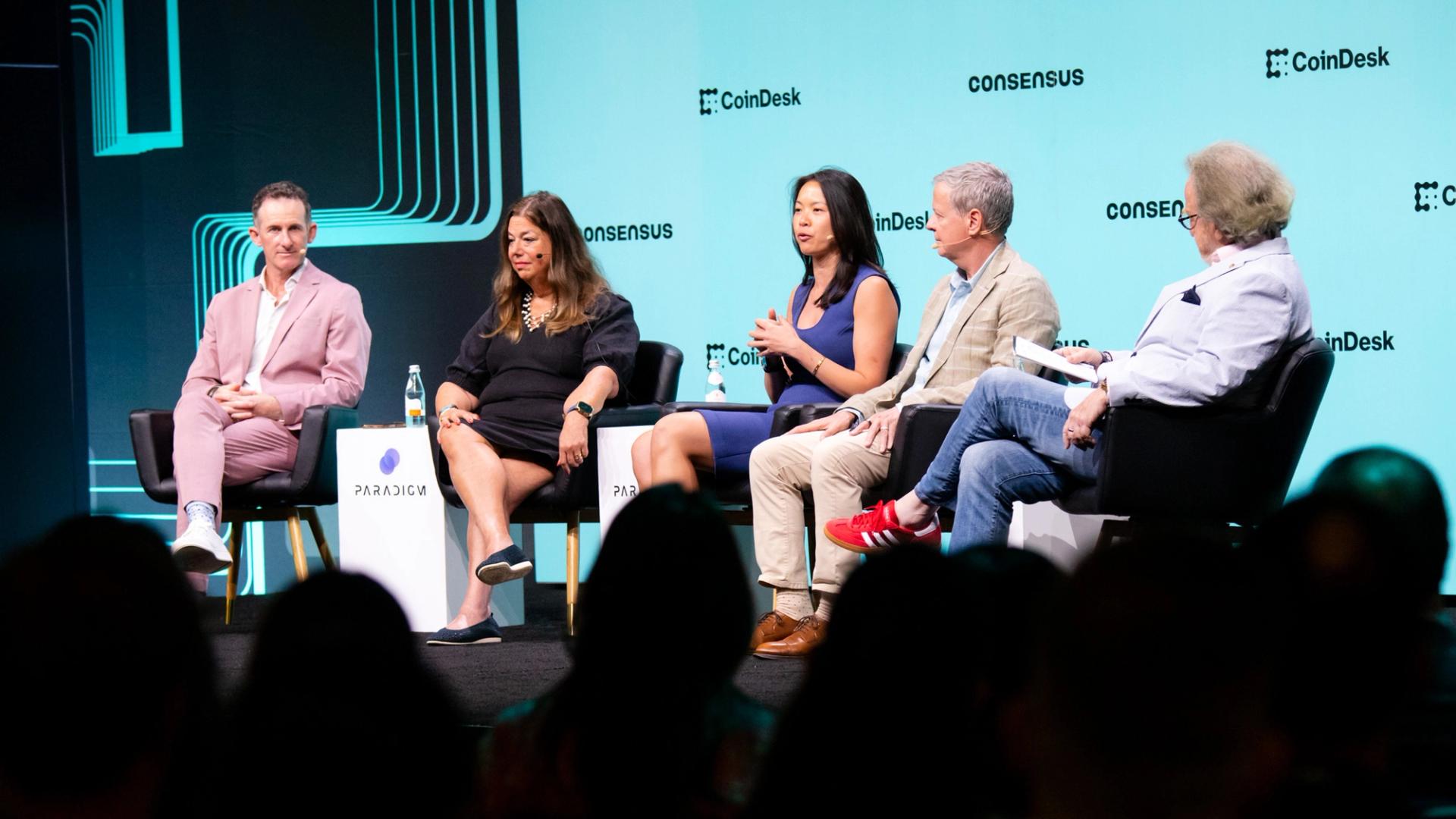
What to know : Wall Street and crypto executives warn that markets are nearing a breaking point as 24/7, machine-driven trading collides with legacy systems built for slower, human-paced processes. Blockchain-based tokenization promises real-time, continuous settlement that could keep both individual and corporate cash fully invested until the moment it is spent, reducing idle balances across the system. Panelists said the main obstacle is not transaction speed but the lack of shared governance standards and rules, which large institutions see as essential to maintaining reliability and trust as markets are rebuilt for automated capital flows.
Miami Beach, FL — A growing group of Wall Street and crypto executives say the financial system is heading toward a breaking point, as markets shift from human-paced processes to machine-driven activity that runs around the clock.
“We’re moving to a world where transactions happen at a speed no human can track,” Sandy Kaul, head of digital assets and innovation at Franklin Templeton, said during a panel on the future of capital markets at Consensus in Miami on Tuesday. At the same time, “almost every process in capital markets today was built for humans, and none of them will stand up to what’s coming,” she added.
The tension between those two ideas — faster, automated markets and legacy systems designed for manual oversight — sat at the center of the conversation.
For decades, financial markets have relied on layered processes to handle trades. Systems batch transactions, reconcile records and settle trades hours or even days later. That structure dates back to a time when physical stock certificates moved across Wall Street by hand.
Now, blockchain infrastructure is starting to remove those constraints. Panelists pointed to tokenization — the process of turning assets like stocks or money market funds into digital tokens — as a key shift. These tokens can move instantly, settle in seconds and operate continuously.
“We are unwinding a system that’s been in place for 50 years and going back to settling one transaction at a time,” Kaul said, describing how real-time settlement could replace today’s batch-based model.
That shift has practical implications. In a tokenized system, an investor’s cash could remain fully invested until the exact moment it is spent. “Every penny of my earnings is fully invested from the moment I earn it to the moment that I spend it,” Christine Moy, partner at Apollo, said, outlining a future where idle cash largely disappears.
The same logic applies to large corporations. Instead of holding cash across multiple accounts worldwide, companies could pool funds into yield-generating assets and convert them only when payments are due.
Still, major hurdles remain. While blockchain networks can already process transactions quickly, some panelists argued that the industry lacks the rules and standards needed for institutions to operate at scale.
“We’ve solved the transaction problem. What’s missing is a standard for governance,” said Tom Zschach, former chief innovation officer at Swift, pointing to the need for clear rules around ownership, compliance and permissions.
That gap matters for large financial firms, where reliability often outweighs speed. “If there’s a chance it might not work, it’s a non-starter. What institutions need is certainty,” he said.
At the same time, competitive pressure is rising. As newer platforms offer faster and more flexible financial services, traditional firms risk losing clients if they fail to adapt.
Taken together, the discussion suggests the next phase of market evolution will not just be about faster trades. It will center on rebuilding the underlying systems so they can support continuous, automated flows of capital—without breaking the trust that global finance depends on.
免责声明:本文章仅代表作者个人观点,不代表本平台的立场和观点。本文章仅供信息分享,不构成对任何人的任何投资建议。用户与作者之间的任何争议,与本平台无关。如网页中刊载的文章或图片涉及侵权,请提供相关的权利证明和身份证明发送邮件到support@aicoin.com,本平台相关工作人员将会进行核查。


