On May 6, 2026, the United States proposed a new plan referred to by multiple media outlets as "ending the war," attempting to package Iran's nuclear activities, the navigation of the Strait of Hormuz, and the lifting of the blockade into the same framework. On the same day, Iran publicly stated that it was assessing this proposal while also sending signals that it "will ensure the safe passage of vessels through the Strait of Hormuz." For a critical waterway that has frequently faced disruptions due to US-Iran conflicts and significantly affects global energy dynamics, these few statements are enough to alter market sentiment—whether the Strait of Hormuz is navigable is not only a regional security issue but also directly reflects the extent of international oil price risk premiums. The market reads this as: the worst-case scenario of war seems to be postponed, but the sharp opposition between the US and Iran on the order of “first lift the blockade or first suspend nuclear activities” remains, and geopolitical uncertainty has not vanished; it has merely transitioned from the tail risk of an "immediate supply cutoff" to the mid-term noise of "negotiation tug-of-war."
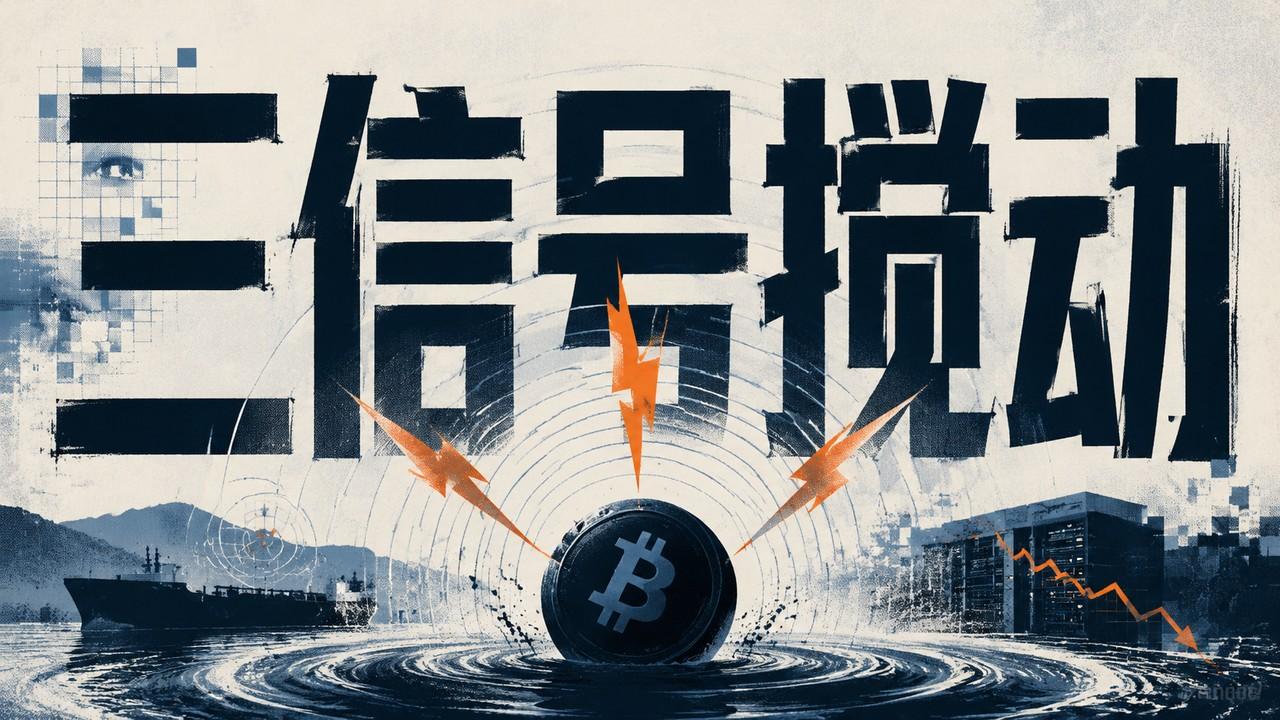
At this pivotal moment, the main narrative in the crypto market is indeed very clear: the compression or re-expansion of oil price risk premiums will, through inflation expectations and interest rate paths, reprice the discount rate of assets like BTC and ETH denominated in US dollars, while the fluctuations of geopolitical tensions will shape their demand curves as "cross-border value transfer tools under sanctions" and "digital safe-haven assets" in another narrative chain. In other words, when traders focus on news about navigation in the Strait of Hormuz, the real questions to address are two that exist simultaneously but may have opposite directions: if oil price shocks are mitigated, will the global liquidity expectations favor the “high beta asset” nature of BTC/ETH; and as long as US-Iran negotiations remain unresolved, to what extent will geopolitical premiums provide underlying support for BTC's hedging narrative?
Strait of Hormuz Navigation Eased: Oil Price Tail Risks Reduced First
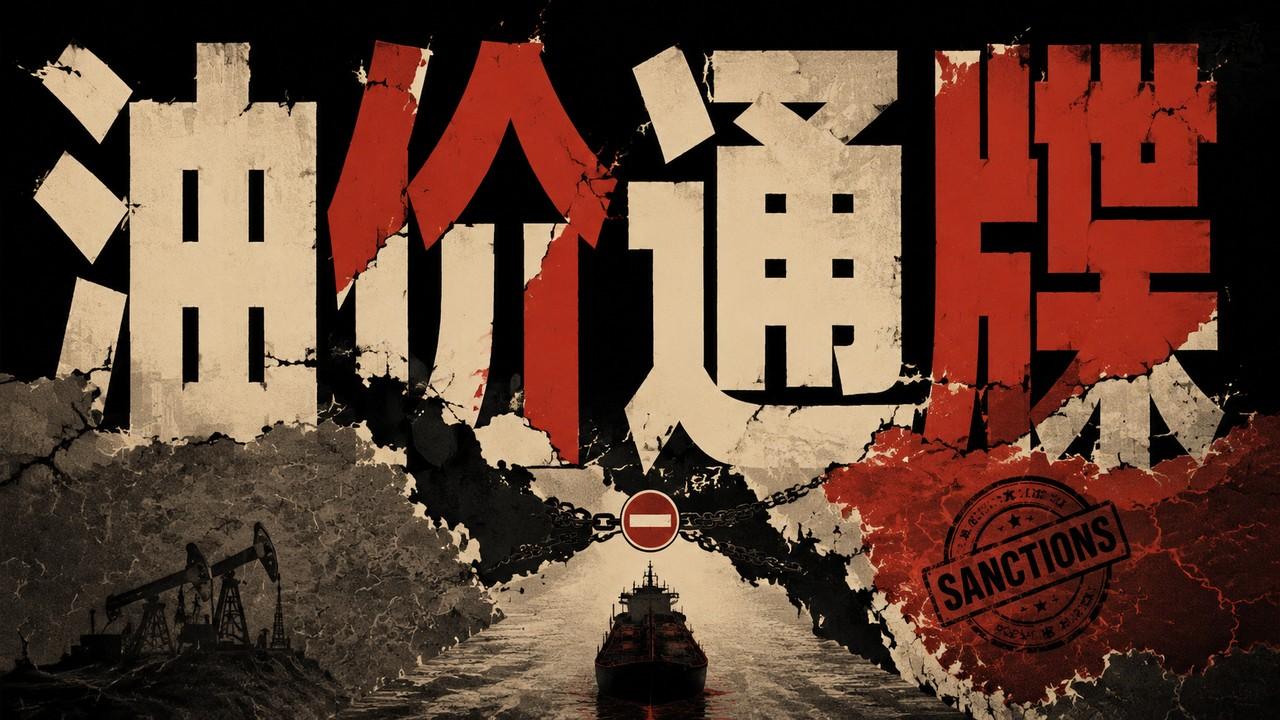
The Strait of Hormuz itself is a price conduit. It connects the Persian Gulf with the open sea and is a critical choke point for Middle Eastern oil and gas exports. Earlier confrontations between the US and Iran over nuclear programs and sanctions have repeatedly caused this chokepoint to get "choked up," resulting in severe fluctuations in international oil prices and global risk assets. For energy traders, as long as there is a possibility of the Strait being blocked or harassed, oil prices are no longer just a string of numbers on a supply-demand balance sheet; they include a layer of "insurance premium for what happens if something goes wrong": the elevated risk premium in futures prices and the extra pricing for extreme scenarios within option implied volatility. The market will repeatedly simulate the low probability yet high-loss paths in pricing models—short-term closures of the Strait, disruption of vessels, skyrocketing freight costs—even if these scenarios ultimately never actually occur; they will remain as "tail risk premiums" lingering over oil prices and energy volatility over the long term.
In this context, on May 6, 2026, as Iran announced it was assessing the US's proposed "end the war" new plan, and publicly stated it would "ensure the safe passage of vessels through the Strait of Hormuz," it effectively handed the market a "reassurance note" on one of the most sensitive variables. This does not mean that all navigation arrangements have been officially restored or clearly adjusted; Iran has not provided a detailed timeline. However, in terms of pricing, the order is very clear: the most extreme scenario of "suddenly cutting off supplies" has had its political signal pressed first to a pause. The energy market instinctively compresses part of the geopolitical risk premium—the panic premium in the flat futures curve begins to ease, and the "fat tail" segment dealing with explosive market conditions in option implied volatility has been trimmed first. Traders are not naive enough to think risks have disappeared, but they will acknowledge that at the moment Iran actively committed to ensuring safe passage, the Strait of Hormuz immediately retreated from being a tactical target of "potential black swans at any moment" back to a manageable bargaining chip.
The problem is that the reduction of this tail risk is itself a function of the peace talks process. The US and Iran remain at an impasse over the order of “first lift the blockade or first suspend nuclear activities”; with the proposal still under assessment, it means that the geopolitical uncertainty of the Strait of Hormuz has merely been downgraded from "immediate explosion" to "repeated uncertainty at any moment." If negotiations are drawn out or any signal is interpreted as "Iran is no longer willing to guarantee safe passage," the energy market will rapidly re-add that portion of tail risk which had previously been compressed, and the rise in oil prices and option volatility will spill over into global risk asset pricing through inflation expectations and interest rate paths, retesting whether high beta assets including BTC and ETH will be labeled as “growth assets” or “geopolitical hedging tools.”
Energy Inflation and Interest Rate Expectations: From Oil Barrels to US Treasuries to Coin Prices
Every significant fluctuation in oil prices primarily leads to a repricing of inflation expectations. Energy prices hold an extremely high weight in the inflation baskets of major economies. The transmission of gasoline, transport, and chemical chains; once oil prices increase, the market will proactively lift the inflation center for the next few quarters. The Federal Reserve and other central banks will repeatedly focus on this area when discussing monetary policy paths: will energy reignite previously suppressed inflation, and will financial conditions need to be tightened again? Under the combination of “high inflation + high real interest rates,” the discount rates for high valuation and high beta assets rise; likewise, risk asset valuations, including growth stocks, are compressed, making it difficult for crypto assets to escape unscathed. Each future cash flow narrative for BTC and ETH will be discounted at a higher interest rate curve.
Bringing the perspective back to the current US-Iran negotiations and the Strait of Hormuz, if the market believes Iran's commitment to "ensure the safe passage of vessels" can persist and that the new proposal is moving towards easing, the portion of "supply disruption premium" within oil prices will continue to be squeezed, leading to a cooling of inflation expectations. For US Treasuries, this means the yield curve can conditionally make a "friendly" adjustment: long-term interest rates may fall or at least not rise under a more moderate inflation path, the dollar's yield advantage may be weakened, and the narrative of global funds migrating from safe-haven assets to high-risk assets may regain strength. In such scenarios, BTC and ETH, as high beta assets priced in US dollars, will see their discount rates decrease, investor-required risk compensations decline, and the same on-chain growth narratives and adoption expectations can support higher valuation multiples.
Conversely, once the probability of negotiations breaking down is repriced, and the question of navigation through Hormuz is once again cast in doubt by the market, oil prices will react first, inflation expectations will rise, and the interest rate path will be forced to adjust more toward a “hawkish” direction—either by increasing nominal interest rates, delaying easing points, or both. The long-end yields of US Treasuries and real interest rates will rise in this repricing, the dollar will strengthen against other currencies, and the overall discount rate for global assets will move up, causing high valuation assets to face the most pressure. For BTC and ETH, the oil price shock manifests through the chain of “inflation—interest rates—dollar,” ultimately reflecting as higher dollar interest rate discounts and higher risk premium requirements. Even if the on-chain fundamentals do not worsen, prices will become weak under the pressure of this macro denominators; hence, for participants in the crypto market, it is essential to closely track how oil prices reshape this transmission chain of inflation and interest rate expectations, rather than the drastic short-term fluctuations of any single coin's sentiment.
The Shadow of War Has Not Dispersed: The Narrative of Digital Gold Under Geopolitical Uncertainty
The new US proposal combines "suspending or freezing nuclear enrichment, restarting navigation through Hormuz, lifting the blockade, and later restarting comprehensive nuclear agreement negotiations," seemingly offering a "conditionally easing" path. However, key differences are precisely stuck on the timing that the market cares most about—whether to first loosen economic and financial restrictions or to pause nuclear activities. Iran openly stated that it is "assessing the proposal" and committed to ensuring safe passage for vessels through Hormuz, which has relieved some pressure on oil prices and shipping sentiment. However, the timing issue remains unresolved, meaning either party can withdraw midway through negotiations; the tail risk of supply disruption and the intensification of sanctions have never genuinely left. This state of "seeing the plan but not being clear on the sequence of implementation" inherently represents a high-grade geopolitical uncertainty premium.
In this context, Bitcoin's role begins to oscillate. On one hand, in past tensions in the Middle East, Bitcoin has repeatedly been viewed by public opinion and certain funds as an alternative asset to hedge against geopolitical and sanction risks. In sanctioned economies, on-chain dollars and Bitcoin have been used as cross-border settlement and value transfer tools, reinforcing its narrative as "digital gold." When discussions around Hormuz, the nuclear issue, and the blockade arise together again, some funds are more willing to view Bitcoin as a safe asset pool that bypasses traditional financial systems. On the other hand, crypto asset prices have over the years exhibited a high correlation with interest rates, the dollar index, and global stock market risk sentiment; when the oil price-inflation-interest rate link tightens, Bitcoin may also be categorized as a high-volatility risk asset, included in the "de-leverage" list. The result is that each round of news regarding "progress" or "stalemate" in the US-Iran negotiations can swiftly alter funds’ perception of Bitcoin as either a “safe haven” or a “risk asset,” with price performances displaying a tug-of-war over narrative dominance.
In contrast, ETH and high beta tokens expose a different risk structure in such geopolitical shocks. The market generally sees BTC as more of a "digital gold," while ETH and smaller market cap tokens are viewed as growth assets more sensitive to macro liquidity. When the US and Iran stalemate on whether to “first lift the blockade or first suspend nuclear activities” and oil price risk premiums remain difficult to reduce, inflation and interest rate expectations fluctuate, and funds often prefer to conduct a "quality sorting" internally within crypto—first reducing positions in high beta tokens, followed by ETH, and finally BTC, concentrating limited risk budgets on assets deemed relatively resilient. As long as the US-Iran game does not provide clear answers in terms of timing and conditions, this structural differentiation of “BTC acting as digital gold, while ETH and high beta assets serving as amplifiers” is unlikely to dissipate. For traders, what they need to assess next is how the evolution of timing discrepancies will push market sentiment toward either "returning to risk assets" or "back to digital gold."
Expectations for Sanctions Easing and On-Chain Dollars: Another Curve of USDT Demand
If in the future the US truly implements the “new plan” as envisioned, partially lifting the economic and financial blockade against Iran, allowing Iran to rejoin the traditional banking system after meeting nuclear activities and navigation conditions, then the entire Middle East's demand curve for "on-chain dollars" will quietly transform. In the past, in sanctioned economies, with dollar accounts being cut off, on-chain dollars and Bitcoin were used as alternative tracks for cross-border settlements and value transfers, essentially bypassing the banking system's "gate" through technological means. Once the gate opens partially, local Iranian entities engaged in genuine trade will have the motivation to shift some settlements back to bank channels with lower costs and compliance pressures, effectively pulling some of the dollar liquidity previously "squeezed" onto the chain back into the onshore world. For dollar-pegged assets like USDT, the "passive demand" from sanction pressures may marginally cool down, leaving a block of rigid demand on-chain, which will no longer be the only channel.
Conversely, if negotiations break down, sanctions not only do not ease but are tightened regarding nuclear activities and Hormuz navigation, Iran will become even more deeply locked out of the dollar clearing system, and cross-border settlements and capital transfers in the region will only further rely on on-chain channels. At this point, the roles of on-chain dollars and BTC will be magnified: the former for pricing and settlement, the latter for value transfer and cross-chain movement, both reshaping the on-chain profile of local participants. Unlike the macro-hedging funds mentioned earlier, these funds bound to sanctions will not swing frequently like trading positions between oil prices and interest rate expectations; rather, they will slowly but steadily alter address distributions, the weights of mainstream fiat trading pairs, and the relative positioning of BTC/ETH in regional liquidity. The real variable is not how much on-chain transaction volume increases on any given day but whether Iran is pushed towards the banking system or pushed back toward this longer-term and harder-to-reverse path of on-chain settlement in the coming years.
From Oil Tankers to K-Lines: What This Negotiation Matters for the Crypto Market
Bringing the timeline back to May 6, 2026: the United States proposed the "end the war" new plan, and Iran, while publicly stating it is assessing it, also sent a signal of "ensuring safe passage for vessels through the Strait of Hormuz," prompting the market to begin compressing the most extreme supply disruption scenarios in the oil price curve. However, the proposal has yet to turn into an agreement, and navigation commitments are still at the verbal stage; the chokepoint of Hormuz still places a considerable risk premium on oil prices, and this premium is essentially the uncertain range of future inflation expectations and major central bank interest rate paths. For BTC and ETH, this is not a story far removed from the Bay Area, but rather directly impacts their discount rates and capital positions through the chain of “energy prices → inflation expectations → interest rates and dollar strength → risk appetite.”
Next, the macro variables that crypto traders should closely monitor are actually quite clear: first, the direction and volatility of oil prices—if there is substantial release of navigation through Hormuz and escort arrangements are implemented, oil price risk premiums will continue to be compressed, pushing inflation expectations and interest rate paths in a dovish direction, favorable for the valuation of BTC/ETH as high beta risk assets; if negotiations backtrack or even face obstacles to navigation, rising oil prices could drive inflation and real interest rates up, shifting the narrative from “growth asset” to “geopolitical hedge,” making prices more vulnerable to global risk sentiment pullbacks and regional safe-haven buying. Second, the pricing of real interest rates and the dollar index—if nominal rates rise but inflation expectations cannot be contained, this will elevate real interest rates, putting pressure on the valuations of BTC/ETH priced in dollars; conversely, a decline in real interest rates coupled with a recovery in risk appetite may spur a new round of risk reallocation towards on-chain dollars and major coins. Third, the negotiation milestones themselves: any emergence of clear timelines or phased results regarding Iran's nuclear activities and the lifting of the blockade, as well as arrangements for navigation through Hormuz, will become trigger points for repricing oil prices and interest rate curves, subsequently impacting BTC/ETH pricing. Ultimately, what is truly worth monitoring on the screen is not any particular political statement but how the risk premium on oil prices and real interest rates are repriced following these milestones.
Join our community to discuss and become stronger together!
Official Telegram community: https://t.me/aicoincn
AiCoin Chinese Twitter: https://x.com/AiCoinzh
OKX benefit group: https://aicoin.com/link/chat?cid=l61eM4owQ
Binance benefit group: https://aicoin.com/link/chat?cid=ynr7d1P6Z
免责声明:本文章仅代表作者个人观点,不代表本平台的立场和观点。本文章仅供信息分享,不构成对任何人的任何投资建议。用户与作者之间的任何争议,与本平台无关。如网页中刊载的文章或图片涉及侵权,请提供相关的权利证明和身份证明发送邮件到support@aicoin.com,本平台相关工作人员将会进行核查。