整理 & 编译:深潮 TechFlow
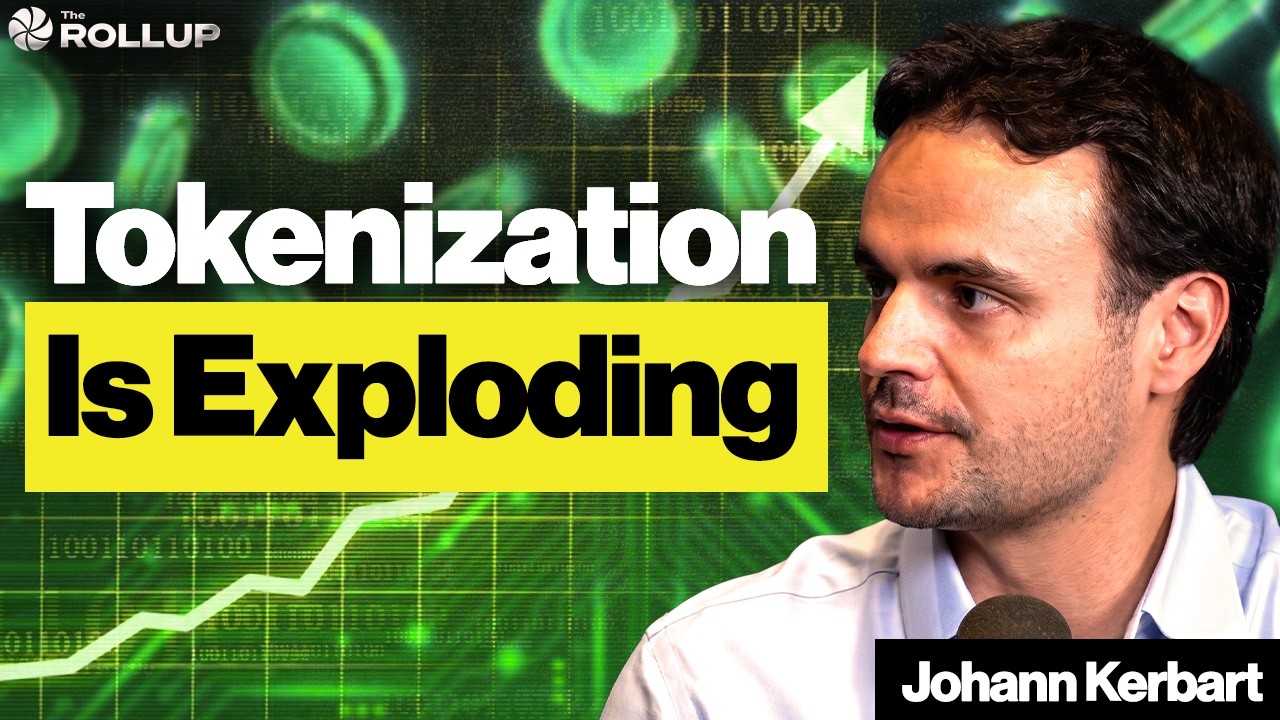
Guest: Johann Kerbrat (Senior Vice President and General Manager of Robinhood's crypto business)
Podcast Source: The Rollup
Original Title: Is Robinhood About to Become the World's Financial Super App?
Broadcast Date: May 6, 2026
Editor’s Introduction
This episode of the podcast features an interview with Johann Kerbrat, Senior Vice President and General Manager of Robinhood's crypto business. He stated that perpetual contracts have already gained traction in Europe, and tokenization will be the next breakthrough point, including bringing U.S. stocks, private equity, and commodities onto the blockchain. Johann also directly responded to the comparison between Robinhood and Hyperliquid, stating that they represent "licensed centralized" versus "fully decentralized" businesses, which are not comparable. However, Hyperliquid's token HYPE can now be purchased on Robinhood.
Highlights
Predictions for the Explosive Growth of Prediction Markets
- "This is a completely new way of investing. Ordinary people used to have no way to hedge against the Federal Reserve's interest rate decisions, the future direction of AI, or which company can create the best model. Prediction markets and event contracts really allow you to hedge from these dimensions."
- "If you want to bet on AI, instead of picking one stock among Nvidia, AMD, or Microsoft, just buy an event contract about AI. This is a play that ordinary investors couldn't access in the past; it was originally only available to specific institutions."
- "In our view, exchanges are basically commodities. Any product we have will connect to multiple exchanges; crypto and stocks follow this logic, and prediction markets do as well."
Perpetual Contracts and Regulation
- "Perpetual contracts are simpler products in many ways; you don't have to manage expiration dates or worry about specific funding mechanisms, and you can settle continuously."
- "We have launched about 12 perpetual contracts in Europe, with up to 10x leverage. We have been in dialogue with the CFTC, and the chairman has repeatedly mentioned that this is one of their biggest concerns. Once the regulatory framework in the U.S. is clear, we can launch at any time."
- "Our stance has always been clear; the rewards from stablecoins and FDIC-insured bank accounts or savings accounts are not the same. However, we also do not want to penalize users who hold stablecoins just for quick transfers between wallets and platforms."
Tokenization
- "Tokenization will be the next big breakthrough point. It is currently very difficult for ordinary users to buy international stocks, and it's even harder for international users to buy U.S. stocks. Crossing continents is even more complex, with many taxes and few safe revenue channels."
- "We see many people in various countries buying USDC and USDT for a safe exposure to the dollar. What can be done with stablecoins can also be done with commodities, stocks, and private equity assets in the future."
- "Ordinary Americans want to invest in private equity, but either they can't enter because they are not accredited investors, or they can't get quality share access. Tokenization can level the playing field."
- "Tokenization is the next stage of technological evolution. Adapt or be eliminated; no one wants to go back to the old system."
Robinhood's Product Logic
- "We want to gradually replace some of the old backend systems with a crypto track. In Europe, we have already launched 2,000 tokenized U.S. stocks and ETFs, providing customers with 24/7 trading, fractional shares, and immediate settlement—everything that tokenized assets can offer."
- "For many people, the first interaction with these DeFi protocols has a threshold. Users always need to think about cross-chain transactions and how to pay gas fees. But in the Robinhood wallet, those complex steps are handled in the background, so users don’t need to manage them."
About Hyperliquid
- "On one side, there’s the licensed, regulated business, and on the other, there’s the completely decentralized model. These two businesses can't be directly compared. What we are doing is centralized; if something goes wrong, you can sue Robinhood or complain to regulators about Robinhood. This is a different world."
- "We don’t view each other as ‘never interacting with each other’ competitors. You can now buy Hyperliquid’s token HYPE on Robinhood."
Robinhood's Super App Vision
Host: Robinhood's crypto business has grown from an experiment a few years ago to a complete market today. What has your experience been like building this business at Robinhood over the past two years?
Johann Kerbrat: Quite cool. We started in 2018 during the crypto winter. Many people asked us why we bothered launching BTC and ETH. Our thought was simple: we wanted users to access all the financial products they care about, and crypto is one of them. Since then, we have gradually launched many assets, opened staking in most states, created transfer functionality, and launched the self-custody wallet Robinhood Wallet, which is also available in Europe. Last year alone, we generated over $1 billion in revenue from crypto. Now that the market is a bit calmer, we are refining new features that users will use when the next bull market comes."
Host: You say the market is relatively calm, but the momentum for prediction markets is strong. I have data showing that prediction markets have risen by 320% on Robinhood. Why is there such enthusiasm for prediction markets?
Johann Kerbrat: I think this is a completely new way of investing. Ordinary people couldn't hedge against the Federal Reserve's interest rate decisions, the future trajectories of AI, or which company could create the best model. Prediction markets and event contracts genuinely allow you to hedge your portfolio from these dimensions. For example, if you want to bet on AI, in the past, you could only choose a stock among Nvidia, AMD, or Microsoft. Now you can simply buy an event contract related to AI, which is something regular investors couldn't access before, as it was originally available only to specific institutions. This is also one of the fastest-growing businesses at Robinhood, reflecting the value of our super app; everything can be managed in one app, without needing to move money between different platforms, from buying stocks to crypto to event contracts."
Robinhood's Product Logic
Host: One follow-up question about prediction markets. Given the success of this product and Robinhood’s super app vision, will you vertically integrate the prediction market more deeply? Currently, Robinhood has a lot of order flow, but I understand that the final settlement for some contracts still occurs on other exchanges. Will Robinhood internalize the market execution process as well?
Johann Kerbrat: In our view, exchanges are essentially commodities. Any product we have will connect to multiple exchanges; both crypto and stocks follow this logic and will connect with many market makers. Prediction markets are no different; we also connect to ForecastEx in addition to Kalshi and have announced our joint venture with CBOE to create an exchange specifically to support the types of event contracts we care about. This is very important to us as it ensures that all the products we want to provide to customers have an outlet."
Host: Speaking of integrating these underlying products, can Robinhood be seen as an aggregator of various crypto protocols and products? Among competitors, Coinbase has already done this with their collateralized Bitcoin loans through Morpho (an on-chain lending product in partnership with the Morpho protocol), allowing users to deposit BTC and borrow stablecoins. I've heard you are also integrating Lighter for perpetual contracts (Lighter is a decentralized perpetual contract exchange). How do you view building a crypto business using different product lines and directly leveraging on-chain protocols? Will Robinhood's crypto business ultimately just be an aggregator of all on-chain protocols connecting order flows to those protocols?
Johann Kerbrat: That’s exactly what we have been doing; that's why we launched the Robinhood Wallet as a self-custody wallet option. The aim is to allow users who are already accustomed to the Robinhood UX to also engage with on-chain and DeFi. You are right; for many people, their first interaction with DeFi protocols has a threshold. Users always have to think about cross-chain transactions and how to pay gas fees. But in the Robinhood wallet, those complex steps are handled in the background, so users don’t need to deal with them themselves. But we can do even more. For example, we haven't integrated Lighter yet, but we have invested in that company, and we will build on it in the future."
One thing we also want to do is replace part of the old backend systems with crypto. In Europe, we have already launched 2,000 tokenized U.S. stocks and ETFs, allowing customers to access all the benefits tokenized assets can offer, including 24/7 trading, fractional shares, and instant settlement. This is very important to us: to gradually replace traditional systems with crypto pathways and slowly bring these benefits to users. For example, in the European market, due to the time difference, when the U.S. stock market opens, European users are already asleep, but tokenized stocks can be traded at any time."
U.S. Path for Perpetual Contracts
Host: One of Robinhood's largest businesses is options, with a figure of about $4 billion annually, whether as counterparties or providing market-making liquidity. Many in the crypto space believe perpetual contracts are a better product than options. Do you agree? If so many people are essentially trading zero-date options, why not let them use perpetual contracts? How do you view perpetual contracts compared to these short-term options, and how do they fit into Robinhood's product system?
Johann Kerbrat: We are already selling perpetual contracts in Europe, where there are clear regulations. There's currently about 12 contracts available, with a maximum leverage of 10x. Perpetual contracts are indeed simpler products in many aspects: you don’t have to constantly manage expiration dates or worry about certain specific funding mechanisms; they can settle continuously, which is a significant differentiation, which is why they perform well in many places. Another reason is that perpetual contracts can create a wide variety of product types; for example, some decentralized exchanges in Singapore have done very well with commodity perpetual contracts because the world doesn’t stop over the weekend; when something happens in the Middle East, people want the ability to hedge and invest."
We believe perpetual contracts are great products, and we have been in dialogue with the CFTC to figure out how to bring them back to the U.S. But clear regulations are needed; the chairman has repeatedly mentioned this is one of their biggest concerns, so we are hopeful that once regulation is clear, we can launch them at any time.
Clarity on Stablecoin Yields
Host: Regarding regulations, your CEO Vlad has been quite vocal on Twitter about needing to “release the yields on stablecoins,” referring to the parts about stablecoin yields in the Clarity Act. There was a significant development last weekend where regulators made a clearer distinction between “rewards” and “interest,” which essentially assigned the interest part to banks; idle stablecoins cannot generate direct interest. As I understand it, users must press a button to store it in some kind of earning opportunity. How will this be presented in Robinhood's product? For example, as a user holding stablecoins, per last week's standards, will it be “earn yields with Robinhood Gold” or “earn yields with Robinhood stablecoin interest,” requiring proactive selection rather than being the default?
Johann Kerbrat: The final text will depend on the outcome, and we are being cautious before the legislation passes. However, it seems we should be able to find a good compromise. Our stance has always been clear: the rewards from stablecoins and FDIC-insured bank accounts or savings accounts are not the same. We never intended to blur this understanding. But as you mentioned Vlad's perspective, we also don't want to penalize users who hold stablecoins simply for quick transfers between wallets and platforms. Therefore, we hope they can still earn rewards while holding stablecoins. Based on current actions, there should be room to pass some rewards to users."
If the entire Clarity Act can be passed, it would be a significant benefit for users because we could develop products for the entire U.S. market instead of being split by state with different rules and products. Once the Clarity Act passes, we can unify all products nationwide.
Bold Prediction: Asset Tokenization Will Open Global Markets
Host: I want to ask a more general question. With the Clarity Act, stablecoins, prediction markets, perpetual contracts, and DeFi, everyone is looking for what the next big explosion will be. What is your boldest prediction? What do you think will explode in Robinhood or the entire ecosystem next year?
Johann Kerbrat: Tokenization will be the next big breakthrough point. It is currently still very difficult for ordinary users to buy international stocks, and it is also hard for international users to buy U.S. stocks. It is relatively easier within the Northern Hemisphere, but crossing to different continents is much more complex, with many taxes and few safe revenue channels. Stablecoins are an example; so many people across different countries buy USDC or USDT for a safe exposure to the dollar. We believe this can be done not just with currency but with commodities, stocks, and private equity. These assets are destined to be tokenized. Users won't just put them in their portfolios; they can also use those assets for lending, collateral, and even use them for mortgage collateral."
These things can be done in the U.S. if the investment portfolio is large enough, but for ordinary people wanting to invest in private equity, they either can't get in because they are not accredited investors, or they can't access quality shares. Tokenization can flatten this disparity and make it accessible to everyone.
Host: One concern I have is that, for example, the Korean stock market is currently booming, and everyone is excited, but it cannot be traded on-chain. Furthermore, now there are finally ways to buy pre-IPO stocks of some American AI companies, yet there’s a vast amount of pre-IPO shares of Chinese AI companies that are still inaccessible. How quickly can you advance this? As the enthusiasm for tokenization rises, how quickly can Robinhood launch tokenized assets and expand into different jurisdictions? How much friction is there in actually launching a new tokenized asset on the front end?
Johann Kerbrat: It depends on the assets and regulation. But overall, we have a set of technology that we have been building over the past decade. I personally believe that our engineering team is one of the strongest in Silicon Valley. So as long as the regulatory side can give the green light, we can push quickly. For example, I think Robinhood is one of the brokers most embedded with AI systems. When you open a coin's detail page or a stock's detail page, you'll see a market summary. This is one of the most highly sought-after features by users; they receive notifications of price changes and want to know why. We also created the Cortex assistant, which can discuss strategies with it and look for areas of improvement. All of this shows that once Robinhood wants to do something, it can be pushed quickly."
Host: Speaking of tokenization, DTCC (the Depository Trust & Clearing Corporation) has suddenly announced its tokenization services, with over 50 companies participating, including Robinhood, planning to launch in October 2026. What does this DTCC tokenization service mean for Robinhood?
Johann Kerbrat: Collaborating with such institutions has always been important to us. We have been vocally calling out that T+1 settlement is too slow; it needs to be much faster to support 24/7 trading. Thus, we are willing to support any such initiatives. But after all, tokenization is the next stage of technological evolution. Adapt or be eliminated; no one wants to return to the old system. So these companies should realize they need to start building products based on this technology.
Robinhood and Hyperliquid
Host: Many people on Twitter like to compare Robinhood and Hyperliquid in terms of revenue, valuation, user numbers, scale, etc. How do you view the rise of Hyperliquid's purely on-chain perpetual contract stack? They want to create an on-chain price discovery center, bringing a large amount of off-chain pricing onto the chain. What does this mean? Is Hyperliquid a competitor to the future of Robinhood in crypto, or do you not care about them?
Johann Kerbrat: To us, these are two different businesses. One side is licensed and regulated, while the other is entirely decentralized, making direct comparison impossible. What I like is that a large number of people are now getting to know perpetual contracts and similar new assets through them, which is something we care about too. We are doing this, but in a different way. We are centralized; if something goes wrong, you can sue Robinhood or file complaints with regulators against Robinhood. This is a different kind of world. But to be fair, you can also buy HYPE on Robinhood. We don’t see each other as competitors that don’t interact; we think they are a great team, and we wish them success."
Host: So, do you view them favorably or unfavorably?
Johann Kerbrat: It’s not necessarily a case of being favorable or unfavorable, but you can buy.
免责声明:本文章仅代表作者个人观点,不代表本平台的立场和观点。本文章仅供信息分享,不构成对任何人的任何投资建议。用户与作者之间的任何争议,与本平台无关。如网页中刊载的文章或图片涉及侵权,请提供相关的权利证明和身份证明发送邮件到support@aicoin.com,本平台相关工作人员将会进行核查。


