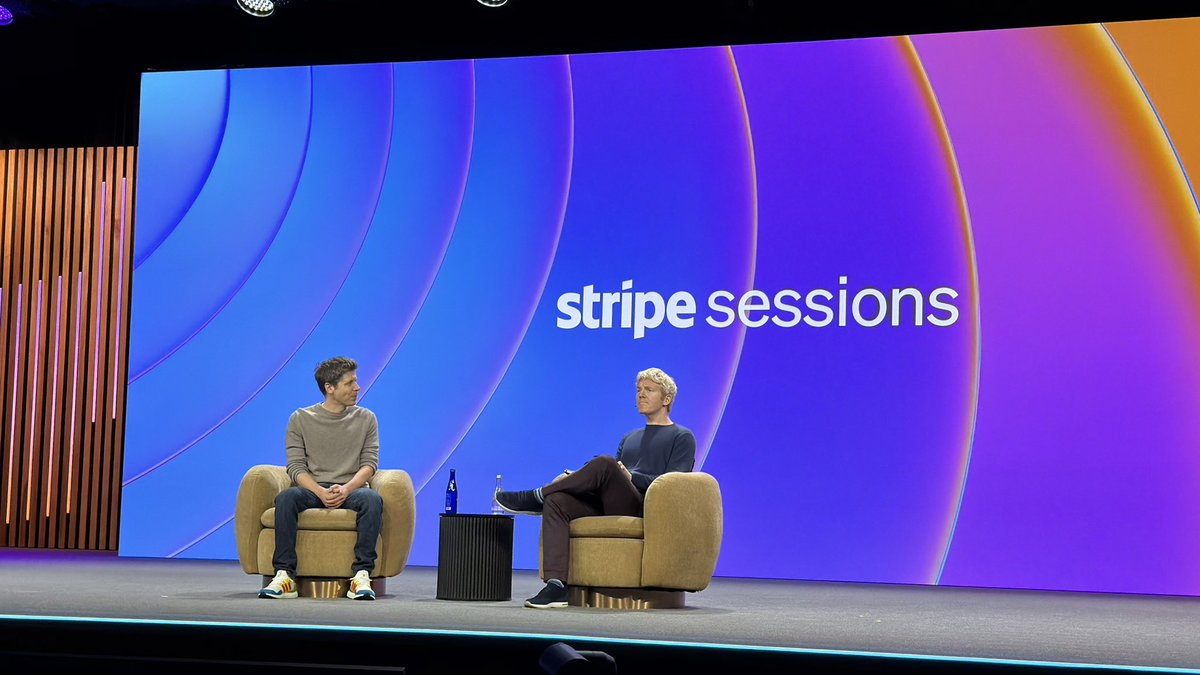
Source: Stripe
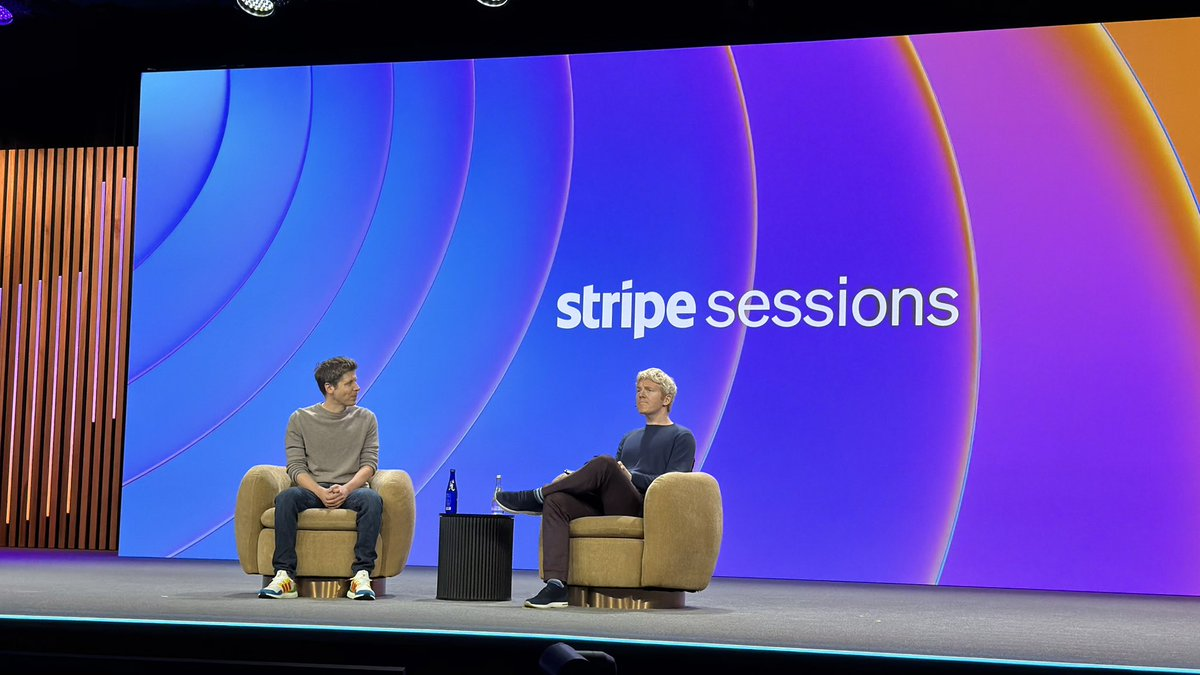
On April 30, 2026, OpenAI CEO Sam Altman appeared on stage at the Stripe annual conference, engaging in an in-depth fireside chat with Stripe CEO Patrick Collison.
The two have known each other for nearly twenty years, and their conversation covered pivotal moments in AI development, OpenAI's management philosophy, changes in the entrepreneurial ecosystem, and the profound impact of AI on science and humanity's future.
During the conversation, Altman shared a series of significant viewpoints:
We are indeed in some kind of takeoff. AI is developing rapidly, and each week is somewhat different from the last.
OpenAI has undergone three evolutions: from a research institution, to a product company, and now to a large-scale token factory.
The revenge of the "idea people" has come: I am now willing to invest in those who deeply understand user needs, possess product insight, but cannot write code at all.
What excites me most about AI is not the products or the business models, but the potential to accelerate scientific discoveries.
We are in a takeoff phase
When does the singularity begin?
Patrick Collison presented an interesting perspective at the outset: considering this year as the first year of the singularity.
In response, Sam Altman stated, "We are indeed in some kind of takeoff." Since the second half of last year and into early this year, the capabilities of AI models have surpassed a certain critical point—especially in the area of code generation.
Each week is somewhat different from the last; things are evolving very quickly.
A shift in cognition
The current Codex (OpenAI's programming model branch) is in its "highlight moment."
While the most steadfast users remain programmers, a large number of users without programming backgrounds are also starting to flood in, attempting to use it for all their daily tasks in front of the computer.
Altman believes that people will experience a more general cognitive shift: realizing how much time they waste on trivial computer tasks.
Switching messaging apps, copying and pasting content, handling those repetitive emails that can obviously be automated—these fragmented tasks are quietly eroding people's focus and work experience. When most people truly realize that AI can help them eliminate these "menial tasks," the feeling will be transformative.
Who is truly making good use of AI?
CEOs leading the charge
After observing a large number of enterprise clients, Altman concluded that the companies that successfully apply AI have a common characteristic—the CEO gets personally involved.
Not just symbolically announcing, "We are going to embrace AI," but getting hands-on to build automated processes and then requiring the team to keep up. He cited the CEO of Shopify as an example: he is one of the earliest CEOs Altman has seen who gets personally involved, directly pushing the entire company to integrate AI in all aspects.
OpenAI is now also trying a new experiment: sending an engineer to directly accompany the enterprise CEO in their work, helping them automate as many workflows as possible.
If we can make a company's leadership truly feel the power of AI, that feeling will permeate the entire organization like a fractal.
The three evolutions of OpenAI
Sam Altman candidly shared the internal management evolution of OpenAI, which actually mirrors the path of AI industrialization.
Three stages of transition
Stage one: a purely research institution, aiming to figure out how to build AGI when everyone else thought it was crazy.
Stage two: while continuing research, learning how to be a product company.
Stage three: the phase currently being entered, where on top of the first two, a large-scale token factory must be built. Altman likens it to a new type of utility, like electricity, where the world needs vast amounts of, cheap, and accessible intelligence.
A low-profit infrastructure vision
Facing questions about whether "AI giants will monopolize everything," Altman referenced Stripe: Stripe's relationship with its customers is highly aligned; the more Stripe earns, the better the customers do, which is a positive infrastructure relationship.
Altman hopes that OpenAI will ultimately become such a role: a provider of intelligent infrastructure, even if it is forever low-profit, as long as it is large enough, fast enough, and deeply tied to the success of the entire world's distributed economy.
He also acknowledges that the switching costs of AI are naturally low, and high profits are hard to sustain. Recent large-scale user migration from competitors to Codex demonstrates that in the AI era, switching friction will become increasingly minimal.
Computing power investment: the most expensive infrastructure in history
Discussing large-scale computing power investments, Altman stated: "This will be the most expensive infrastructure project in human history."
The efficiency improvements of each GPU have exceeded his expectations, but the growth in demand is even faster. As for how much computing power needs to be built? "I don't have a good answer... to some extent, demand is almost unlimited."
OpenAI's management philosophy
OpenAI has gathered some of the smartest and most unique individuals in the world. Altman revealed that his secret lies in extreme belief games:
Concentrated resources: When training GPT-3, OpenAI invested almost all computing resources into one project. At that time, people at DeepMind warned that this would create a toxic competitive culture; OpenAI's response was: We have faith; this is the right direction.
Common vision: Altman believes that even if there are personal conflicts or disagreements among team members, their common belief in "scalability" allows them to come together to solve problems.
A communication style of "directly managing hundreds of people"
When asked if he has any unusual management habits, Altman mentioned: he communicates directly with hundreds of people in the company every day via Slack—either through assistants or directly, with one or two brief messages each time.
This decentralized approach sometimes provides him with extremely valuable information.
A new paradigm for startups
The revenge of the "idea people"
Altman developed a deep-seated bias during his time at YC: he scoffed at entrepreneurs who said "I only have an idea and need a programmer to realize it," deeming it as absurd as saying, "I have a great song idea; I just need someone who knows the guitar to help me make it."
But now, "the revenge of the idea people has arrived."
Those who deeply understand user needs, possess product insight but cannot write code can also quickly build products using AI tools. Altman stated that he is now very willing to invest in such individuals.
How to invest before the singularity?
AGI may arrive within three to five years; is the traditional ten-year investment horizon for venture capital still reasonable?
Altman's answer: Whatever is done on this timescale, always maintain a 'suspension of disbelief.' You cannot do nothing just because "the singularity may arrive in three years, and we can't see through it." You must still act as if life will continue.
OpenAI has already signed twenty-year power and land agreements but only has a clear grasp of its product roadmap for the next two years. — Investing in long-term infrastructure while staying clear about the present is his answer.
AI is reshaping scientific discovery
Altman is most excited about AI not for products or business models, but for the potential to accelerate scientific discoveries.
He believes this will be the most profound contribution of this technology to human quality of life.
Conquering complex diseases
Through collaboration with the Arc Institute, OpenAI is supporting research into complex diseases involving multiple genes, such as cancer and Alzheimer's, using large biological foundation models like Evo 2.
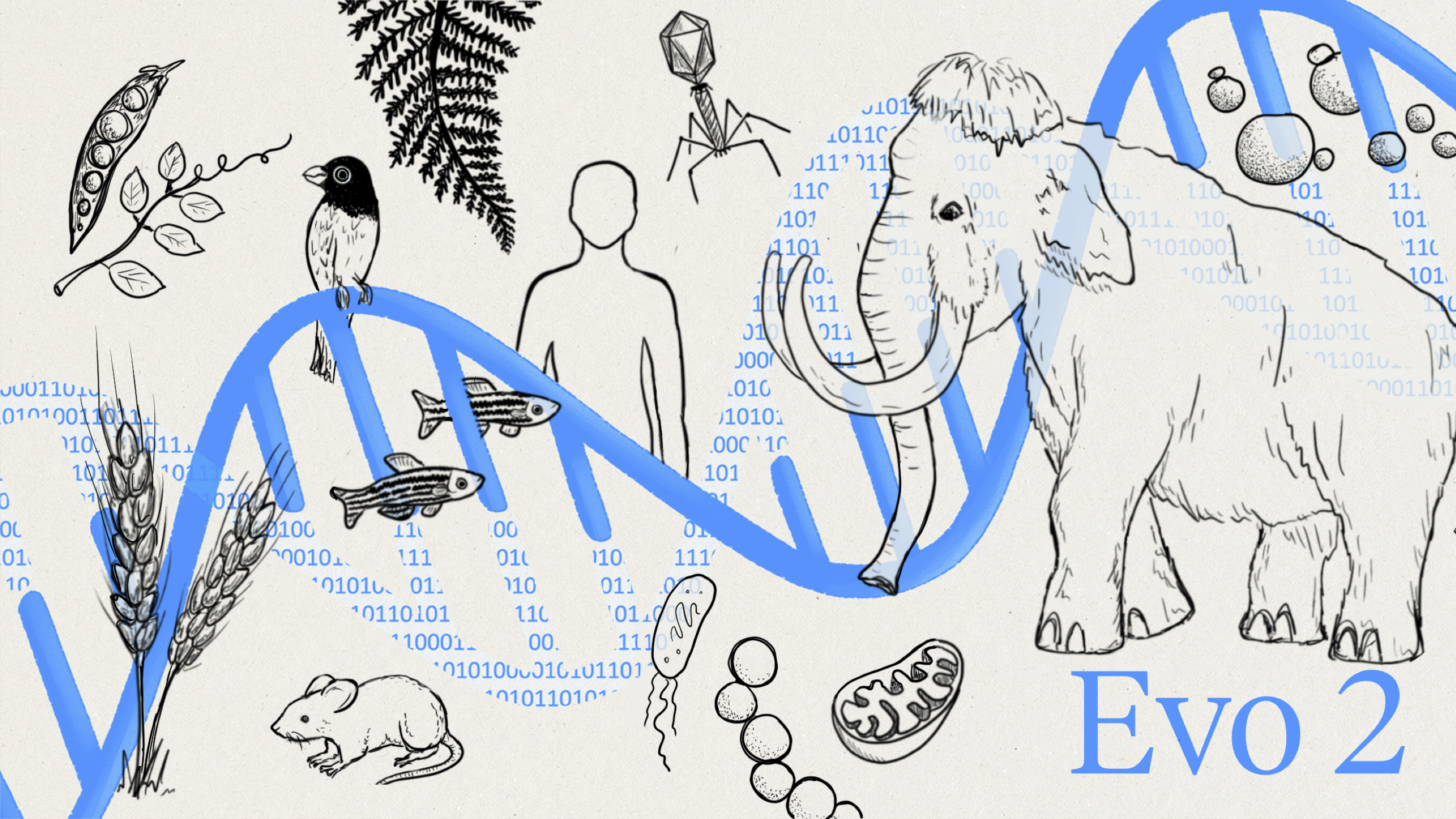
AI is shortening research cycles that originally took ten years down to one.
Leaps in energy and materials
He specifically highlighted one severely underestimated field: materials science.
AI excels at finding optimal solutions in vast combinations, which will bring breakthroughs in catalyst development, energy efficiency improvements, and more. He anticipates very rapid progress here, making profound changes to all our lives.
👉 In terms of energy, Altman boldly predicts: Due to the overwhelming demand for AI computing power, the first profitable nuclear fusion reactor might emerge within five years.
Democratization: Sam Altman's last insistence
At the end of the conversation, Altman discussed one of OpenAI's most controversial decisions: Iterative Deployment.
He recalled that many safety experts at the time advocated locking AI in an "ivory tower," controlled by a few elites, and distributing results to the world afterward.
"This idea made me very uncomfortable." Altman stated: Avoiding the concentration of power and making this technology truly belong to the entire world is extremely important.
"People will use AI in various ways, but I believe most people are good, and most will use tools to do amazing things. I think my most important contribution is to push this technology to become a democratized technology accessible and buildable by everyone."
免责声明:本文章仅代表作者个人观点,不代表本平台的立场和观点。本文章仅供信息分享,不构成对任何人的任何投资建议。用户与作者之间的任何争议,与本平台无关。如网页中刊载的文章或图片涉及侵权,请提供相关的权利证明和身份证明发送邮件到support@aicoin.com,本平台相关工作人员将会进行核查。


