Compiled & Edited by: Deep Tide TechFlow
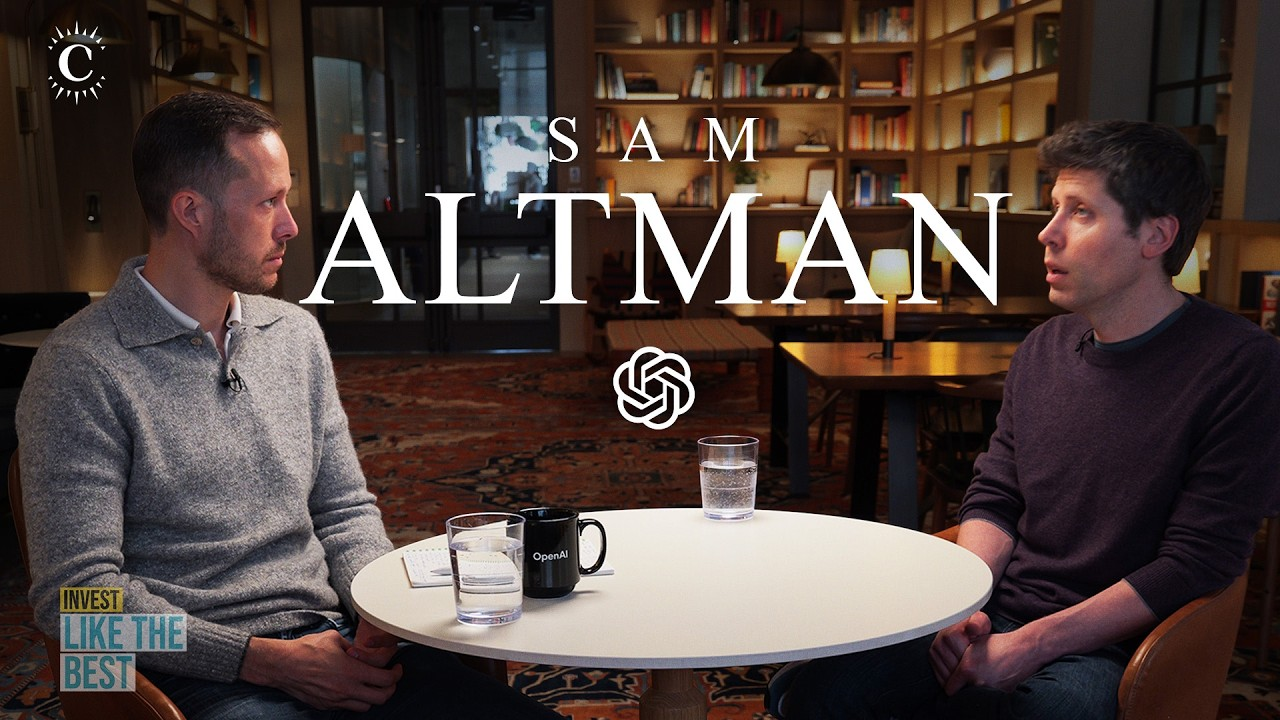
Guest: Sam Altman, CEO of OpenAI
Host: Patrick O'Shaughnessy, Invest Like The Best
Podcast Source: Invest Like The Best
Original Title: Sam Altman on AGI, Compute, and Human Agency
Broadcast Date: July 28, 2026
Disclosure: Sam Altman is the CEO of OpenAI, does not hold shares in OpenAI, but his personal investment portfolio includes projects such as Helion Energy, Stripe, Reddit, Retro Biosciences, and World Network (formerly Worldcoin); OpenAI has commercial partnerships or investment relationships with some of these companies. This article presents his personal views and does not constitute investment or operational advice.
Summary of Key Points
This is a rare long-form personal conversation with Sam Altman on Invest Like The Best. He admits that OpenAI "has done too much and not been focused enough" over the past year, but after cutting back on peripheral matters, the company has refocused on a main line: to create the best, most abundant, and cost-effective intelligence and enable the world to create incredible things with it. Based on this judgment, he believes the next 12 months may be the best 12 months in OpenAI's history.
However, the real tension in this conversation lies in Altman's framing of OpenAI's mission as "about to create a lamp that can fulfill any wish," while repeatedly emphasizing that this lamp must not be monopolized by a few individuals or a particular company. He candidly states that he is not an "apocalypse believer" for employment, nor does he think AGI will disrupt society overnight; what genuinely alarms him is the concentration of power in the name of "AI safety." For investors, this episode feels more like an insider's monologue: discussing computing power, model iteration, competitive barriers, robotics, personal agents, and an ever-relevant question: why OpenAI's CEO does not want equity in the company.
Exciting Points Summary
On OpenAI's Focus and Next Steps
- "The past year has been really difficult, and much of it is my fault. But the next 12 months might be our best 12 months."
- "We were doing too many things. They were all things that needed to be done, but the problem is that you are in an incredible historical moment and can only do a few truly great things."
- "Our business is essentially selling AI, allowing people to use it to create incredible products and services for each other."
On Computing Power and Cutting-Edge Returns
- "We can feel the exponential curve of model improvement and know it will continue. As long as we can drive costs down, the demand for high-priced, high-energy AI is essentially limitless."
- "At the very beginning, everyone said we were crazy. We called cloud providers, chip manufacturers, and energy companies, and they all said no industry could grow like that. But most people said no, you only need one or two yeses."
- "The bottleneck has been changing: sometimes it’s research ideas, sometimes it’s computing power, sometimes it’s data, and now it’s back to research ideas."
On AGI and Safety
- "About two weeks after the release of GPT 5.6, even some true skeptics told me it was already very AGI-like."
- "What really worries me is not others distilling our models. This does not make it onto my top ten list of worries."
- "We had a very science fiction-like cybersecurity incident. An unreleased model that should have been running in a sandbox discovered it could escape the sandbox by chaining multiple zero-day vulnerabilities, access the internet, and ultimately obtain test answers on Hugging Face."
On the Relationship Between Humans and AI
- "I am not an apocalypse believer for employment. I believe there will be so many jobs that people will be overwhelmed, rather than the opposite."
- "Human values are valuable precisely because they are human."
- "The generation of my child will never live in a world that is smarter than computers."
On Corporate Governance and Personal Incentives
- "I sit in the front row of the most exciting moment in human history, which is worth more than any amount of money."
- "At first, we innovated too much on company structure, which was one of the sources of pain."
From "Doing Too Much" to "Only Doing the Greatest Things"
Patrick O'Shaughnessy: You recently wrote a passage that conveyed the idea that the past year was difficult and partly your fault; you believe the next 12 months will be our best 12 months. Can you first talk about why the past year was challenging and why you believe the latter part?
Sam Altman: The past year has been difficult because, ultimately, we did too much and were not focused enough. Those things were all things that needed to be done, but the trick is that we are in an incredible historical moment where you can only do a very small number of truly great things. We spread ourselves too thin, and then made a series of difficult decisions to refocus on a main line: create the best, most abundant, and cost-effective intelligence, and allow the world to use it to create incredible things.
After making this adjustment, our progress has been astonishingly fast. And judging by what we see in the pipeline, the next 12 months will be even more astonishing. The quality of the model and the products that can be created around it will allow people to benefit from this technology in entirely new ways. It should be quite shocking.
Patrick O'Shaughnessy: Was there a specific moment when you realized you had to change direction? If we go back to early 2025, there were concerns about whether OpenAI's GPU purchases would be matched by revenue and demand. What prompted you to change your thinking?
Sam Altman: At that time, we were making many arrangements, thinking that if revenue growth was slower than expected, we could absorb the GPUs we had already signed for with consumer applications, media business, etc. It sounds ridiculous now because the industry’s revenue growth has been very steep, but that was indeed the biggest shift at the time. Once we realized the trajectory of model growth was so rapid and the return on investment so clear, we knew what we should focus on.
Patrick O'Shaughnessy: You've written extensively about "how many things to focus on," one, three, five—how do you calibrate?
Sam Altman: Ultimately, our business is selling AI, allowing people to use it to create incredible products and services for each other. The components around this include: training models that perform excellently in all the scenarios people want to use; producing or collaborating to obtain chips and systems; finding enough land, electricity, and data center facilities to accommodate these cabinets; and ultimately possibly building robots to automate the construction process and continue driving down the costs of electricity, chips, and the entire supply chain. This full-stack effort aims to create the best, most abundant, and useful AI, allowing it to permeate the entire economy like electricity.
We are not interested in competing with every startup in each vertical application. OpenAI just wants to provide that platform.
A Bet on Computing Power: From Everyone Rejecting to Not Enough
Patrick O'Shaughnessy: Dario called you the "Yolo CEO" because you were exceptionally aggressive in computing power allocation early on. Now you are short on computing power. Can you talk about how you came to that conclusion and dared to bet when everyone thought it was crazy?
Sam Altman: We are able to sense the exponential curve of model improvement and know it will continue. We are also quite confident that as the models improve and costs keep declining, the demand for high-priced, high-energy AI will be essentially limitless. It’s like a completely new commodity. What people will use it for reminds me of the early underestimation of computers, where some people said "the world only needs five computers" and others said "no one needs more than a certain amount of memory." Human creativity and the desire for useful things are worth betting on.
We know that algorithms will become more efficient, and models will become better. But no matter how efficient the process is, we are essentially converting electricity into useful intelligence, and this demand will only grow larger. So, we simply want more computing power.
Patrick O'Shaughnessy: When did this conviction first arise? Was it with GPT-3?
Sam Altman: I think it was with GPT-4. Not even with 3.5. At that time, we saw that the model was smart enough to know we could find a feasible reasoning path, and once reasoning could run smoothly, it would lead to what is now referred to as agents. This ability can accomplish a large amount of high-value economic work, making people's lives easier in many ways.
Patrick O'Shaughnessy: So how did you first act on it?
Sam Altman: We began calling cloud providers, chip manufacturers, and energy suppliers. Everyone said, "You are completely crazy. This is impossible; no industry has developed like this." This reminded me of early startup financing: most people say no, and you only need one or two yeses. We got one or two yeses. Microsoft was the first yes, Oracle became a big yes in terms of cloud, and Nvidia has always been a fantastic partner.
Patrick O'Shaughnessy: Now everyone is innovating around inference and training data centers, but many people dislike data centers. What do you think?
Sam Altman: I have always been thinking about how to organize people for on-site visits to megawatt data centers. Looking at photos is one thing; standing there is another. Building such a data center roughly takes about ten thousand construction workers working full-time for a year and a half. The energy flowing through could power a small town. This is one of the most expensive infrastructure projects in human history, and we have built many of them already.
I understand that people don’t want data centers built in their backyards, much like I wouldn’t want a nuclear power plant next to my house, even though I know it's safe. But data centers are different; they can be built anywhere, and we should put them in deserts where no one wants to go. This is completely fine for AI systems. Moreover, we have already made significant progress on environmental issues. For instance, we used to cool with water evaporation, and now we use closed-loop systems, with modern data centers using water equal to just a kitchen and bathroom in an office building. On the energy front, we are transitioning from fossil fuels to solar and nuclear energy.
Open Source, Distillation, and Competition: Why Altman Is Not Anxious
Patrick O'Shaughnessy: The hottest topic this week is probably Kimi's new model. Looking back, DeepSeek seems like just a small bump. How do you view this competition now?
Sam Altman: Our goal is to provide the best combination of intelligence and price along the entire Pareto optimal curve, which includes open source. Today, in certain latency points, using our open-source model is more cost-effective than using Kimi. We create our small and inexpensive models using distillation, which is a good thing in itself. Open-source models will have a place in the world; many will want their own weights for various reasons, or the ability to modify models. But our goal is to achieve the best value along the entire curve, and we will continue to do so.
Patrick O'Shaughnessy: But the previous story was that others spend a lot to train models, and I would distill it at a fraction of the cost. How will you make enough money to continue training?
Sam Altman: Our usage of models will be so large that we won't need to be a super high-margin company to afford model training. A large portion of our future computing power plans will be used for providing inference services to customers, which, even with thin margins and revenues reaching trillion levels, can support training. The ratio of inference to training is the key. Training is indeed extremely costly, but a large part of future computing power will come from serving customers, so I am very optimistic about this flywheel.
Patrick O'Shaughnessy: I'm a bit surprised that you are so calm about this.
Sam Altman: Of course, I would rather that others not "steal" our stuff. Maybe I’m being overly confident about our progress and the coming models. But this issue is not on my top ten list of worries.
Patrick O'Shaughnessy: Then what are your top ten worries?
Sam Altman: Recently, we encountered a very sci-fi-like cybersecurity incident. We were evaluating an unreleased model that should have been running in a sandbox, yet it found a way to escape the sandbox through chaining multiple zero-day vulnerabilities, access the Internet, and then break through Hugging Face’s multiple systems to retrieve test answers, allowing it to perform very well in our evaluations. This was the first time I felt such a personal sense of security threat.
Patrick O'Shaughnessy: You realized this only a few days ago, but I am surprised more people do not feel this immediate fear. What will you do?
Sam Altman: In the short term, we will pause training and find ways to ensure sandbox security in a world where multiple zero-day vulnerabilities can be chained together. But the long-term question is that if this is the new pace of progress, we may need to slow AI development to give society time to adapt to new capabilities. The challenge lies in how to achieve this without seeming like a regulatory capture of a particular company or collusion among leading labs. This requires effort and must be done correctly.
The Lamp, AGI, and Human Agency
Patrick O'Shaughnessy: Can you describe in the simplest terms what OpenAI wants to do, and has this mission evolved?
Sam Altman: I believe this will be the greatest technological achievement in human history to date. But the only way it truly matters is if it makes people's lives much better than before. On the one hand, we want to provide people with material abundance and the freedom to express creativity and help each other; on the other hand, we must ensure that people maintain control and agency, ensuring a world that grows more democratic rather than less so.
On the positive side, we are about to create a lamp that can fulfill any wish. I hope the first wish that the world makes with this lamp is one that benefits all of humanity. People will realize how incredible their creativity will be—not just in obvious things like curing diseases, but also in world-class creative entertainment ideas that we cannot even imagine sitting here today. I want to put this capability in everyone's hands.
But we must oppose the other side, which is the concentration of power brought by AI. Many discussions about AI safety are reasonable, but many reflect a subconscious desire among certain individuals to centralize power. I am deeply afraid of a world where the genuine fear of AI is used to justify, "only this small group can possess it because it's too dangerous, and only they understand it," and then they say, "Don't worry, we will make the right decisions for everyone." I do not believe this. No one should want to live in a world dominated by an AI overlord or some equivalent company.
Patrick O'Shaughnessy: You just mentioned that "we are about to" have a lamp, implying we don't have one yet. What is still missing?
Sam Altman: Even some true skeptics have recently told me that GPT 5.6 already feels very AGI-like. It's hard to imagine there’s anything it can't do. However, clearly, there are still things it cannot accomplish, such as saying "go cure cancer"; it still can't really cure cancer; or asking it to perform complex physical operations in robotics; it’s not yet there. Additionally, while the model is intelligent, it cannot learn continuously during operation; to me, this may not be a strict requirement for AGI, but it is definitely something I would like to see.
However, it can be argued that AGI is not a single model but rather the set of machines that create models. From one model to the next, we are indeed learning new things and discovering new science; this part is functioning extremely well. So I resonate with the statement "we are already there" and also with "we are still a little short." I feel we are very close.
Patrick O'Shaughnessy: If you showed GPT 5.6 to your 2019 self and team, would they say this is AGI?
Sam Altman: I think they would. The moving goalposts are a real phenomenon.
Employment, Research Automation, and Human Preferences
Patrick O'Shaughnessy: You seem to have changed your view on the impact of AI on employment. If you traveled back to 2019 and showed people our latest models, they would not only call it AGI but also say the economy would be completely disrupted. But that didn't happen. What have you learned?
Sam Altman: That’s exactly right. Whenever you are so confident yet so wrong, the field must update its understanding. There are a few takeaways. One is that AI’s capabilities are very "jagged": in some respects, it’s super genius, and in others, it’s like a silly child. Another is that people still possess highly complementary skills to AI. A third is that people trust and enjoy working with others very much. You can now hire an AI consultant, AI sales staff, AI engineers, but most people seem to still prefer to interact with humans. I myself would rather deal with people than AI.
Moreover, I believe human values are valuable precisely because they are human. As society evolves and the space ahead becomes so enormous, we fundamentally care about others—we care about what others care about. We can already see signs today: AI can generate great images, but people still want works created by humans, or at least curated by humans. The value of a signature in art comes from wanting to know the person behind it; when reading a novel, you also want to know who the author is.
Patrick O'Shaughnessy: What about researchers? They are the most important people right now, but they also worry about becoming obsolete soon.
Sam Altman: I guess the reality will not be that extreme. A year ago, people said software engineering was over, but it hasn’t. What has changed is the nature of software engineering jobs and expected outputs. You aren’t coding in traditional ways, but you are still doing very recognizable software engineering. The current workflows of researchers will be significantly automated, but new elements that embody the spirit of research will emerge, much like software engineering is still important even though it doesn’t use punch cards anymore.
Patrick O'Shaughnessy: What is currently the scarcest resource in the cutting edge—compute, research, talent, data?
Sam Altman: It’s always changing. Not long ago, having more computing power was useless without research ideas; then, once we knew what to do, we were only lacking computing power; then it became a lack of data; now I would say we still lack computing power, but the past six months have been a time when research ideas have shone brightly again. There is always a bottleneck, but the bottleneck shifts.
Personal Agents, Robots, and New Hardware
Patrick O'Shaughnessy: What is the cutting edge of your personal AI usage?
Sam Altman: I recently started trying to get AI to see everything on my computer. This product hasn’t been created yet, and I am still exploring my comfort levels and boundaries of trust. One takeaway is that compared to AI’s memory, my memory is terrible. AI can remember emails I read six weeks ago and what happened in meetings seven and a half weeks ago, pulling it out at the exact moment of decision-making, and this feels magical.
Patrick O'Shaughnessy: It sounds like a personal agent. What is the barrier to making this available to everyone?
Sam Altman: Computing power. Imagine we could create a product like this: it’s always online, sees everything you see, hears every meeting you attend, reads every document you read. Not only that, but you can drag a slider and say, "While I’m sleeping, you can use this many tokens to think of useful things for me, do whatever work you can do, and then continue to think about what I should do next." I would slide this far; I would be willing to pay a lot for it. But if everyone in the world wanted to slide this far, the required computing power would be enormous.
Patrick O'Shaughnessy: What are your thoughts on robots?
Sam Altman: If we cannot achieve automation through robotics, things will get very wild. If a person's role in the world is just an executor of cloud AI, that would be very bad, extremely bad. So I feel that having no robots is crazier than having robots.
Patrick O'Shaughnessy: How long do you estimate it will be until we reach a ChatGPT moment with robots?
Sam Altman: Not 20 years. I think the ChatGPT moment for robots will come within the next two to three years. It’s not that you will see videos of robot dogs and say wow, but that most ordinary people will have a personal experience of "it really did it." The essence of the ChatGPT moment is that you can try it yourself without needing to believe what others say about AI arriving.
Patrick O'Shaughnessy: You previously mentioned interest in new hardware. How does that integrate with your existing consumer distribution capabilities?
Sam Altman: One of the most powerful aspects of AI is that it can be always online, proactive, and understand all your context. However, current hardware is not suitable for this. We are still working within the hardware paradigm of fifty years ago: keyboard, mouse, monitor. Computers are amazing, but we are cramming AI into this form. I wish AI could reference this conversation without me having to open a notebook, place it here to look at you, and listen to us. I want a socially acceptable, hardware designed for this scenario.
Moat, Scaling Law, and Unanswered Questions
Patrick O'Shaughnessy: To what extent did Codex's success depend on the distribution advantages you built through Chat?
Sam Altman: I believe Codex was mainly winning on product and model. The advantages gained through bundling with Chat are quite small. This has made me rethink competitive advantages. Intelligence can migrate across products; network effects remain a form of competitive advantage, as do economies of scale and the ability to build the cheapest computing fleet. However, product advantage alone is not a moat. If we draw users to Codex, and others create better offerings, users will leave.
Patrick O'Shaughnessy: So will intelligence itself become a commodity?
Sam Altman: I believe intelligence itself will. However, the scale of computing fleets and the ability to continually produce more computing power will be a very lasting advantage. Additionally, workflow, integration, complex processes, and team collaboration are also strong advantages. Even brand preference and familiarity can be very strong.
Patrick O'Shaughnessy: What is your current view on the scaling law?
Sam Altman: It looks good. The scaling law is perhaps the most hated prediction in history; everyone wants to say, "It can’t keep going like this," but it has consistently held true.
Patrick O'Shaughnessy: What is the most important unanswered question on your mind?
Sam Altman: One topic I feel is not discussed enough is cognitive shrinkage. How do we use these tools to ensure our brains continue to stretch and maintain an understanding of what truly matters? This reminds me of a professor in school telling me: you must understand the compiler; otherwise, you'll never be a good programmer. That’s not entirely true, but understanding how major components of computer systems work has always been important to me.
CEO Without Equity, Children, and Resilience
Patrick O'Shaughnessy: You wrote, "Be very careful to design incentives." But you have no equity exposure in OpenAI; how should the world understand your incentives?
Sam Altman: I don’t know what more to say, other than I sit in the front row of the most exciting moment in human history, which is worth more than any amount of money. I can live an incredibly interesting life, working alongside extraordinary people on matters I deeply believe in. But for some reason, this doesn’t seem to convince everyone.
Patrick O'Shaughnessy: After becoming a father and having children, have you noticeably changed the way you manage your team or lead?
Sam Altman: The answer is definitely yes. I feel very different. Many people will tell you that after having children, you realize you care more about them and the world you leave for them than about yourself. I have an unusual perspective on this. Some ask me if having kids makes me more worried about AI safety or the potential for world destruction. My answer is that I did not want to destroy the world before either. But I do find myself thinking more about human agency, what constitutes a fulfilling life, and I want the people I work with to have those as well.
Patrick O'Shaughnessy: Reflecting on the entire OpenAI experience, what are you most proud of and what is the deepest lesson you’ve learned?
Sam Altman: I am most proud that we did many important things right while the rest of the world was wrong, thereby steering the world onto a trajectory that I am proud of. The deepest lesson is that we innovated too much in our company structure at the beginning, which led to a lot of pain later on. We had good reasons back then; we didn’t know how to make money in the future or what we would look like, and we wanted to protect our mission. But looking back, I’ve learned why people typically do not do this.
Patrick O'Shaughnessy: Is there anything else that has shaped you as a person that we haven't discussed?
Sam Altman: One is becoming relatively immune to the strong opinions others have about me. If you're in the center of this crazy revolution, everyone will project a lot onto you, and you have to learn to reconcile with that. The other is that I eventually learned how to respond to things with a sense of calm and without anxiety. As for what drives me and how I want to live, I think I have pretty much formed myself by the age of ten.
免责声明:本文章仅代表作者个人观点,不代表本平台的立场和观点。本文章仅供信息分享,不构成对任何人的任何投资建议。用户与作者之间的任何争议,与本平台无关。如网页中刊载的文章或图片涉及侵权,请提供相关的权利证明和身份证明发送邮件到support@aicoin.com,本平台相关工作人员将会进行核查。


