Bundling holdings, cluster addresses and abnormal reissuance: The on-chain doubts of PIPEDOG.
Written by: KarenZ, Foresight News
A developer released a PIPEDOG, withdrew liquidity-related assets about ten minutes later, and then issued another token with the same name, symbol, and total supply as the first PIPEDOG. The first one quickly faded into silence, while the second peaked at a market value of 74.6 million dollars.

This is not a fictional scenario but a true on-chain record that occurred on the Robinhood Chain within a few hours.
Seventeen minutes, the same developer switches between two tokens with the same name
The contract address of the first PIPEDOG deployed by this developer is 0x030e...9560. On-chain records indicate it was deployed by address 0xa359...e814 at 04:12 on July 28; about two minutes later, the developer established a Uniswap liquidity position using nearly all the tokens and around 263 WETH.
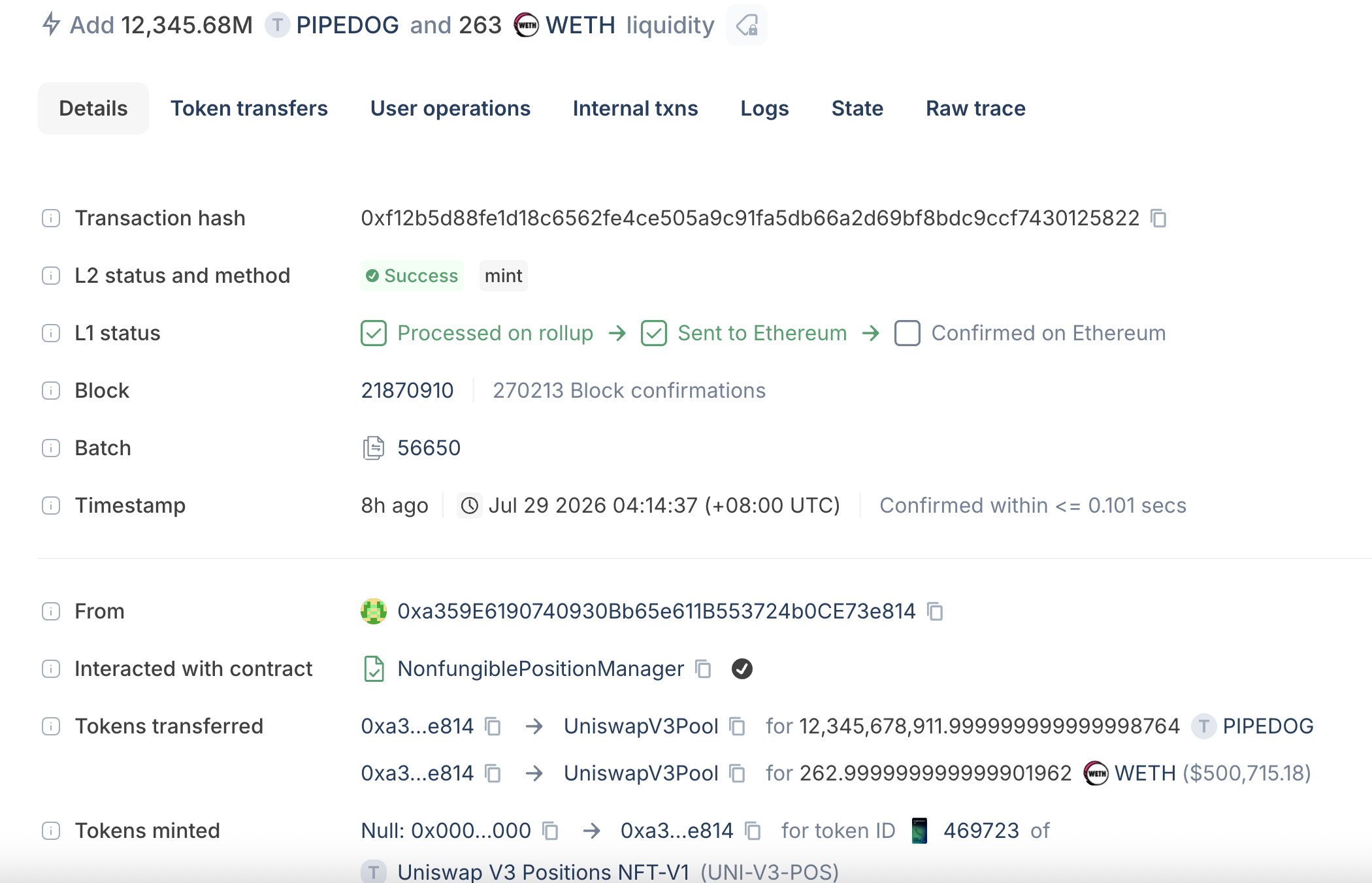
At 04:21, the market value of the first PIPEDOG token rose to 2.11 million dollars. Three minutes later, the developer continuously called the multicall function and the withdraw function of the Uniswap position management contract, withdrawing related liquidity. According to the GMGN market data, within the next two minutes, the market value of the first PIPEDOG token rapidly plummeted to around 9,000 dollars and has since slightly rebounded to 68,000 dollars.

At 04:29, the same developer's address deployed the second PIPEDOG, with the contract being 0x5cb6...d8a6. This means that the two deployments were only about 17 minutes apart, and it took less than ten minutes from the first version's pool opening to the liquidity withdrawal operation.
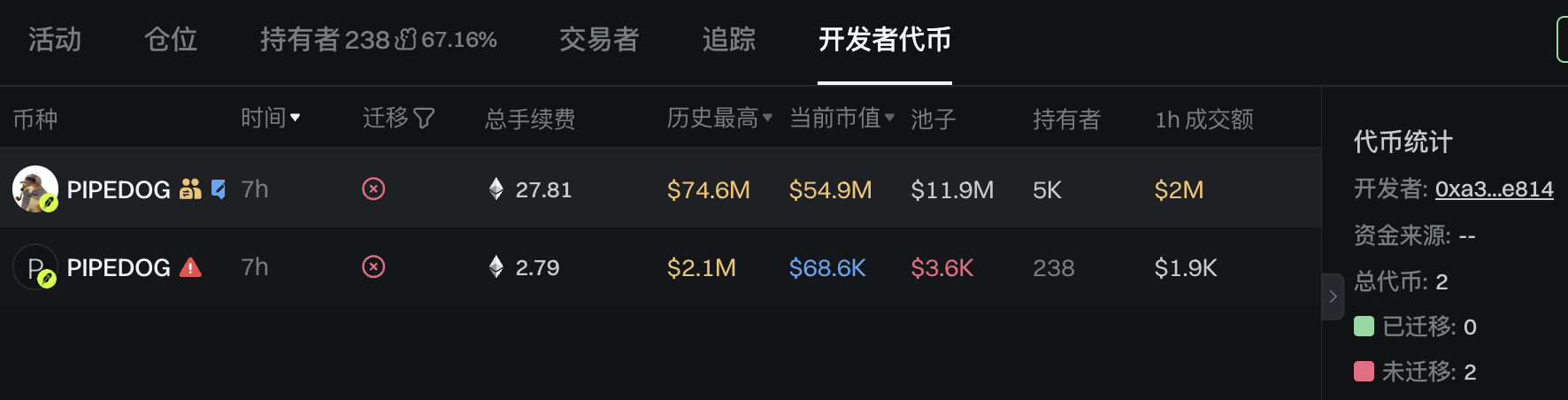
Source: GMGN
On-chain records can prove that both tokens originated from the same deployment address and can restore the sequence of pool establishment, liquidity withdrawal, and token reissuance; however, it remains unclear why the developer abandoned the first version. What is certain is that the developer did not continue managing the original token but quickly shifted funds and market attention to the second contract with the same name.
The second PIPEDOG token reached a market value of 74.6 million dollars at its peak, and as of the time of writing, its market value is approximately 55 million dollars.
24.1% of bundled trading and numerous cluster addresses
What is noteworthy about the second PIPEDOG is not just the increase in price, but also its early trading and holding structure.
The GMGN page shows that its bundling holdings account for 23.16%, while the historical peak was 42.65%. Wallets identified by the platform as being related to bundled trading still hold nearly a quarter of the tokens. Such a high ratio does not directly prove that these wallets are controlled by the developer, but it is sufficient for the market to further examine whether the chips are truly distributed among independent holders.
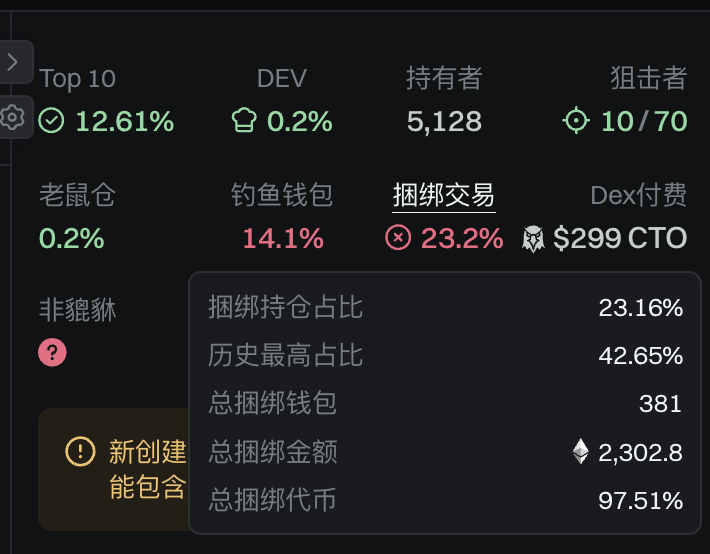
Source: GMGN
Bubblemaps provides another set of signals. Excluding the Uniswap pool that holds about 10.19% of the tokens, all eight major holding groups exist in clusters, containing 31, 18, 28, 18, 13, 15, 13, and 10 addresses, totaling 146 addresses. Based on the holding proportions shown in the screenshot, these eight clusters collectively control about 32% of the token supply.
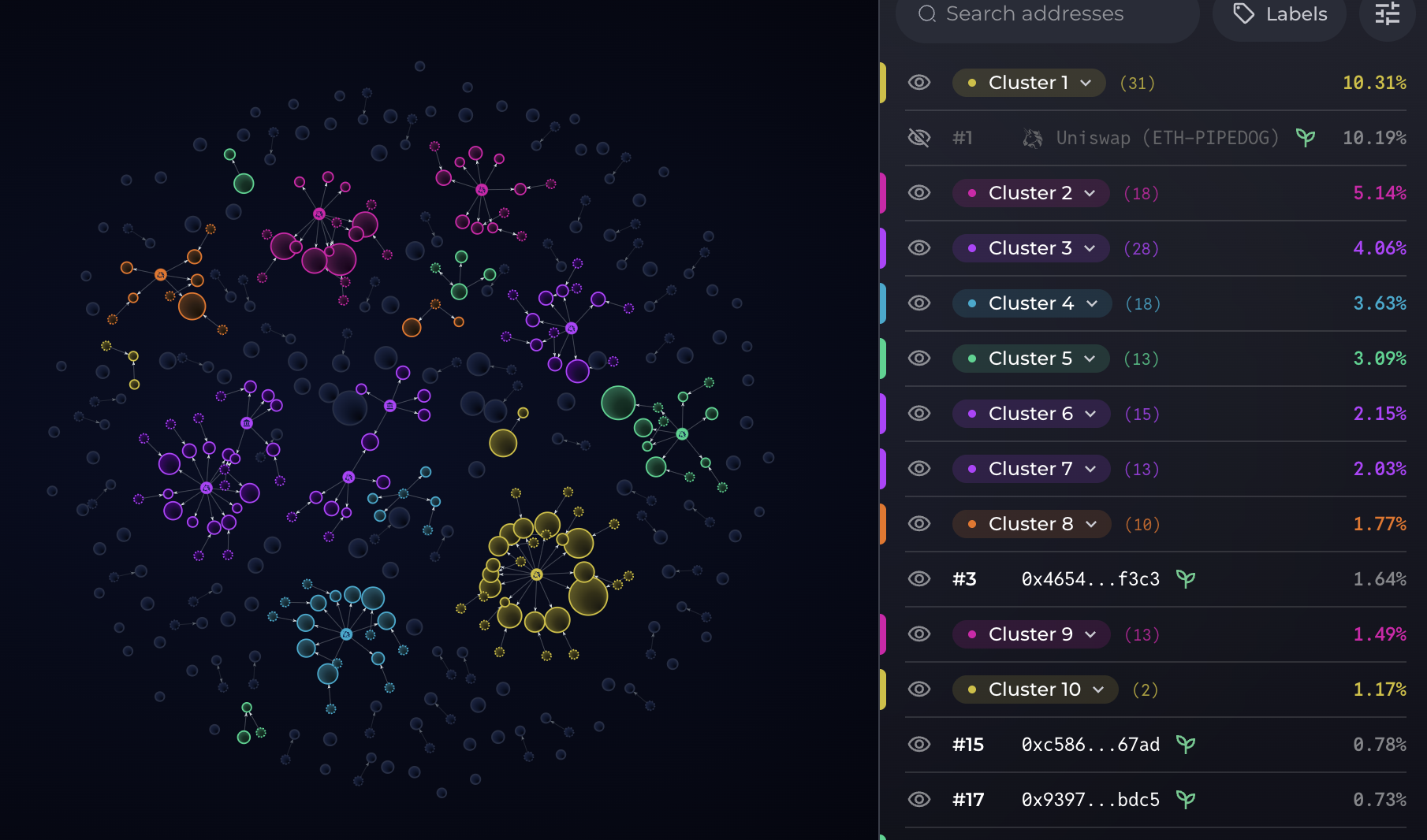
Source: Bubblemaps
The first PIPEDOG also exhibited similar characteristics. GMGN shows that its bundling holdings account for 16.5%; Bubblemaps data indicates that the largest holding address possesses 67.16% of the tokens, while the second largest holding entity is a cluster composed of 76 addresses, collectively accounting for 21.09% of the supply.
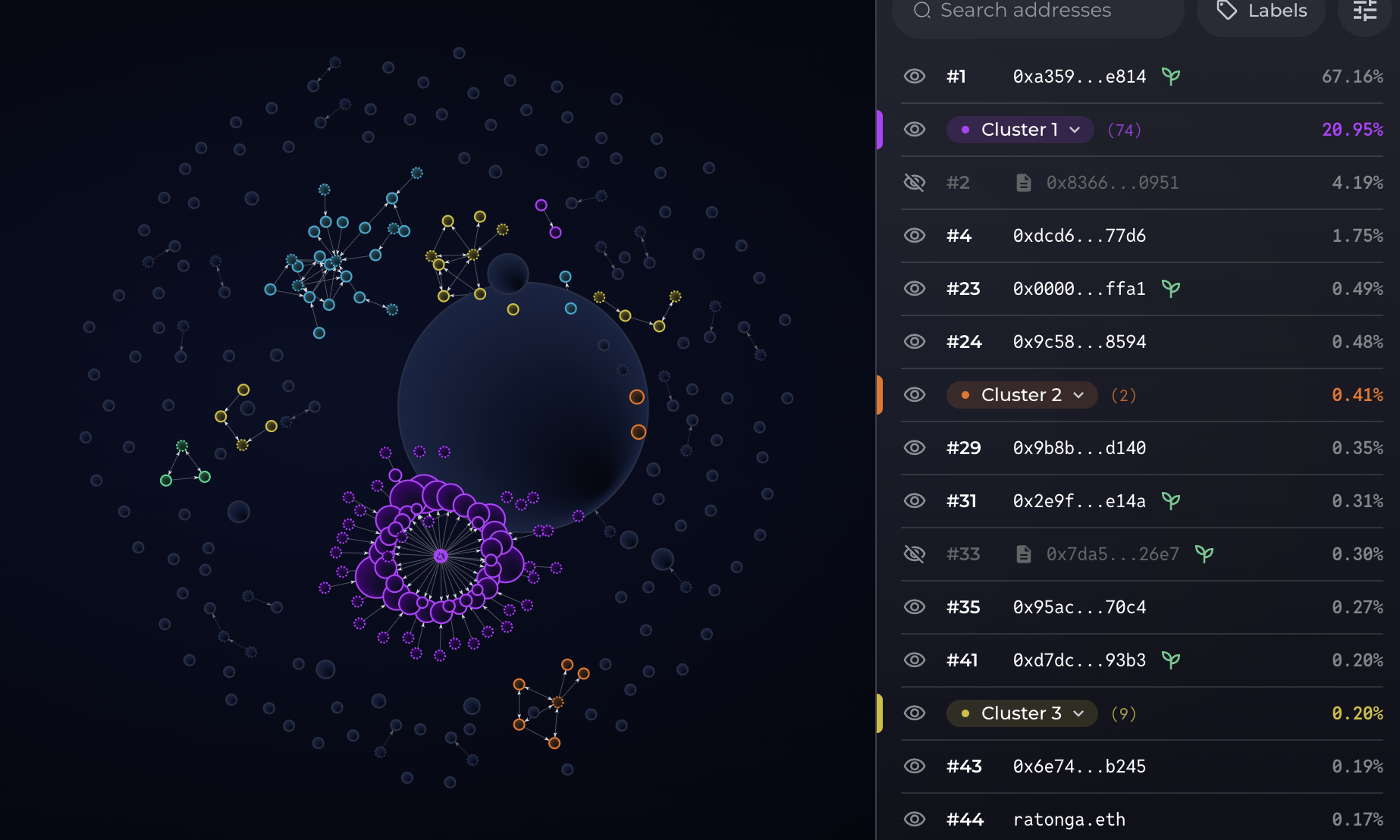
Source: Bubblemaps
This indicates that both issuances exhibited high proportions of bundled holdings and clustered chips, not just an isolated phenomenon occurring with the second token. However, determining whether these wallets are controlled by the same entity still requires further evidence regarding the sources of funds, timing of operations, and selling paths.
Locking liquidity does not eliminate chip risks
After the second token was launched, the project team claimed on Twitter that they would "permanently lock" liquidity worth 1358.83 ETH, along with a chain transaction that invoked the lock method.
This operation can reduce the risk of the project team suddenly withdrawing the corresponding liquidity positions, but locking liquidity and diversifying token chips are two different matters: LP cannot be easily withdrawn, but that does not mean cluster wallets cannot sell tokens, nor does it imply that the wallets that bundled purchases early are independent of each other.
Considering the current evidence, PIPEDOG displays high chip correlation in its launch phase along with abnormal records of the same developer abandoning the old contract and reissuing a token with the same name in a short time. Although there is currently insufficient evidence to classify it as a "conspiracy" manipulated by a single entity, the issuance process and holding structure have already revealed multiple risk signals worth being cautious about.
免责声明:本文章仅代表作者个人观点,不代表本平台的立场和观点。本文章仅供信息分享,不构成对任何人的任何投资建议。用户与作者之间的任何争议,与本平台无关。如网页中刊载的文章或图片涉及侵权,请提供相关的权利证明和身份证明发送邮件到support@aicoin.com,本平台相关工作人员将会进行核查。


